
How Many Mini-Split Zones Do You Need?
Plan one zone for each room or open area you want to control separately. Bedrooms and closed-off rooms get their own head, while an open kitchen and living room can share one. A two-bedroom flat with an open living area often ends up with three zones. A room-by-room load calculation sets the final count and each head's size.
By the Nur HVAC team · Updated November 9, 2026 · 13 min read
Zone planner: a starting layout for your home
Pick the rooms you want to heat and cool to see a first layout and what to ask about. It uses the rules of thumb we start from on a walk-through.
Which rooms do you want to heat and cool?
Starting layout
3 zones on one multi-zone outdoor unit.
- 1Open kitchen and living area. One wall head or a ceiling cassette sized for the whole space. A long or L-shaped room may need a second head.
- 2Bedroom 1. Small wall head, often the smallest size in the line. The load calculation confirms it.
- 3Bedroom 2. Small wall head, often the smallest size in the line. The load calculation confirms it.
Worth knowing
- On one outdoor unit, all the heads run in the same mode, heating or cooling, though each room keeps its own setting. If that outdoor unit stops, every head stops with it.
- Small bedrooms and offices are where sizing goes wrong most. Two or three small rooms side by side can share one concealed ducted unit instead of a head in each.
- Kitchens pick up heat from cooking and often from afternoon sun. The load calculation decides whether one head is enough.
This is a starting point, not a design. The final number of zones and the size of each head come from a room-by-room load calculation at the estimate.
What a mini-split zone is
A zone is any space with its own temperature setting. On a ductless mini-split, that almost always means one indoor unit, called a head, with its own remote or wall control. The head connects to an outdoor heat pump through a line set, two insulated copper refrigerant lines, run together with a communication cable and a condensate drain.
A single-zone system is one outdoor unit and one head. A multi-zone system is one larger outdoor unit with two or more heads, each running on its own setting. According to Mitsubishi's US product page for its M-Series multi-zone units (checked November 2026), the outdoor units range from 20,000 to 60,000 BTU/h and, depending on the model, connect up to eight indoor units. We've installed up to six heads on one outdoor unit in a San Francisco home.
A zone is not the same as a room. One head can serve an open kitchen, dining and living area as one zone.
Which rooms get their own head, and which can share
We count zones by how you live in the house, not by the number of doors. A head heats and cools the room it sits in well, but conditioned air doesn't travel far through doorways and hallways. If a door is closed most of the day or night, the room behind it needs its own head.
Own head: bedrooms
People sleep at different temperatures, and bedroom doors are closed at night. Each bedroom you want comfortable gets a head, sized small.
Own head: home office
An office runs on a different schedule than the rest of the house and often has a computer and monitors adding heat. A small head lets it stay off when nobody is working.
Own head: in-law unit or finished basement
Someone else lives on a different schedule there. A separate single-zone system gives that space its own controls and keeps it running if the main system stops.
Can share: open kitchen, dining and living
One open area is one zone. A long or L-shaped room may need two heads, but they serve the same space.
Can share: kitchen and dining room
If a wide opening connects them, one head may cover both. A kitchen behind a door gets its own, away from the range.
Can share: two or three small rooms side by side
A concealed ducted unit in a hallway ceiling or closet can serve them through short ducts. You see grilles instead of heads, and the rooms share one setting.
Often skipped: hallways, bathrooms, closets
They pick up air from the rooms around them. A bathroom with no outside wall rarely gets its own head.
Single-zone vs multi-zone mini-split
For two or more rooms, you can use one multi-zone outdoor unit feeding several heads, or several single-zone systems, each with its own small outdoor unit. The right one depends on the rooms, the lot and how much one failure would bother you.
- One multi-zone outdoor unit
- One box outside instead of several, which matters on a San Francisco terrace or a narrow side yard. One electrical circuit. All heads run in the same mode at once, heating or cooling. If the outdoor unit stops, every head stops.
- Separate single-zone systems
- More outdoor units and more circuits, which often costs more up front. Each system is matched to one room, and when one fails the others keep running. A good fit for a room with a big load, like a sunny top-floor bedroom, or an in-law unit.
On efficiency, a single-zone system pairs one head with an outdoor unit built for it, and single-zone models carry higher efficiency ratings than multi-zone units in most lineups, Mitsubishi's included. A multi-zone unit split across several heads is more flexible. It gets less efficient when it has to serve one tiny room at a time with the rest of the heads off, because the outdoor unit has a lowest speed and can't go below it.
What drives the cost on either route, without the numbers: how many heads and of which type, how long the line sets are and how hard the route is (roof, crawlspace or finished walls), where the outdoor unit sits, the electrical work, condensate pumps for heads on inside walls, removing old wall heaters, and the permit. We price both routes side by side when it's close. See multi-zone heat pump systems and ductless mini-split installation.
Sizing: why bigger heads in small rooms backfire
A common mini-split mistake isn't too few zones. It's heads that are too big for the rooms they serve. A small bedroom with an oversized head reaches temperature in a few minutes, the head slows to its minimum, overshoots, shuts off and starts again. That's short cycling. It wastes energy, wears the compressor, and in cooling mode it doesn't run long enough to pull moisture out of the air.
Bay Area weather makes this worse. On a mild 60-degree day in San Mateo, a room needs very little heat, so an oversized head spends most of the year near its lowest speed or cycling. On small rooms we install the smallest head in the line, like the MSZ-FX06NL heads in the Belmont job below.
We don't size from a square-foot rule. Two rooms with the same floor area can need very different heads. The load calculation, done room by room, looks at:
Windows
How much glass, which way it faces, and whether it's single-pane.
Sun
A west-facing room with afternoon sun needs much more cooling than a north-facing room of the same size.
Insulation and air leaks
Uninsulated walls, an attic above or a crawlspace below all add load.
Ceiling height
A 10 or 11-foot ceiling in a Victorian or Edwardian flat holds a lot more air than an 8-foot ceiling in a ranch house.
Kitchen
Cooking, the oven and the refrigerator add heat. An open kitchen raises the load of the whole living area.
The outdoor unit is sized from the combined loads, and it has its own limits on how many heads and how much total head capacity it accepts. Those limits differ by model, so they're checked against the manufacturer's data for the exact unit, not guessed.
Indoor unit types, and which room each suits
Every zone needs an indoor unit, but it doesn't have to be a wall head. Different types can run on the same multi-zone outdoor unit, so each room can get the one that fits it.

Wall-mounted head
The most common choice and the simplest to install. We mount it high on the wall so air spreads across the room instead of blowing onto the bed or the sofa.
Best for: bedrooms, offices and most living rooms.

Floor console
A low unit that sits near the floor, often under a window or where an old wall heater stood. The Palo Alto three-zone job below mixes wall heads with a floor console on one outdoor unit.
Best for: rooms with big windows, low knee walls or attic rooms with sloped ceilings.
Ceiling cassette
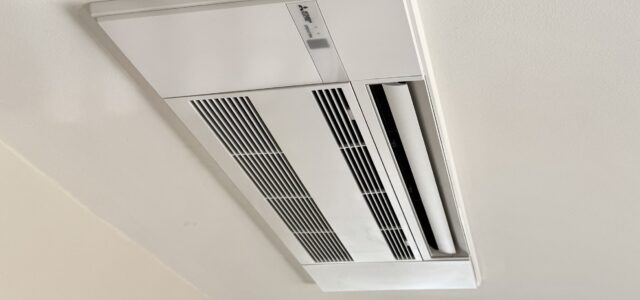
A cassette sits flush in the ceiling, so nothing hangs on the wall. One-way cassettes fit smaller rooms; four-way cassettes push air in every direction for larger open rooms. They need space above the ceiling, from a joist bay or an attic.
Best for: rooms where windows, art or cabinets take the walls, and owners who don't want to see heads. Our Cupertino five-zone job is all cassettes.
Concealed ducted unit
A slim air handler hidden above a hallway ceiling, in a closet or in the attic, with short ducts to a grille in each room. One unit can serve two or three small rooms that share one setting, so it works best for rooms with similar sun and use, like two kids' bedrooms.
Best for: clusters of small rooms where separate heads would each be oversized, and anyone who would rather see grilles than heads.
Where the outdoor unit goes, and how the lines get there
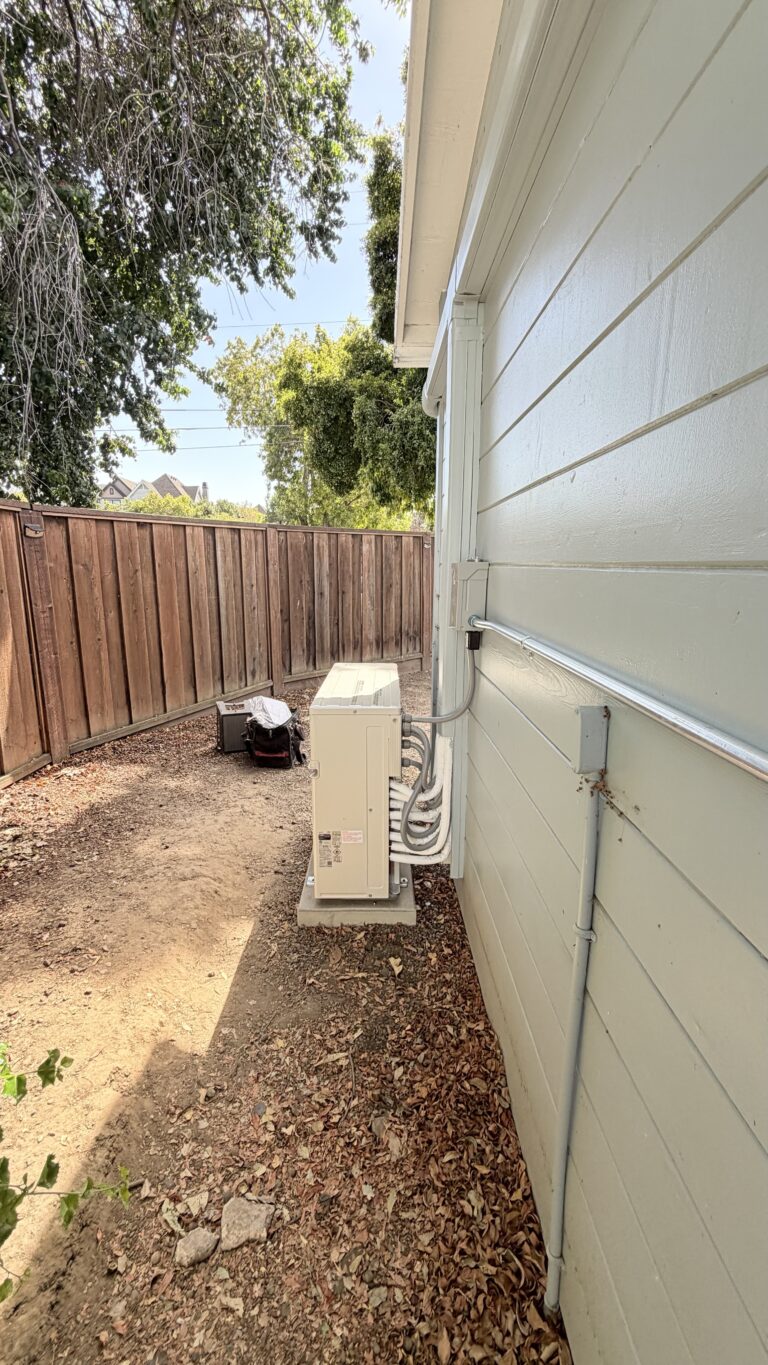
Each head needs refrigerant lines, a communication cable and a drain, run back to the outdoor unit (on some larger systems, to a branch box first). A multi-zone job is mostly a routing job, and the route decides where the outdoor unit can go.
On Bay Area lots, the outdoor unit ends up in one of a few places:
Side yard
A level pad along the side of the house, as on the San Mateo four-zone job. Lines run under the eaves to each head.
Back deck or terrace
A raised pad or stand that keeps the unit level and lets water drain away, like the San Francisco terrace and Redwood City deck jobs.
Flat roof or roof deck
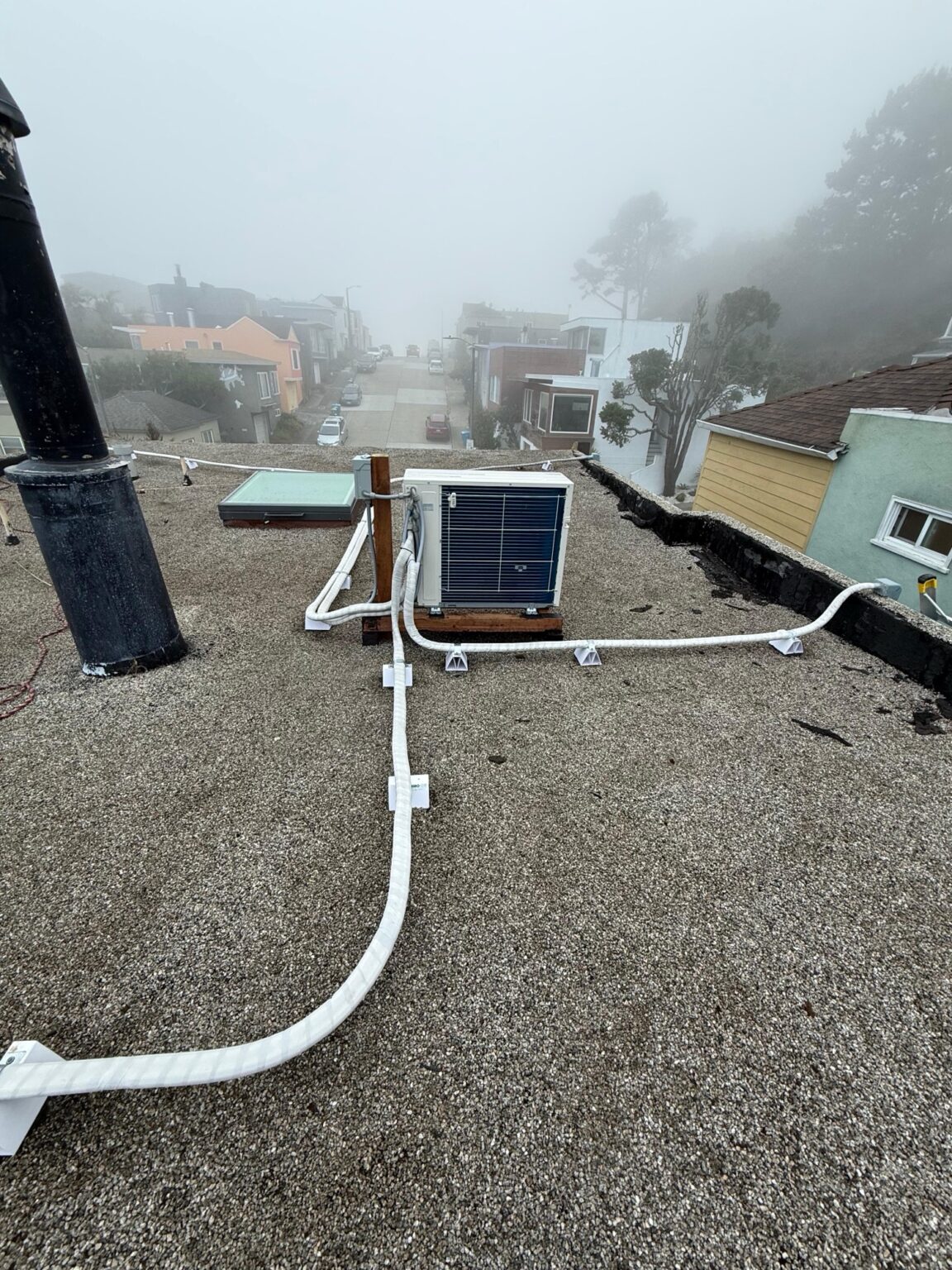
Common in San Francisco, where there's often no side yard. A raised stand over the gravel or membrane, against a parapet where possible.
Pitched roof
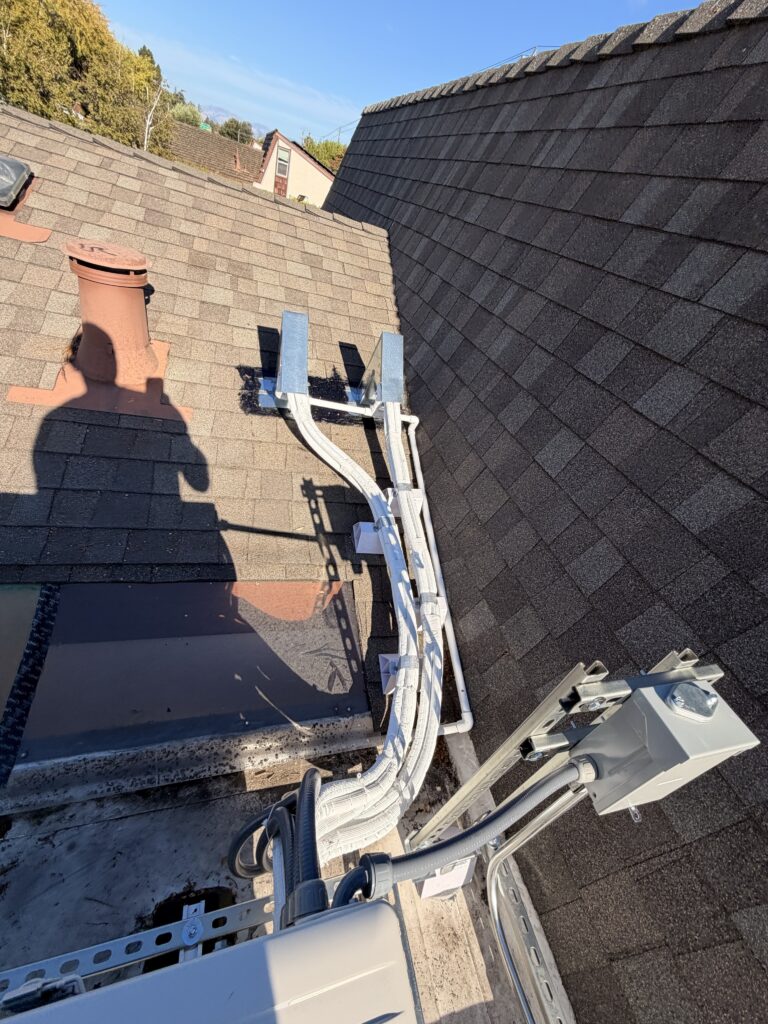
Possible, as on the Cupertino job, with the unit on a rack and the lines on stand-offs so nothing lies on the shingles.
Outside, the lines travel in a paintable cover that follows corners and trim, and enter through a sealed wall box. In a San Francisco building they often come down from the roof through a utility room or closet. On houses with a crawlspace, they run under the floor and come up behind each head. When a head is on an inside wall, a small condensate pump moves the water out.
The outdoor unit is the part you hear. We keep it away from bedroom windows, yours and the neighbors', where the lot allows, and set it level on a pad or stand so it doesn't vibrate. It also needs a dedicated circuit and a disconnect within sight of the unit, so the electrical panel is part of the plan from the start.
Real 1 to 6 zone mini-split installs from our jobs
These are Mitsubishi systems our crews installed between 2024 and 2026. We name the model where it's from the current product line. On the older jobs the equipment has since been replaced in Mitsubishi's lineup by newer models, so we describe it by size instead.
1 zone
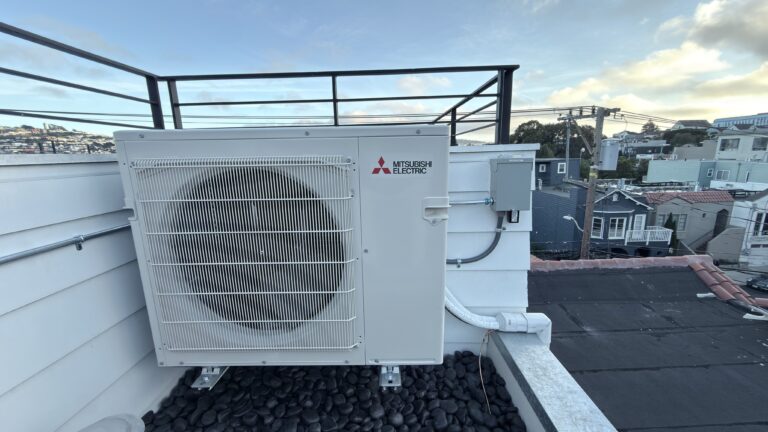
One room under a San Francisco roof deck
One wall head, with the condenser on a raised stand over the roof ballast against the parapet. The lines go up through the ceiling, where we opened and patched one section of drywall. About nine hours on site, October 2026.
2 zones
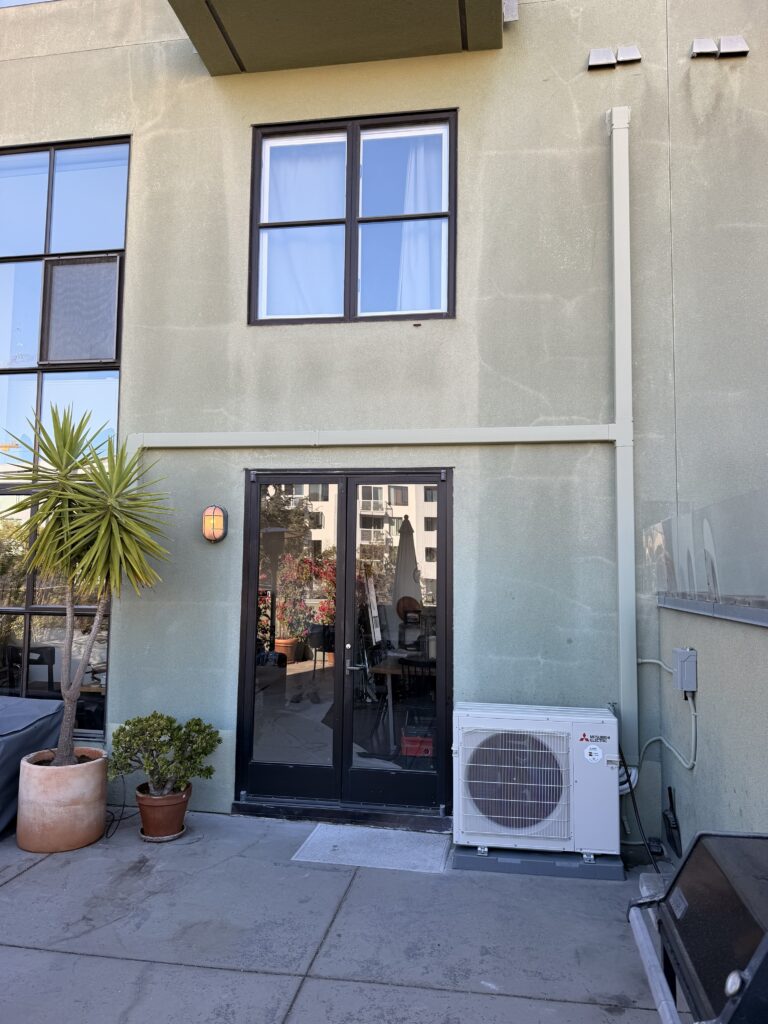
Loft with a terrace, San Francisco
The two rooms that get used most: the bedroom upstairs and the main living space. The bedroom head sits above the curtain rod and blows across the room, not onto the bed. The outdoor unit is in a terrace corner, with the line set in a cover that follows the facade. November 2026.
2 zones
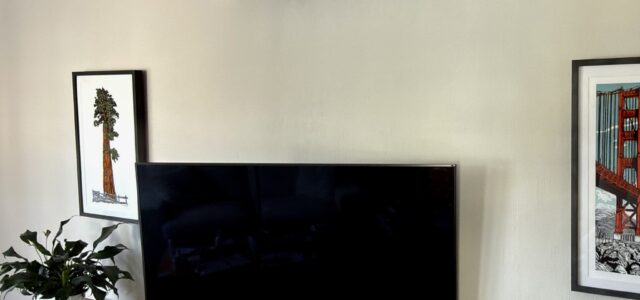
A living room on a two-zone unit, San Mateo
An MSZ-FX09NL wall head above the TV on an MXZ-2D20NL two-zone outdoor unit. The 9,000 BTU/h head is one size up from the smallest in that line. February 2026.

3 zones
Living room, bedroom and office, Redwood City
Three indoor units on one Mitsubishi MXZ-4C36NA outdoor unit set on the deck. Each room runs on its own setting, so the office can stay off when nobody is working and the bedroom can run cooler at night. August 2024.
3-zone outdoor unit
Gas furnace to ductless, Belmont
An older gas furnace came out, and an MXZ-3D24NL three-zone outdoor unit went in with several MSZ-FX06NL wall heads, the smallest size in that line. We tested every zone in heating and cooling before leaving. June 2026.
3 zones
Wall heads and a floor console, Palo Alto
Three zones on one outdoor unit, mixing wall-mounted heads with a floor console that sits low under a window. Floor units suit rooms with low walls or large windows. May 2024.
4 zones
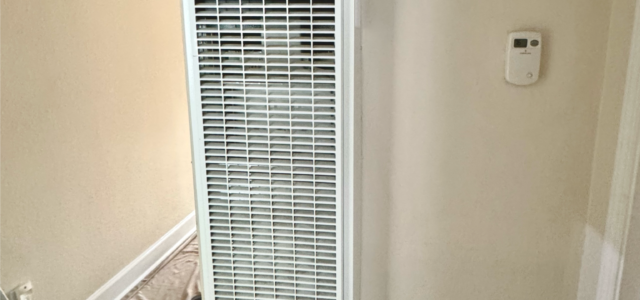
Wall heaters out, four heads in, Milpitas
Old wall heaters warmed only the spot in front of them. We removed them and put a wall head in each of four rooms on one outdoor unit, so the bedrooms can run cooler at night and the house now has cooling too. December 2025.
4 zones
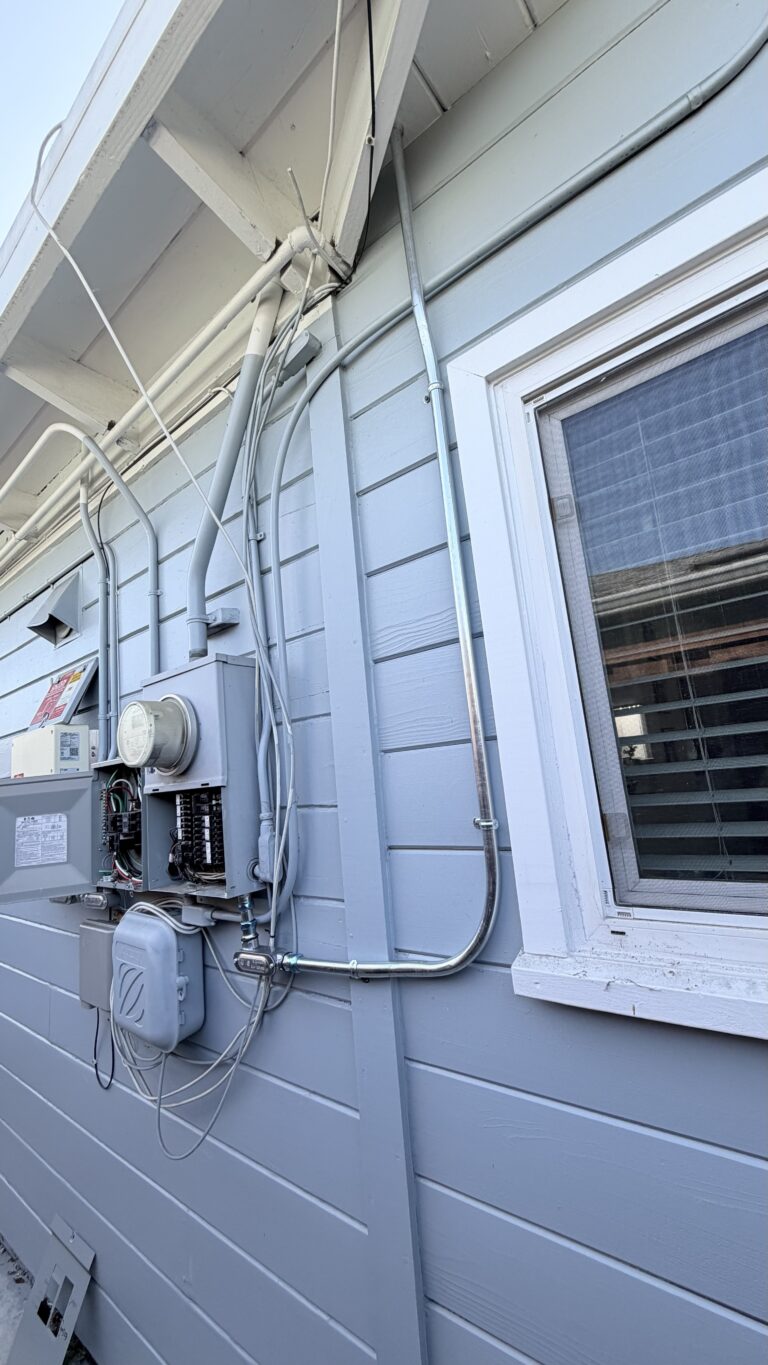
Four wall heads and new electrical, San Mateo
One condenser on a pad along the side of the house feeds four wall heads, with the line sets run tight under the eaves. New conduit to the panel, about nine hours on site. The homeowner qualified for a Peninsula Clean Energy rebate (now WestLight Energy), and we handled the paperwork. October 2026.

4 zones
Cassettes and wall heads, San Mateo
Ceiling cassettes in some rooms and wall heads in others, all on one Mitsubishi outdoor heat pump. Mixing the two let each room get the unit that suited its layout and ceiling. June 2024.
4 zones
Two roof surfaces, Cupertino
The outdoor unit sits on a rooftop rack. The line sets cross a flat roof, then run along the ridge of a pitched section on stand-offs so nothing lies on the shingles. October 2026.
5 zones
Five ceiling cassettes, Cupertino
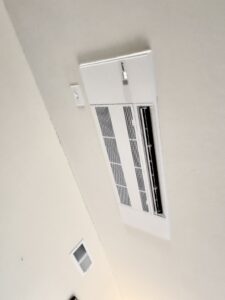
Five zones on ceiling cassettes, fed by one larger Mitsubishi outdoor unit in the side yard. Nothing hangs on the walls. June 2024.

6 zones
Six wall heads, San Francisco
The biggest ductless layout on this list: six wall-mounted heads on one larger Mitsubishi multi-zone outdoor unit, with no ductwork. March 2024.
Typical zone layouts by home
Built only from the jobs above, so it shows what real homes ended up with, not a rule.
| Home | Zone layout | Where we did it |
|---|---|---|
| One problem room (top-floor bedroom, office) | 1 zone, single-zone system | San Francisco, roof deck condenser |
| Loft or flat where two rooms get used | 2 zones: bedroom + living space | San Francisco, terrace |
| Living room as the main zone | Two-zone outdoor unit, 9,000 BTU/h head in the living room | San Mateo |
| Living room, bedroom, home office | 3 zones, one indoor unit each | Redwood City |
| Furnace house, small rooms | 3-zone outdoor unit, smallest wall heads | Belmont |
| Rooms with big windows or low walls | 3 zones, wall heads + a floor console | Palo Alto |
| House heated by wall heaters | 4 zones, one head per room | Milpitas |
| Rooms with different layouts and ceilings | 4 zones, cassettes + wall heads | San Mateo |
| Whole house, nothing on the walls | 5 zones, all ceiling cassettes | Cupertino |
| Large home with no ducts | 6 zones on a larger outdoor unit | San Francisco |
Mini-splits in San Francisco homes
Many San Francisco Victorians, Edwardians, flats and row houses were never built with ducts, and adding them means opening ceilings and walls. That's why so much of our ductless work is in the city, and a few things come up on almost every job there:
Tall ceilings and bay windows. Front rooms like these carry more load than their floor area suggests.
No side yard. The outdoor unit goes on the roof, a roof deck or a back terrace, and the line route through the building is the main planning question. In a flat, we also check what the building allows on shared roofs and facades before we design.
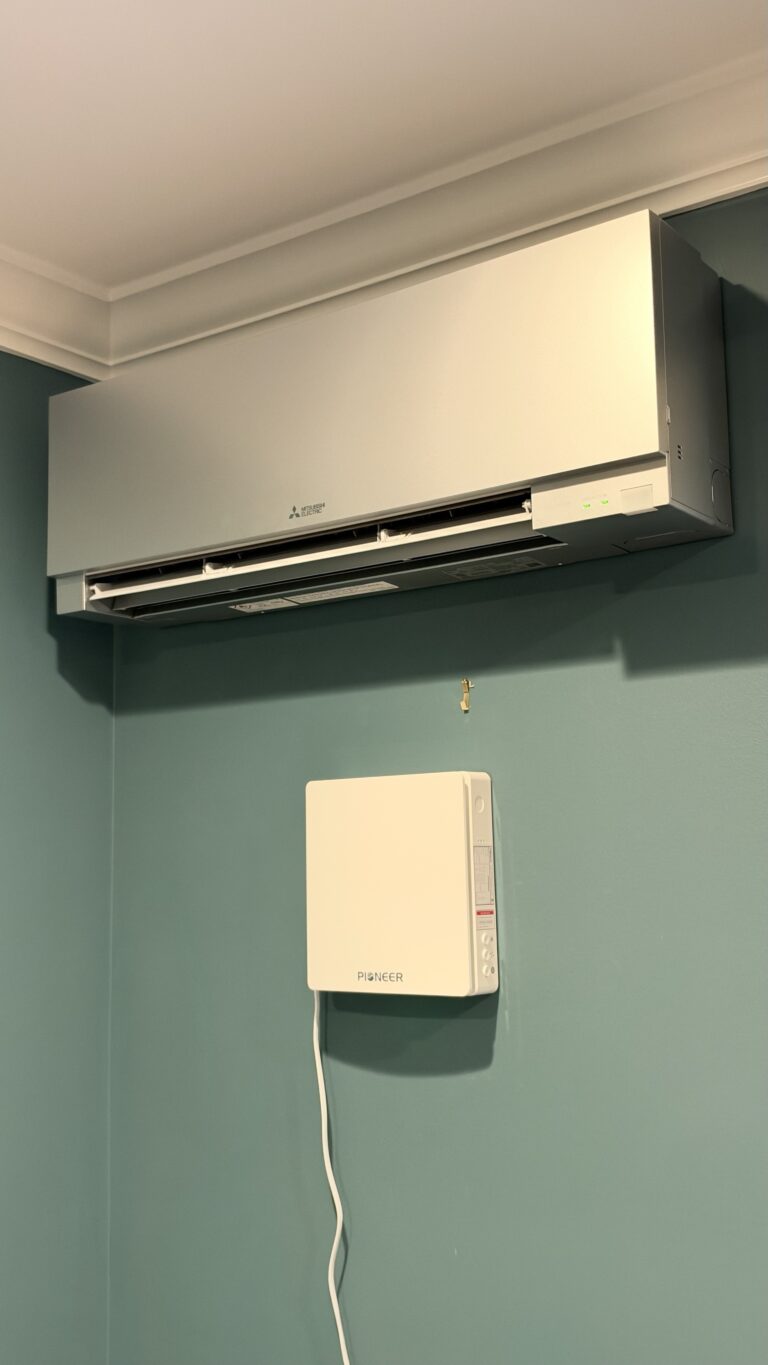
Fresh air. Heads only recirculate room air. In a home where the windows stay shut through foggy months, a small wall-mounted ERV next to one of the heads brings in fresh air while keeping most of the heat. See ERV and HRV ventilation.
Rebates. A system that replaces a gas furnace or gas wall heaters can qualify for local rebates. Rules differ by provider and some need approval before installation, so we check your address first. More in our Bay Area heat pump rebate guide.
What happens at a mini-split estimate
Nur HVAC has been a Mitsubishi Electric Diamond Elite contractor since 2025, and nearly all of our ductless work is Mitsubishi. Qualifying Mitsubishi installs are eligible for up to 12 years of coverage on parts and compressor, and we register the equipment for you.
- 01
We walk the house with you
Room by room: which rooms you use and when, which doors stay closed, where the sun hits. Then the load calculation for each room.
- 02
We plan where everything goes
Head type and spot in each room, the outdoor unit location, every line route and wall penetration, the drain, and what the electrical panel can carry.
- 03
You get it in writing
A written scope and schedule, with options priced side by side when there's a real choice, like one multi-zone unit vs separate systems. Rebate rules checked for your address.
On install day the crew sets the outdoor unit, mounts the heads, connects the line sets (brazing under nitrogen where a joint is needed), pressure-tests and vacuums them, and checks heating and cooling at every head before leaving. The city inspection follows. If you're still deciding between a ductless system and a ducted heat pump, our heat pump installation guide covers the ducted side.
Mini-split zones: questions
How many mini-split heads do I need?
One for each room or open area you want to control on its own. Bedrooms and closed-off rooms get their own head, while an open kitchen, dining and living area can often share one. The final count and the size of each head come from a room-by-room load calculation.
Can one mini-split heat a whole house?
One head heats one room or one open area well. Air doesn't travel far through doorways and hallways, so closed bedrooms stay colder. For a whole home we use several heads on a multi-zone outdoor unit, or a ducted heat pump if the house has usable ducts.
Can one zone heat while another cools?
Not on a standard multi-zone system. All the heads run in the same mode at once, heating or cooling, but each room holds its own temperature. In the Bay Area the whole house almost always wants the same mode.
Can I add a zone later?
Only if the outdoor unit has a free connection and enough capacity for the new head. If you expect to finish a basement or add a room, tell us at the estimate so we can plan the outdoor unit and line route around it.
Do I need a permit for a mini-split?
Yes. In the Bay Area cities we work in, from San Francisco down the Peninsula to the South Bay, a mini-split install is done under a city permit and inspected. We pull the permit as part of the job.
How long does a multi-zone install take?
On our recent jobs, one-zone, two-zone and four-zone installs each took one long day on site, about nine hours or less. More heads and long roof or crawlspace routes can push a job past one day. You get the schedule in writing before we start.
Related guides: Heat pump installation in the Bay Area · Furnace vs heat pump vs dual fuel · Heat pump rebates · Furnace not heating
Related: Ductless mini-split installation · Multi-zone heat pumps · Ductless repair · San Francisco · San Mateo · Belmont · Cupertino