
Gas Furnace vs Heat Pump vs Dual Fuel: What to Choose in the Bay Area
In most Bay Area homes with ducts and an aging furnace and AC, a heat pump is the better long-term choice: winters are mild, it cools too, and rebates favor it. Keep or replace a gas furnace if it's the only thing broken. Dual fuel makes sense when the furnace is still young but you need cooling.
By the Nur HVAC team · Updated November 9, 2026 · 14 min read
The short answer
Heat pump
Best when the furnace and AC are both old, or you want cooling and off gas in one move. Mild winters suit it, and local rebates are written for it.
Gas furnace
Best when only the furnace failed, the AC is young (or you don't want AC), and you need heat back this week. Under the current rule it can run for its whole life, even after 2029.
Dual fuel
Best when the furnace is young and the AC died. A heat pump takes over cooling and most heating, and the furnace stays as backup.
The right answer depends on what's broken today, how old everything else is, and whether the house has ducts.
Which fits my home?
These are the five situations we see most at estimates around San Mateo County, San Francisco and the South Bay. Each one shows what we'd usually suggest and the catch to watch for.
Which one sounds like your home?
Furnace died, AC is fine
It's December, the furnace quit for good, and the air conditioner outside is only a few years old.
What we'd usually suggest
A new furnace, sized to work with the AC you have
- Your AC still has years left, and a heat pump would replace it before it's worn out.
- A furnace swap is the quickest way back to heat in the middle of winter.
- When the AC fails later, a heat pump can take its place and the furnace becomes the backup. That's a dual fuel system, built in two steps.
Watch out for
Make sure the new furnace's blower and coil space will suit a heat pump later. Under the rule as written today, a furnace installed before the 2029 deadline can be serviced for its whole life.
Furnace replacement →AC died, furnace is 8 years old
The outdoor AC failed in a heat wave. The furnace in the attic is about 8 years old and runs fine.
What we'd usually suggest
Dual fuel: replace the AC with a heat pump and keep the furnace
- A heat pump gives you cooling plus efficient heat. A plain AC gives you cooling only.
- The furnace you already paid for stays as the backup for the coldest mornings.
- We built the same kind of system on a San Francisco roof deck job where the house had no cooling at all: a 4-ton Carrier heat pump tied into an attic furnace in good shape.
Watch out for
Some rebates pay only when a heat pump replaces gas heat, so keeping the furnace can cost you the rebate. Check your program before you decide.
Dual fuel installation →Everything is 20+ years old
The furnace and AC both went in around the same year, back in the 2000s, and both are getting loud or unreliable.
What we'd usually suggest
A ducted heat pump replacing both
- One outdoor unit and one air handler replace two aging machines, so you maintain one system instead of two.
- Bay Area winters are mild enough that most homes heat well on a heat pump alone.
- Local rebates are written for exactly this swap: gas heat out, heat pump in.
Watch out for
Old ducts. A heat pump on leaky or crushed ducts won't deliver what it's rated for and will struggle to pass the HERS test. We check them before quoting.
Heat pump installation →No ducts in the house
Wall heaters, a floor furnace or an old boiler, and no ducts to connect a central system to.
What we'd usually suggest
A ductless heat pump (mini-split)
- Indoor units go in the rooms you use, linked to an outdoor heat pump by a thin line set.
- A central furnace and dual fuel both need ducts, so they'd mean building a duct system from scratch.
Watch out for
How many indoor units you really need. More zones isn't always better on mild days.
How many mini-split zones? →Nothing broken, planning ahead
Everything still works, but the furnace is 15 years old and you'd rather not replace it in a hurry.
What we'd usually suggest
Get the numbers now, swap on your schedule
- Read last winter's PG&E bills to see how many therms go to heating (the example below shows how).
- Check your panel and where an outdoor unit could sit, so a heat pump is ready to go when you want it.
- Some rebates need approval before installation, which is easy to miss in an emergency swap.
Watch out for
If your gas water heater is aging too, its zero-NOx rule starts January 1, 2028, so plan both together.
Bay Area heat pump rebates →Gas furnace vs heat pump vs dual fuel, side by side
All three heat through the same ducts. Here's where they differ.
| Factor | Gas furnace | Heat pump | Dual fuel |
|---|---|---|---|
| Heating feel | Hot air, roughly 120 to 140°F at the vents. Warms a cold house fast. | Warm air, about 90 to 100°F, for longer stretches. Even, steady heat. | Heat pump feel most of the time, furnace heat on the coldest mornings. |
| Cooling | None. Needs a separate AC. | Built in. The same unit runs as the AC in summer. | Built in, from the heat pump. |
| Running cost | Set by the gas rate and the furnace's efficiency (AFUE). | Set by your electric rate plan and how efficiently it runs in your weather. | The thermostat can switch to whichever is cheaper at that temperature. |
| Equipment hours | Runs only in winter. | Runs in winter and summer, so the compressor logs more hours. | Two machines to maintain, but the winter hours are split between them. |
| 2029 rule | New gas furnaces scheduled to require zero-NOx. Existing ones keep running. | Not affected. This is the zero-NOx option. | A new furnace installed after the deadline would need to meet the zero-NOx standard. Check first. |
| Rebates | None we know of locally for a gas furnace. | Local energy provider and city rebates, mainly when it replaces gas heat. | Depends on the program. Keeping the furnace can affect eligibility. |
| Noise | Inducer and burners indoors. Nothing outside. | Outdoor unit runs in winter too. Inverter models slow down and run quietly most of the time. | Same outdoor unit as a heat pump. |
| Space | Furnace plus a flue or PVC vent route. | Air handler where the furnace stood, plus an outdoor spot. | Furnace, coil on top of it, and an outdoor spot. |
| Electrical | A small circuit for the blower and controls. | A 240V circuit for the outdoor unit. Older panels may need work. | A 240V circuit, but the furnace covers backup heat. |
Gas furnace vs heat pump running cost at PG&E rates
The comparison comes down to two prices and two efficiencies. PG&E residential prices as of March 2026, the latest we've checked against PG&E's published sheets:
- Gas: $2.792 per therm (non-CARE, effective March 1, 2026; $2.211 on CARE). PG&E gas rate advisory
- Electricity on E-TOU-C in winter (October to May): about 29¢ per kWh off-peak within your baseline allowance and 37¢ above it. Peak hours, 4 to 9 p.m., run 32¢ and 40¢.
- Electricity on tiered E-1: about 33¢ per kWh in Tier 1 and 41¢ in Tier 2.
- PG&E's Electric Home rate (E-ELEC) lists winter prices between about 28¢ and 32¢ depending on the hour. PG&E electric rate pricing
Rates change during the year, so check your own bill.
A worked example
Assumptions. A house whose old 80% furnace (80 AFUE) burns 300 therms a year for heating, which delivers 240 therms of heat to the house. One therm of heat equals 29.3 kWh. We assume the heat pump runs at a COP of 2.5 to 3.5 on Bay Area winter days in the 30s to 50s, meaning it delivers 2.5 to 3.5 units of heat for each unit of electricity. Many inverter heat pumps are rated higher at 47°F; we use a lower range because real installs lose some of that to ducts, defrost and colder mornings. Your actual COP depends on the equipment and the house.
| Same 240 therms of heat from | Uses | Cost per year |
|---|---|---|
| 80% gas furnace | 300 therms | about $838 |
| 96% gas furnace | 250 therms | about $698 |
| Heat pump, COP 3, 29¢ (E-TOU-C, within baseline) | 2,344 kWh | about $680 |
| Heat pump, COP 3, 28¢ to 32¢ (E-ELEC winter) | 2,344 kWh | about $656 to $750 |
| Heat pump, COP 3, 33¢ (E-1 Tier 1) | 2,344 kWh | about $774 |
| Heat pump, COP 3, 37¢ (E-TOU-C, above baseline) | 2,344 kWh | about $867 |
| Heat pump, COP 2.5 to 3.5, 29¢ | 2,009 to 2,813 kWh | about $583 to $816 |
| Heat pump, COP 2.5 to 3.5, 37¢ | 2,009 to 2,813 kWh | about $743 to $1,041 |
What this shows. Against an old 80% furnace, a heat pump comes out about even or ahead on most plans. Against a new 96% furnace, it's close, and the rate plan decides it: a heat pump on a cheap winter rate edges ahead, one paying above-baseline prices costs more. Heating adds kWh in winter, so part of it often lands above baseline. Ask PG&E to compare E-ELEC with your current plan using your own usage.
The heat pump also replaces your AC, which this example leaves out. If you'd otherwise buy and run a separate air conditioner, that changes the math in the heat pump's favor.
What dual fuel actually does
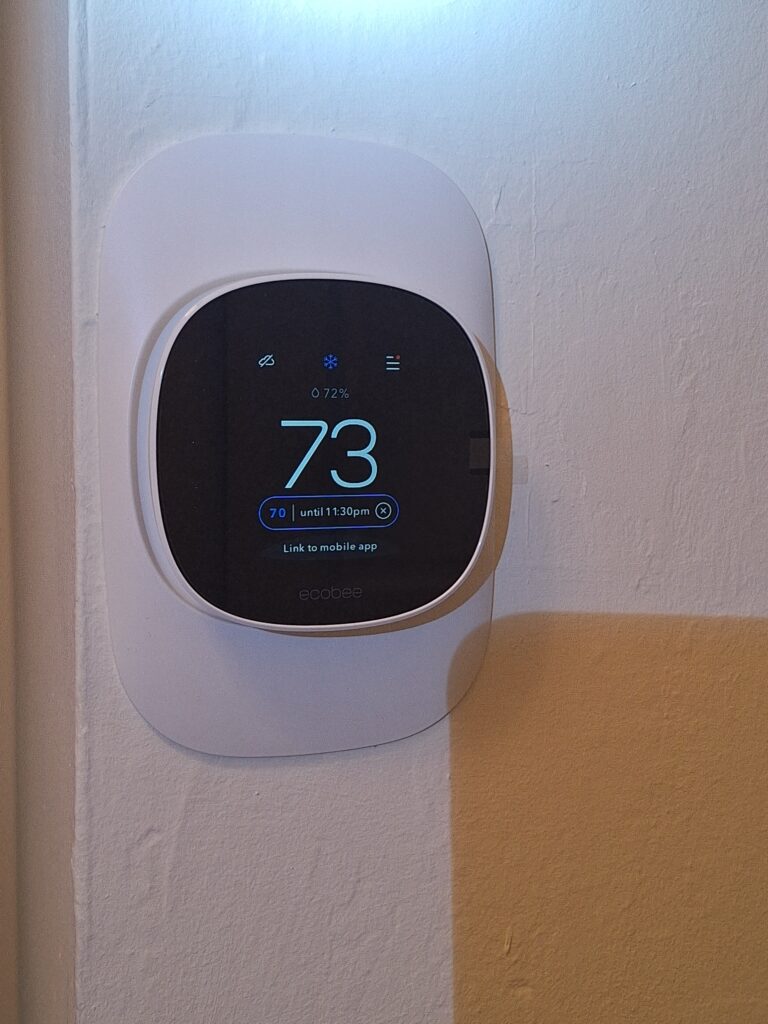
A dual fuel system, also called a hybrid heat pump, is a heat pump and a gas furnace sharing one set of ducts. The heat pump's outdoor unit connects to a coil that sits on the furnace, and both use the furnace blower. In summer the heat pump runs as your air conditioner. In winter a thermostat that can manage two heat sources decides which one runs.
Most setups decide by outdoor temperature, read by a sensor outside. Above the switchover point, the heat pump heats. Below it, the heat pump stops and the furnace takes over. They don't run at the same time for heat.
Picking the switchover temperature
There are two reasons to switch, and they give you two different temperatures:
The cost point
A heat pump gets less efficient as it gets colder outside. At some temperature, its heat costs more than furnace heat. Using the March 2026 rates above, the heat pump stays cheaper as long as its COP is above about 2.4 (29¢ power vs an 80% furnace) to about 3.7 (37¢ power vs a 96% furnace).
The comfort point
Below some temperature, the heat pump can't keep up with how fast the house loses heat. Leaky older homes and houses up in the hills hit that point sooner than a tight newer home in the flats.
The higher of the two is your switchover point. A new high-efficiency furnace plus above-baseline electricity pushes the cost point up, so the furnace runs more. We set it with you from your rates and how your house behaves, and you can change it later on the thermostat.
One practical upside: in a dual fuel system the furnace is the backup heat, so the heat pump doesn't need electric resistance strips. That keeps the electrical load down, which matters in older homes with small panels. See dual fuel installation.
The 2029 gas furnace rule (and what's still unsettled)
The Bay Area Air Quality Management District's Rule 9-4 is currently scheduled to require new gas furnaces sold or installed in the Bay Area to be zero-NOx starting in 2029. Today the practical way to meet that standard is an electric heat pump.
- Your existing furnace can keep running. You can keep using and repairing the one you have, and a furnace installed before the deadline can be serviced for its full life.
- The rule is under review. The Air District is drafting amendments, with staff recommendations due to its Board on December 2, 2026. The date or details could change, so check before you base a decision on it.
- Dual fuel after 2029 is the open question. The rule covers new gas furnaces. A dual fuel system installed after the deadline would need a compliant furnace. Adding a heat pump to a furnace you already own is a different situation. Ask us or the Air District when you're planning it.
- Water heaters come first. Rule 9-6 requires zero-NOx water heaters starting January 1, 2028 (moved from 2027 on November 4, 2026), with exemptions for some low-income owners and homes with serious electrical or space limits.
Read the current status on the Air District's building appliances page.
How the Bay Area's mild climate changes the math
Few truly cold hours
Most winter hours on the Peninsula and in the South Bay sit well above freezing. That's where an inverter heat pump does its best work. A dual fuel system set for comfort alone would rarely hand off to gas; one set for cost hands off more often.
Cooling is now part of it
Many older Bay Area homes never had AC. Heat waves and smoke days changed that, and a heat pump adds cooling without a second machine.
Foggy mornings mean defrost
Damp air in the 30s and low 40s puts frost on the outdoor coil. The heat pump reverses for a few minutes to clear it. It's normal, and it's one reason we use a range below the rated COP.
The flip side: in a mild climate a furnace doesn't burn much gas, so the dollar savings from switching are smaller here than in colder places. That's why we look at your bills instead of promising a number.
Rebates: where the choice really shifts
Bay Area rebates, as of November 2026, come mostly from local electricity providers and cities, and the main heat pump rebates pay when it replaces gas heating. A few examples from official program pages:
- Silicon Valley Clean Energy: $2,000 for a heat pump replacing a gas furnace, more for income-qualified homes. Reserve before you install.
- City of Palo Alto Utilities: up to $2,500 for a heat pump replacing gas heat, more for income-eligible homes.
- WestLight Energy (formerly Peninsula Clean Energy, San Mateo County) and San José Clean Energy run their own programs. Check the current amounts on their pages.
What's gone: the federal 25C tax credit ended December 31, 2025, and the statewide TECH Clean California and HEEHRA single-family money is fully reserved or waitlisted.
For dual fuel, read the fine print. Rebates written for replacing gas heat may not pay for a system that keeps the furnace, and each program words this differently. Some also need approval before installation. The full list, with what to do in which order, is in our Bay Area heat pump rebates guide.
Recent dual fuel and heat pump installs
Three recent jobs, one of each kind of decision.
Kept the furnace, added a heat pump · San Francisco
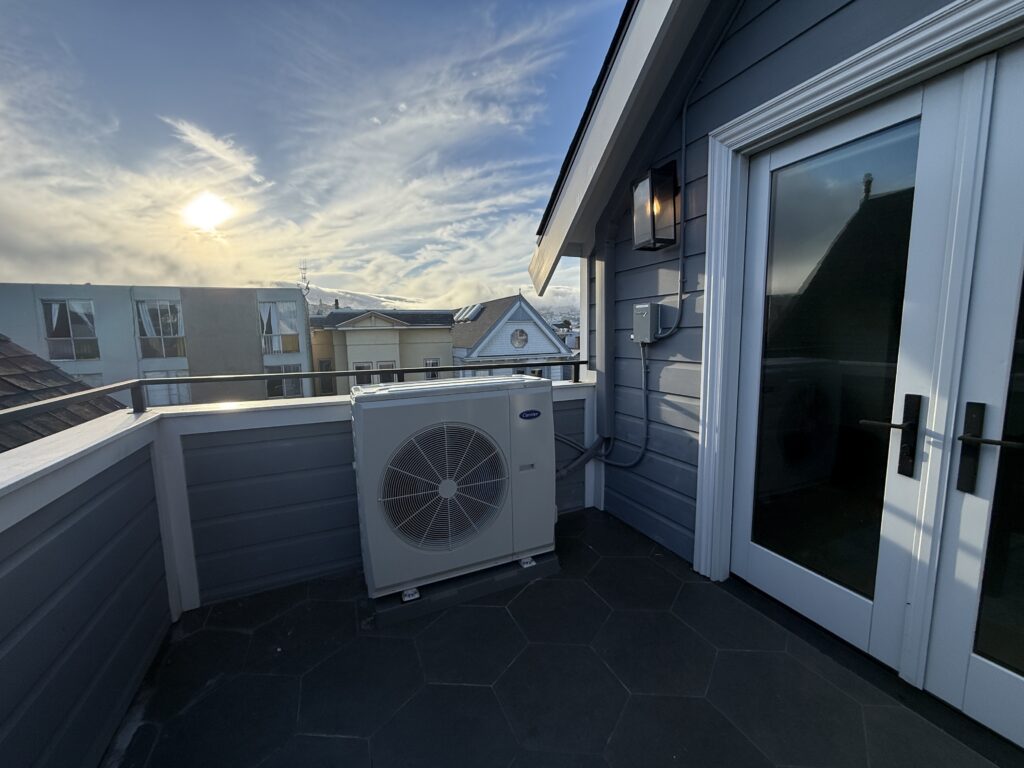
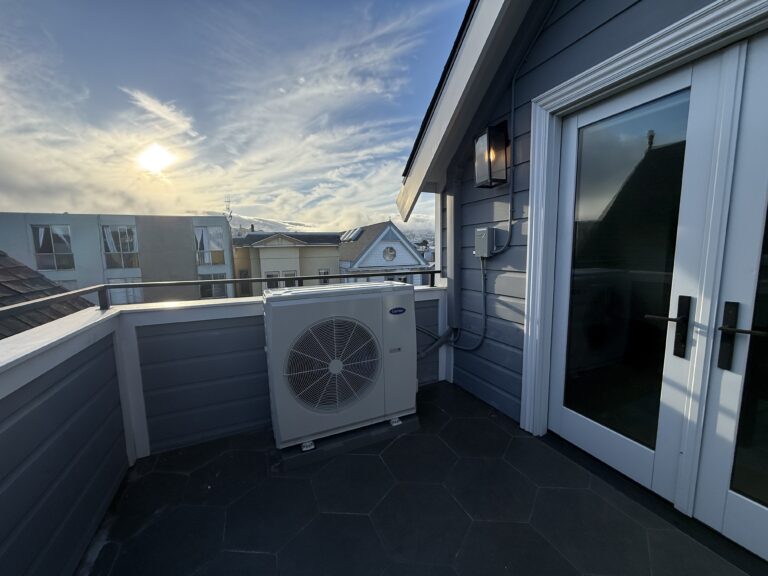
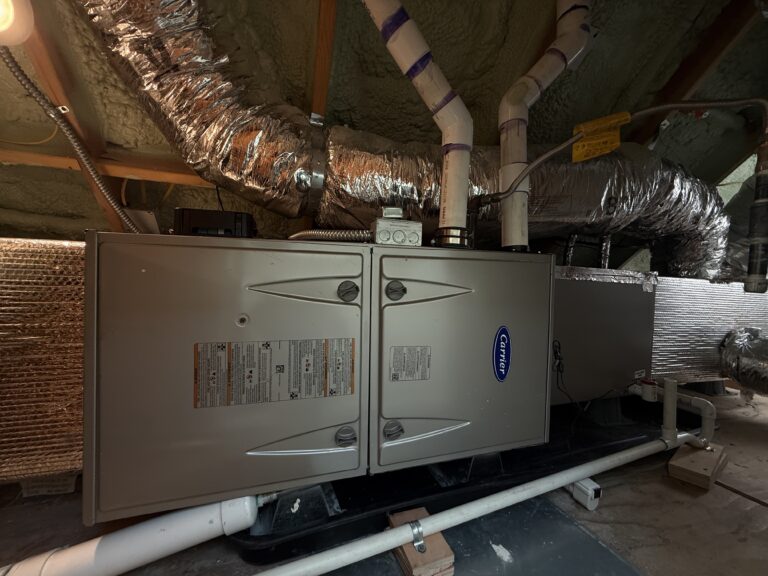
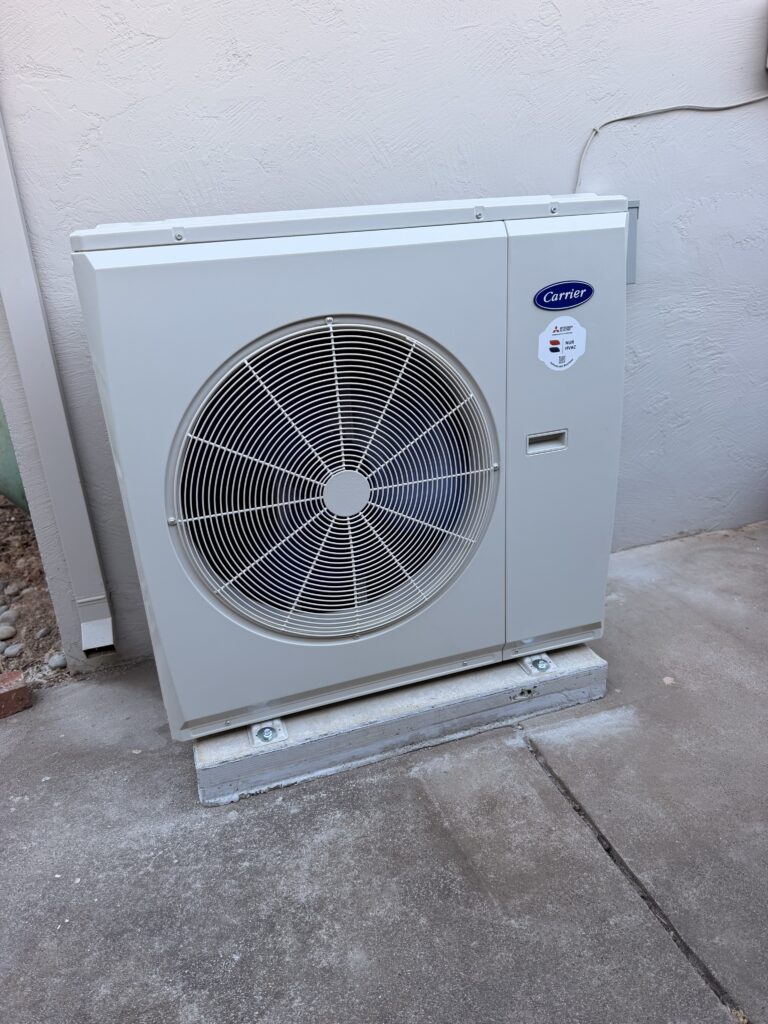
The homeowners had a Carrier furnace in a spray-foam insulated attic that was still in good shape, and no cooling. We set a 4-ton Carrier heat pump in the corner of the upper roof deck, since there was no side yard to spare, and tied it into the furnace so the two share the ductwork. The heat pump now does the cooling and most of the heating; the furnace is the second heat source. About nine hours on site, under a city permit.
New furnace and heat pump together · San Mateo
Here the old furnace, coil and outdoor AC had all reached the end. We replaced them with a full dual fuel system, with gas held back for cold snaps: a Carrier 59TP6C060V17 two-stage 96% AFUE furnace with a variable-speed blower, a Carrier 37MURA36AA3 3-ton inverter heat pump on R-454B, and a matching coil. A smart thermostat runs both sides and handles the switchover.
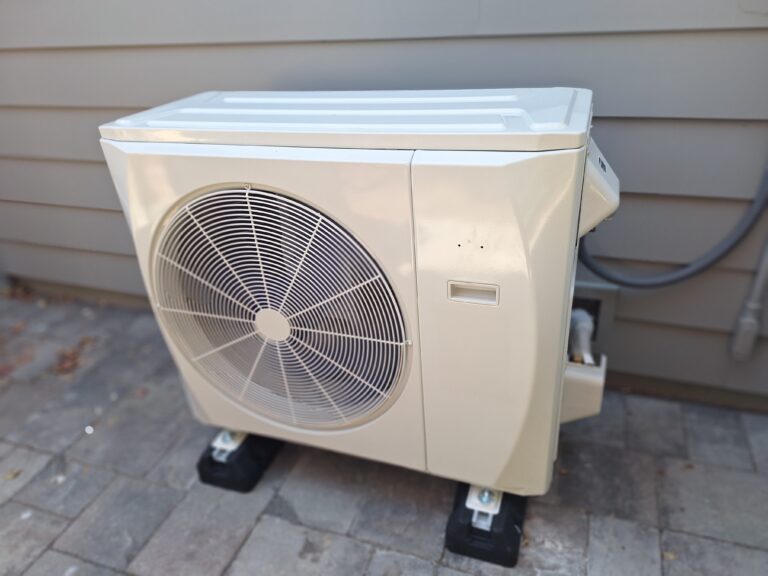
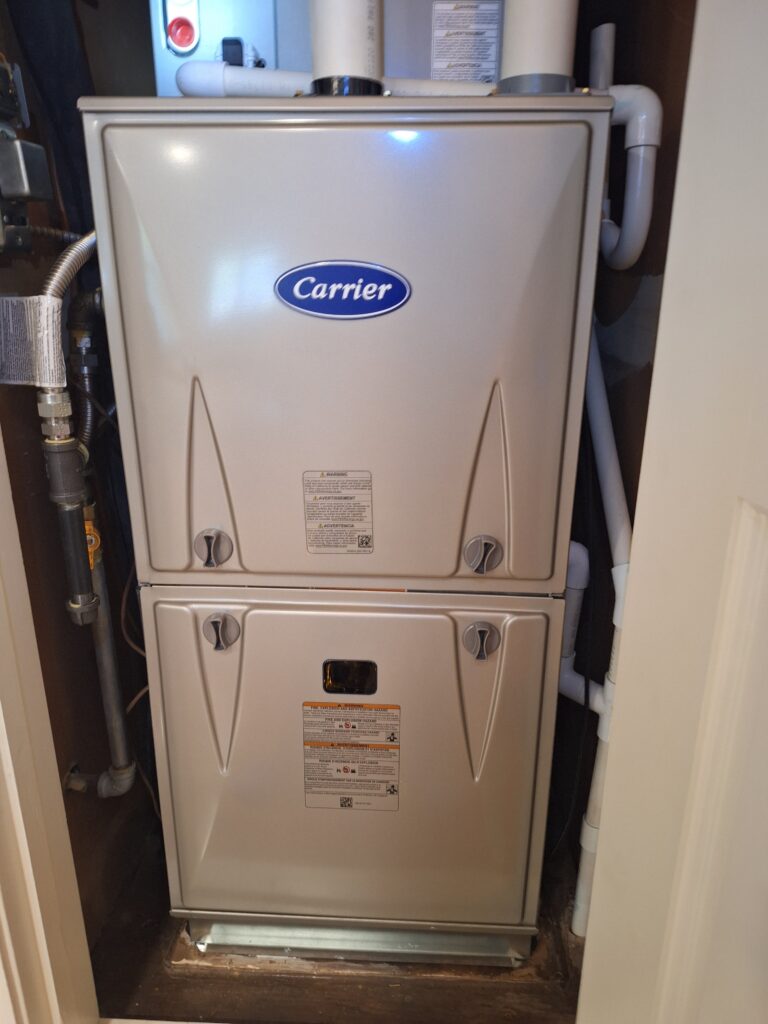
Furnace out, heat pump in · San Mateo
An old Carrier WeatherMaker furnace was squeezed between a wall and the water heater. We measured the spot at the estimate, then replaced it with a 3-ton Mitsubishi heat pump outside and a matching Mitsubishi air handler on the same platform, connected to the existing ducts. One system now heats and cools the house. We're a Mitsubishi Diamond Elite contractor, so qualifying systems are eligible for up to 12 years of parts and compressor coverage.
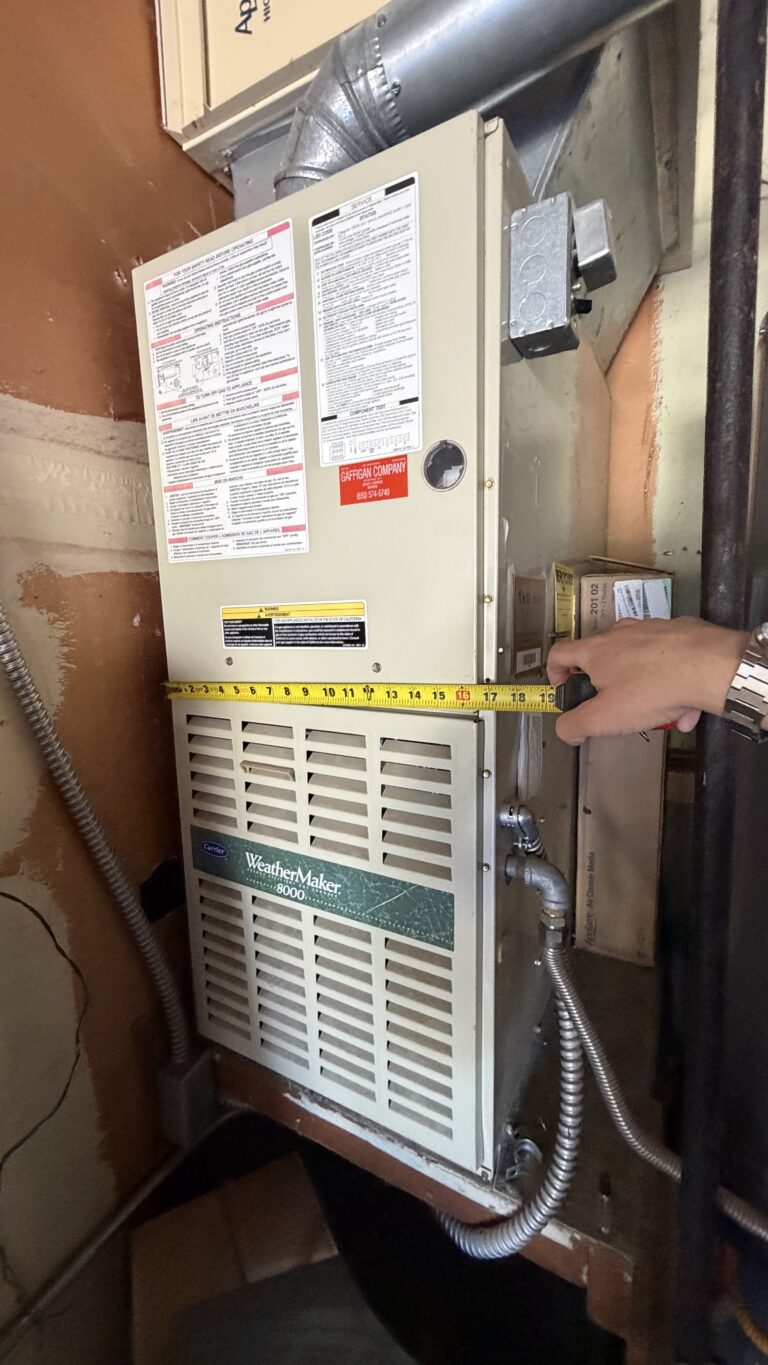
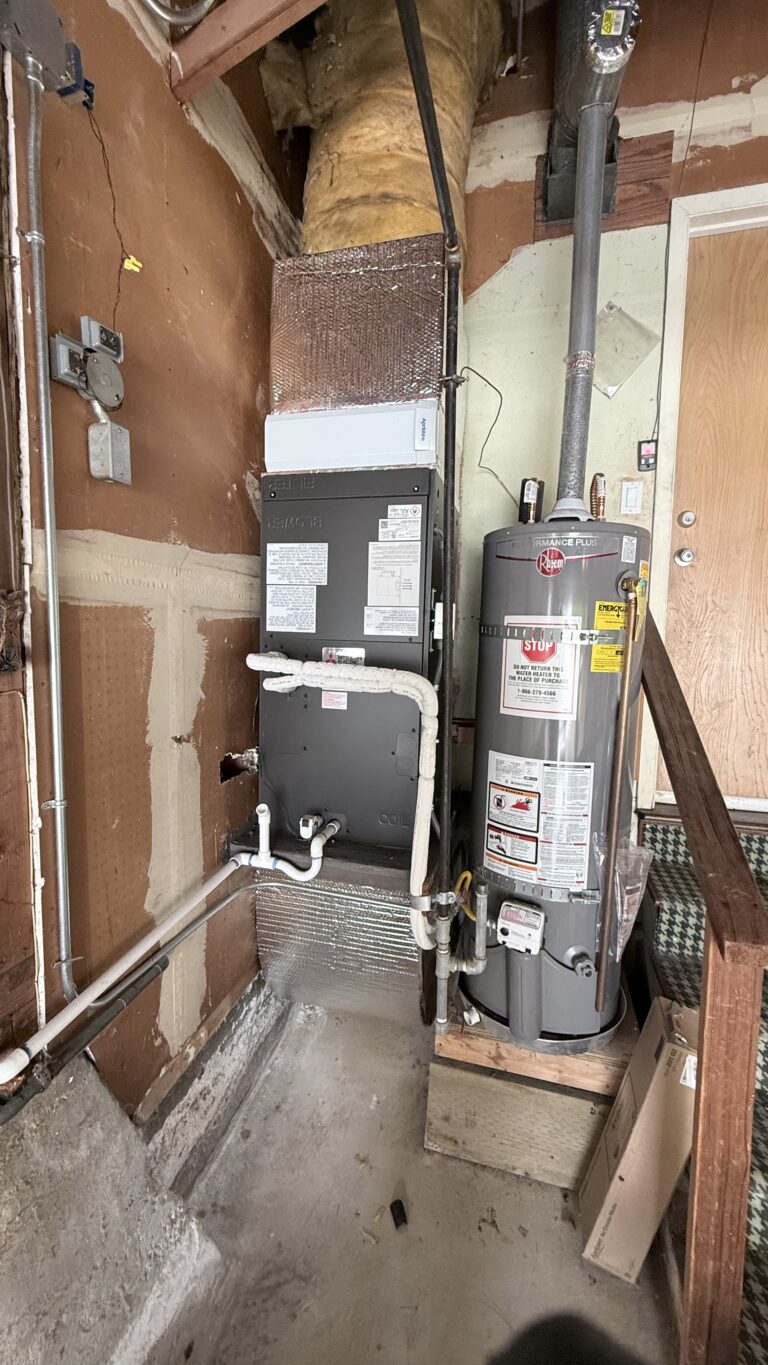
For homes without ducts, the answer is a ductless system. In Belmont we moved a homeowner off an older gas furnace to a Mitsubishi MXZ-3D24NL multi-zone heat pump with MSZ-FX06NL wall units, so each room runs on its own. More on that in ductless mini-split installation and how many zones you need.

What an estimate looks like
- 01
We look at the whole system
Furnace and AC age, the ducts, the electrical panel, and where an outdoor unit could go. Bring a year of PG&E bills if you have them.
- 02
You see the options priced
When there's a real choice, you get furnace, heat pump and dual fuel priced side by side, with the rebate rules for your address checked before we order equipment.
- 03
We handle the paperwork
We pull the permit, meet the inspector, schedule the HERS test, and register Mitsubishi warranties on qualifying systems.
If the furnace just died and you need heat tonight, call for a repair visit first: the $85 diagnostic is credited toward the repair if you go ahead, and you can decide about replacement with a working house. Installation details live on our heat pump installation guide.
Furnace vs heat pump: questions
Is a heat pump cheaper to run than a gas furnace in the Bay Area?
Often, but not always. At PG&E rates as of March 2026, a heat pump running at a COP of 3 costs less than an old 80% gas furnace on most plans, and about the same when you pay above-baseline prices. Against a new 96% furnace it's close: slightly cheaper at the lowest winter rates, more once your heating pushes you into above-baseline prices. Your rate plan matters as much as the equipment.
Are gas furnaces being banned in the Bay Area?
Not the furnace you have. Bay Area Air District Rule 9-4 is currently scheduled to require new gas furnaces to be zero-NOx starting in 2029, which in practice means heat pumps. Existing furnaces can keep running and be repaired. The rule is under review, with staff recommendations due to the Air District Board on December 2, 2026, so check the latest before you decide.
Can I still install a dual fuel system after 2029?
Rule 9-4 covers new gas furnaces, so a new furnace installed as part of a dual fuel system after the deadline would need to meet the zero-NOx standard. Adding a heat pump to a furnace you already own doesn't involve a new furnace. The Air District is reviewing the rule, with staff recommendations due to its Board on December 2, 2026, so check with us or the Air District before you plan around it.
At what temperature should a dual fuel system switch to gas?
There's no single right number. It depends on your gas and electric rates, how your heat pump's efficiency drops as it gets colder, and how well the house holds heat. We set it with you at startup, and you can change it on the thermostat.
Should I replace a furnace that still works?
Not right away. A working furnace can keep running past 2029. Check your panel, ducts and rebate options now, so you can switch on your schedule instead of in an emergency.
Related guides: Furnace not heating · Heat pump installation · Heat pump rebates · How many mini-split zones
Services: Heat pump installation · Dual fuel systems · Furnace replacement · Ductless mini-splits · San Mateo · San Francisco · Foster City · Palo Alto · San Jose