
Heat Pump Installation in the Bay Area (2026): What to Expect
A Bay Area heat pump installation replaces your gas furnace and AC with one outdoor unit and an indoor air handler that reuses your ducts, or with ductless heads if the house has none. A straightforward swap often takes one long day on site, plus a city permit, electrical work and, on many jobs, a HERS duct test.
By the Nur HVAC team · Updated November 9, 2026 · 15 min read
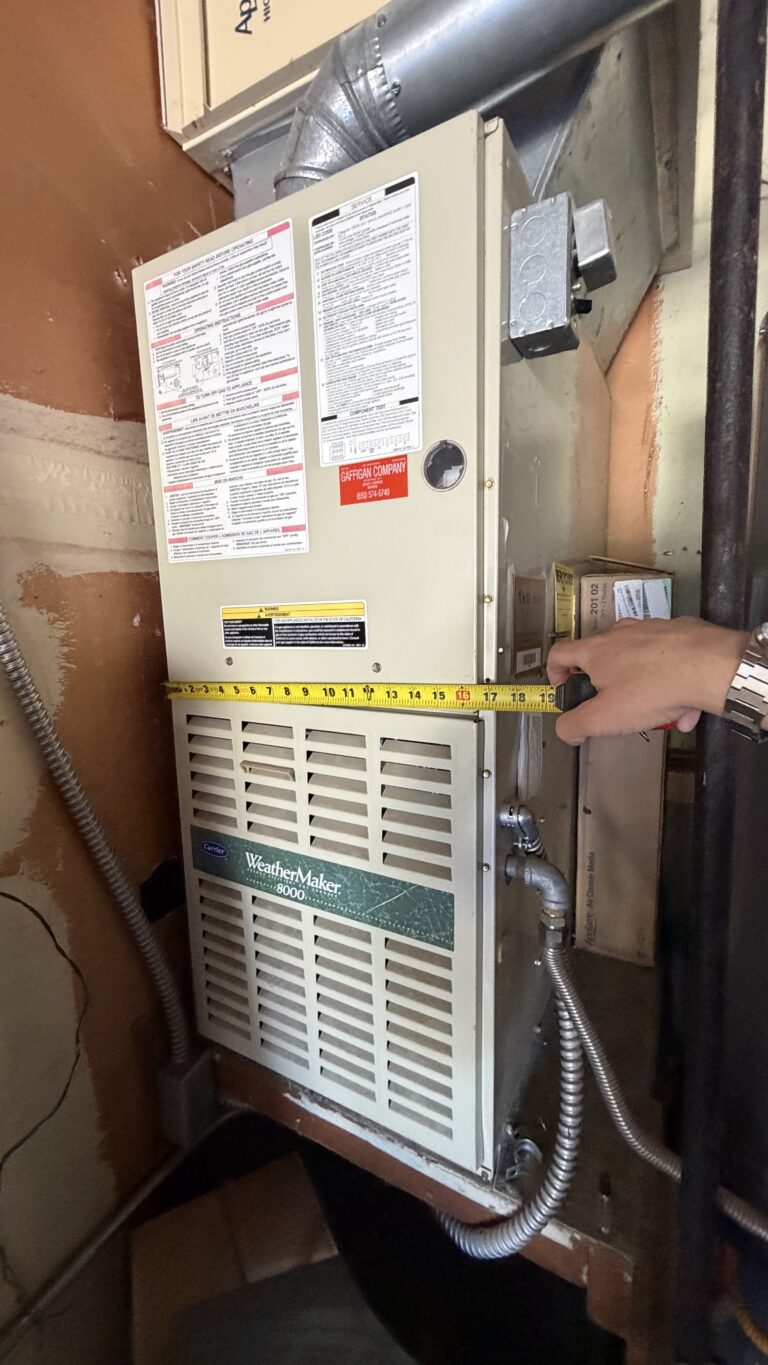 Before
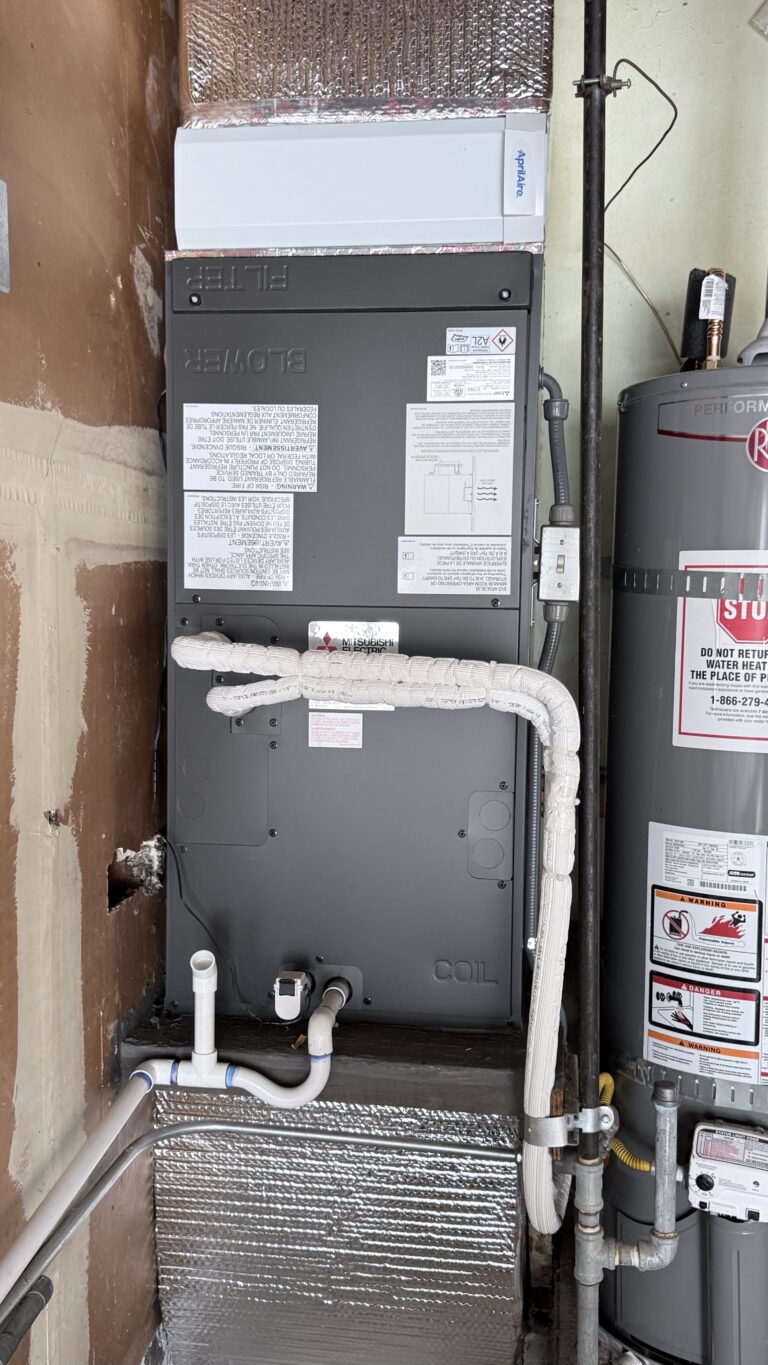 After
Is your home ready for a heat pump?
Three things shape most of our heat pump installs: ducts, the electrical panel, and where the old furnace sits. Pick what matches your house in each row to see what it means for the job.
1. Does the house have ducts?
A ducted heat pump is the likely fit
The outdoor unit goes where the AC sits (or would sit), and an air handler takes the furnace's spot on the same ducts. We inspect the boots, the return and every run we can reach first. Leaky ducts are the most common reason a changeout fails its duct test.
From our jobs
In Emerald Hills we kept the ducts on a Carrier 3-ton swap, resealed the supply boots with foil mastic tape, and the system passed its HERS test.
Ductless heads, or a short-run ducted unit
Homes heated by a wall heater, baseboards or an old boiler rarely have ducts, and building them means opening walls. Instead, a small indoor head goes in each room you use, all connected to one outdoor unit. A concealed ducted unit can serve two or three nearby rooms if you'd rather see a grille than a head.
From our jobs
In Belmont a homeowner moved off an older gas furnace onto a Mitsubishi MXZ-3D24NL outdoor unit with MSZ-FX06NL wall units, each room controlled on its own.
Ducted for the house, a head for the problem room
Additions, converted garages and upstairs bedrooms are the common gaps. A separate mini-split can cover that room. Some larger Mitsubishi outdoor units, like the MXZ-SM48 and SM60, can feed an air handler and ductless heads together, so you keep one unit outside instead of two.
From our jobs
In Brisbane one room needed heating and cooling without extending the existing ducts, so a single-zone Mitsubishi system took care of it on its own.
2. What size is your electrical panel?
Tight, but not an automatic panel upgrade
Plenty of 1950s to 70s Bay Area homes still have a 100 amp panel. Whether it can take a heat pump comes down to a load calculation for the whole house, plus free breaker spaces. When the numbers are tight, a load manager can keep the heat pump from stacking on other big loads. A full upgrade involves PG&E and adds time, so we flag it at the estimate.
From our jobs
Load managers aren't only for small panels. On a 5-ton Carrier install in Hillsborough we added a Siemens load manager so the heat pump shares capacity with the rest of the house.
Most likely enough capacity
A 200 amp panel normally has room. We still check for room for a 240-volt double-pole breaker (two spaces in most panels), the panel's condition, and what else is coming: an EV charger, an induction range or a heat pump water heater. Wiring for those in the same visit beats coming back a year later.
From our jobs
In Santa Clara the job included a new dedicated line and breaker, a disconnect at the outdoor unit and a communication line between the two units.
Look at the main breaker
Open the panel door. The main breaker, normally the largest one at the top, has its rating printed on the handle: 100, 125, 150 or 200. Send one photo of the open panel and one of the door label when you book. Don't remove the inner cover.
3. Where is the old furnace?
Air handler on its side, with water protection
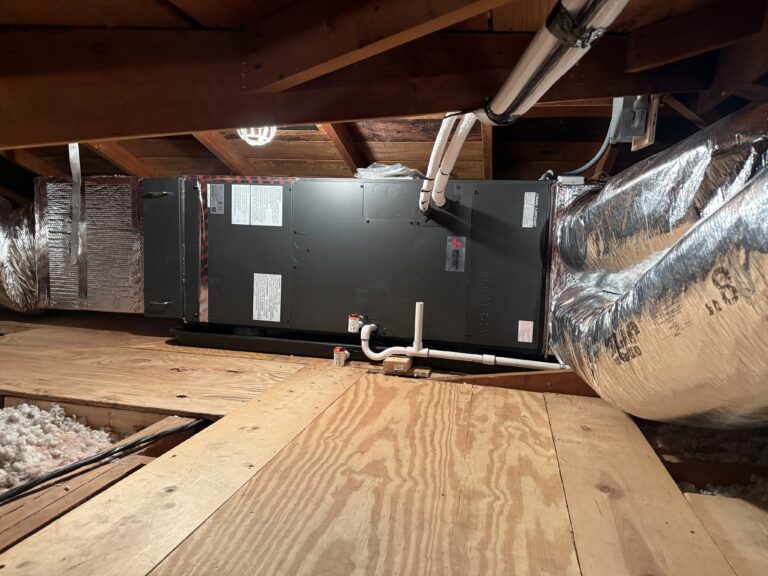
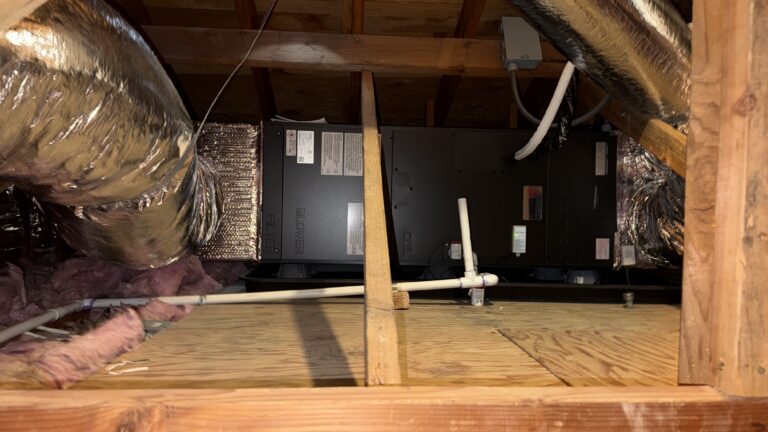
The air handler lies horizontally on a platform, in a drain pan with an overflow switch that shuts the system off before water can reach your ceiling. We also check that the new unit fits through the hatch and that there's somewhere solid to kneel for service.
From our jobs
In Santa Clara we laid plywood decking in front of the attic air handler and a walkway across the insulation to reach it.
The simplest location
A garage gives room to work, an outside wall close by for the line set, and an easy path for the condensate drain. The air handler stands where the furnace stood, and the filter ends up at a height you can reach.
Measure first, then plan the drain
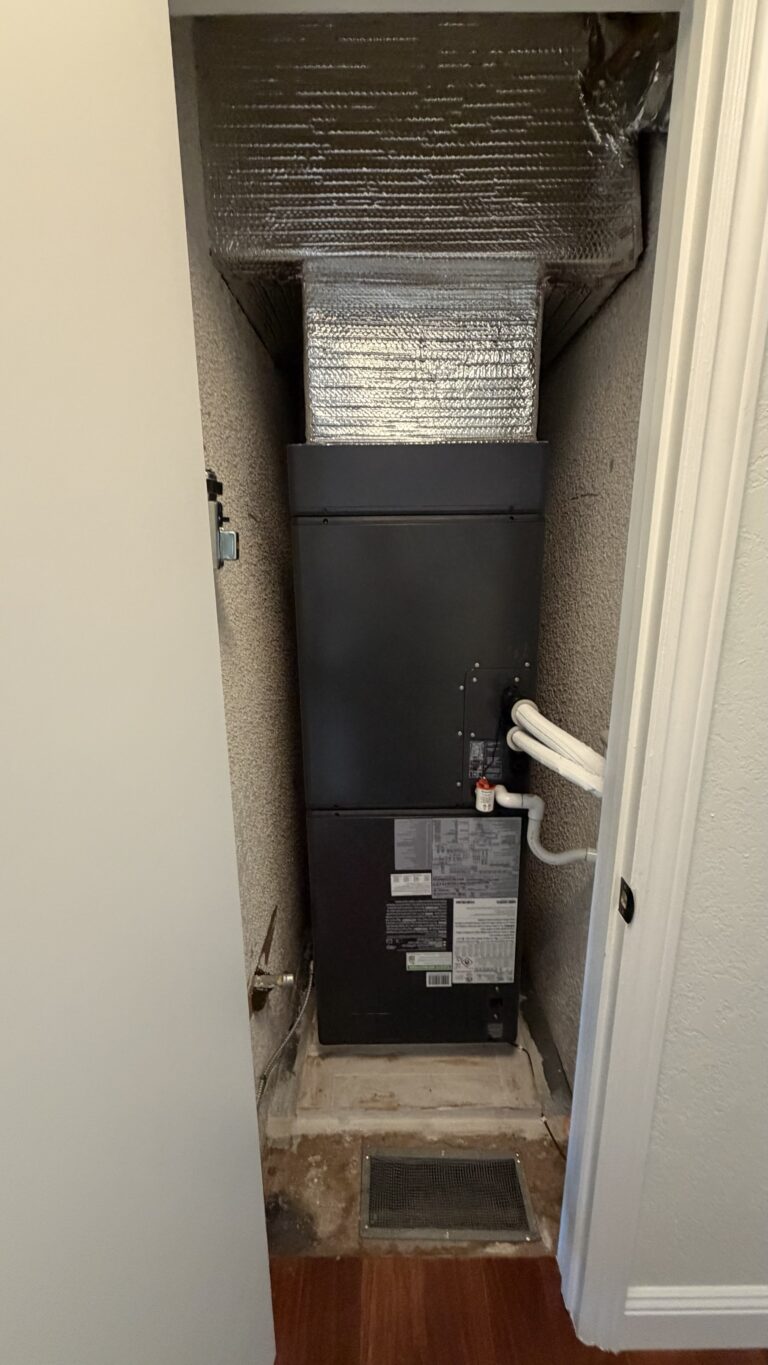
Closet furnaces are often squeezed between a wall and a water heater, so we measure before anything is ordered. An inside closet may have no gravity route for condensate, and then a small pump with a safety switch moves the water out.
From our jobs
In San Mateo an old Carrier furnace sat between the wall and the water heater. We measured it at the estimate, and the Mitsubishi air handler went on the same platform.
Low clearance and old ducts
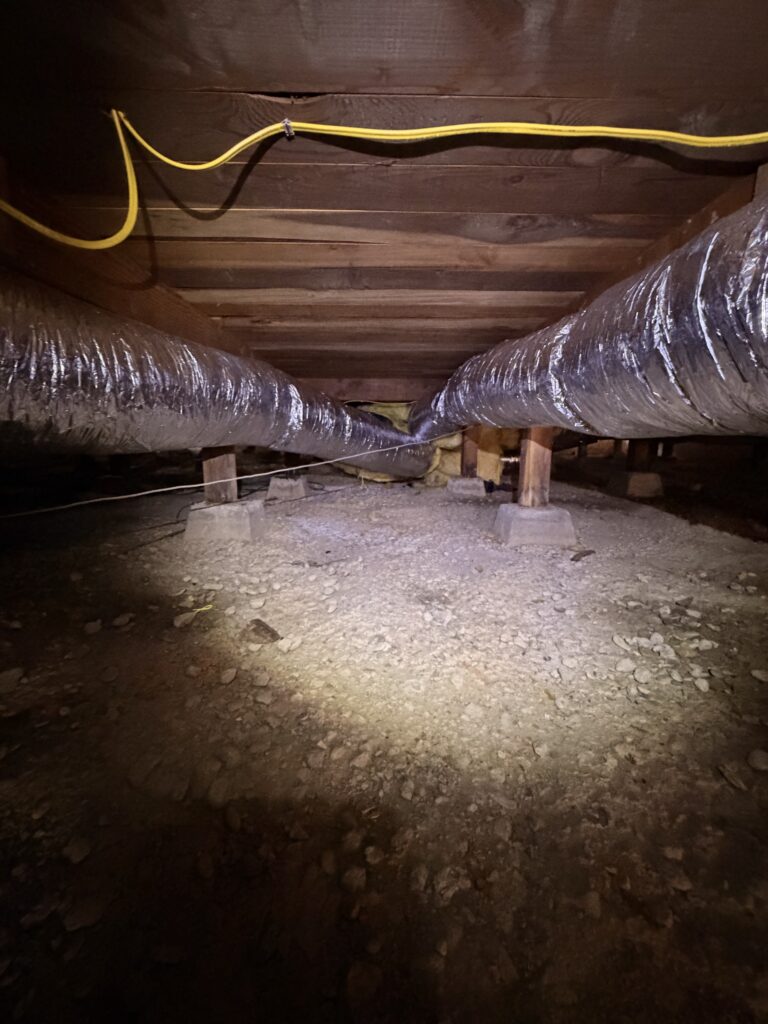
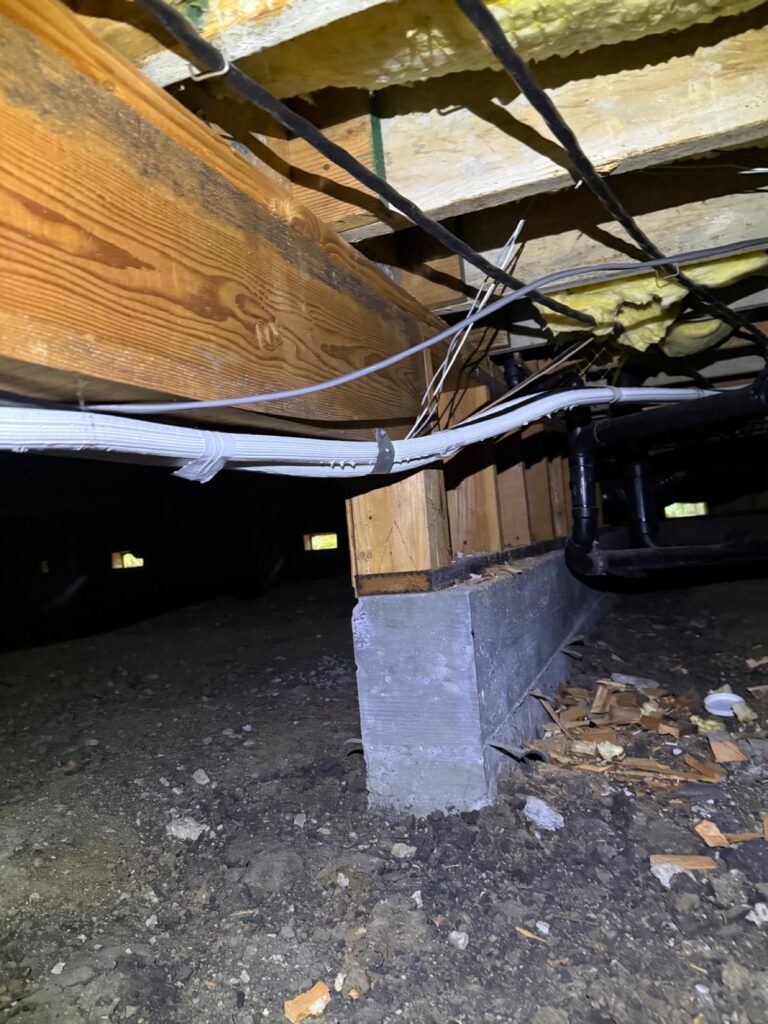
The air handler sits between the joists, with lines and wiring strapped to the framing. Crawlspace ducts are often the oldest part of the system, and older duct wrap and tape can contain asbestos. In older homes we have a licensed abatement contractor take out the old ducts before we start.
From our jobs
In San Bruno, because of the home's age, a licensed abatement contractor removed the old crawlspace ducts, and we ran a new system with ten supply vents and one return.
Which type of heat pump fits which Bay Area home
Every system below heats and cools. The difference is how the heat gets from the outdoor unit into the rooms. The photos are from our own installs.
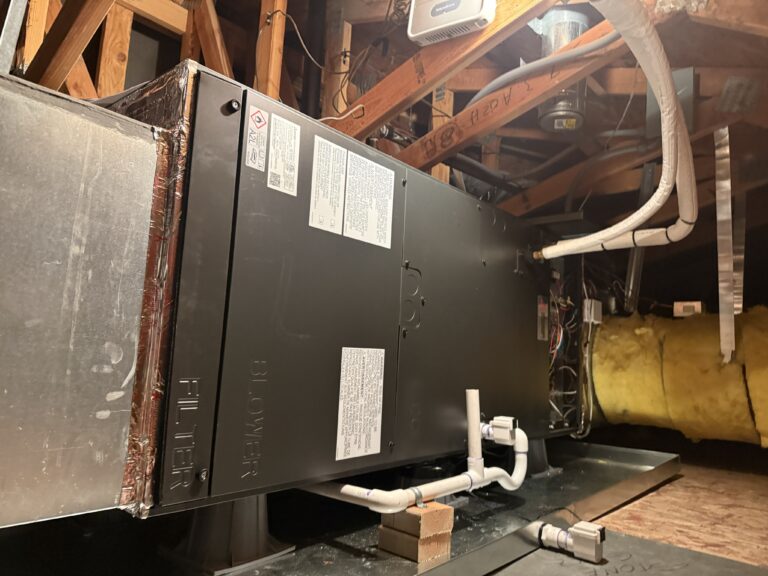
Ducted central heat pump (replaces furnace and AC)
The direct replacement for a furnace with central air. The outdoor unit sits where the AC condenser was, and the air handler goes in the old furnace spot. The existing ducts carry the air after we test and seal them. In South San Francisco an older Carrier furnace on the attic platform became a Mitsubishi 4-ton system, with the air handler in a drain pan on the existing ducts.
- Fits best
- homes with ducts in usable shape where both the furnace and the AC are aging.
- Watch for
- ducts that are crushed, undersized or lying on the attic floor. They hold back a new system and can fail the duct test.

Ductless mini-split
A small indoor head goes high on the wall of each room and connects to an outdoor unit through a thin refrigerant line set. One outdoor unit can run several heads, each with its own setting. Most of our ductless work is in San Francisco homes that were never ducted and houses still heated by wall heaters. In one San Francisco home, four zones now run off a single Mitsubishi outdoor unit on the roof.
- Fits best
- homes without ducts, additions, converted garages and single problem rooms.
- Watch for
- the line set route on the outside wall, and drainage for heads on inside walls.
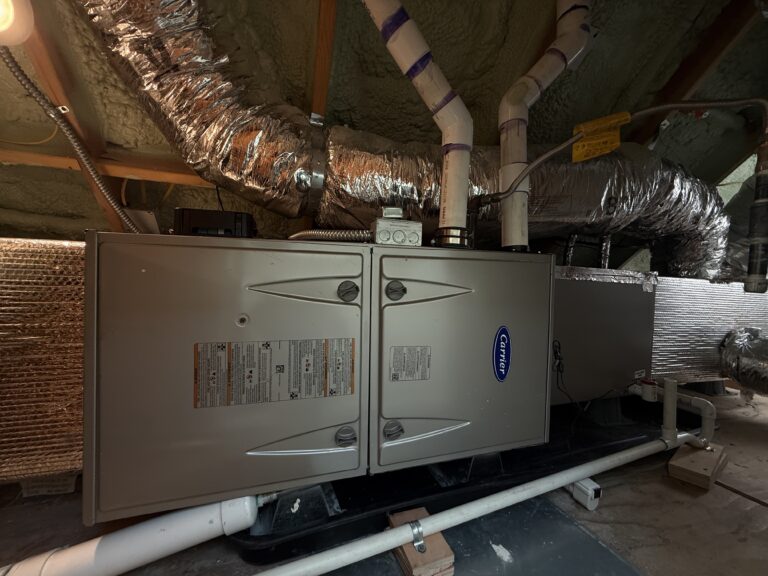
Dual fuel: heat pump plus a gas furnace
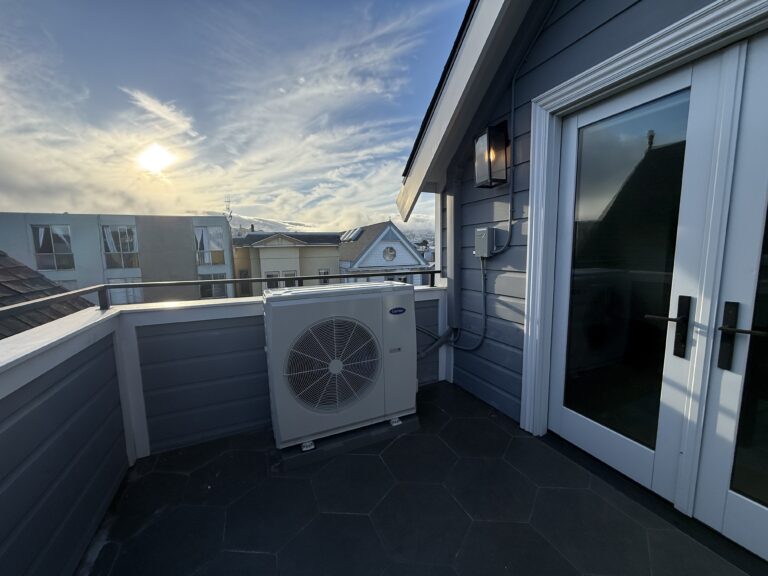
The heat pump does the cooling and most of the heating, and a gas furnace takes over below a switchover temperature you choose. On a San Francisco job the attic furnace was in good shape, so we kept it and added a 4-ton Carrier heat pump on the roof deck, sharing the furnace blower and ducts. Some rebate programs only pay when the heat pump replaces gas heating, so keeping the furnace can affect eligibility.
- Fits best
- a furnace with years left, or a home in the hills where you want gas as backup.
- Watch for
- paying for two heating systems, and rebate rules. See our furnace vs heat pump vs dual fuel guide.
What a full heat pump installation includes, step by step
A heat pump quote should name each of these. If one is missing from a quote you're comparing, ask whether it's included.
- 1
Estimate and load calculation
We size the system from a room-by-room load calculation: square footage, windows, insulation and which way the house faces. Copying the old furnace's size is how homes end up with equipment that's too big and short cycles.
- 2
Rebate reservation
If your program needs approval before work starts, it goes in first.
- 3
Permit
The city mechanical permit, plus an electrical permit where the city wants one for the new circuit.
- 4
Old equipment out
We remove and dispose of the furnace and the AC condenser. If the house is going all-electric, we cap the gas line.
- 5
Outdoor unit
On a new concrete pad, a raised stand or a roof deck platform, often on rubber anti-vibration pads, bolted down so it stays level.
- 6
Air handler, drain and filter
In the furnace's place, with a drain pan, an overflow switch, a PVC condensate line (or a pump) and a filter you can reach.
- 7
Line set
Copper lines brazed under nitrogen, pressure-tested and pulled into a deep vacuum before the refrigerant goes in. Outside they run in a line cover.
- 8
Electrical
A dedicated breaker and circuit, a disconnect by the outdoor unit, a communication cable between the units and, on most of our installs, a surge protective device.
- 9
Ducts
Boots, plenum and return sealed. Crushed or undersized runs replaced, or the whole system when it's needed.
- 10
Thermostat and startup
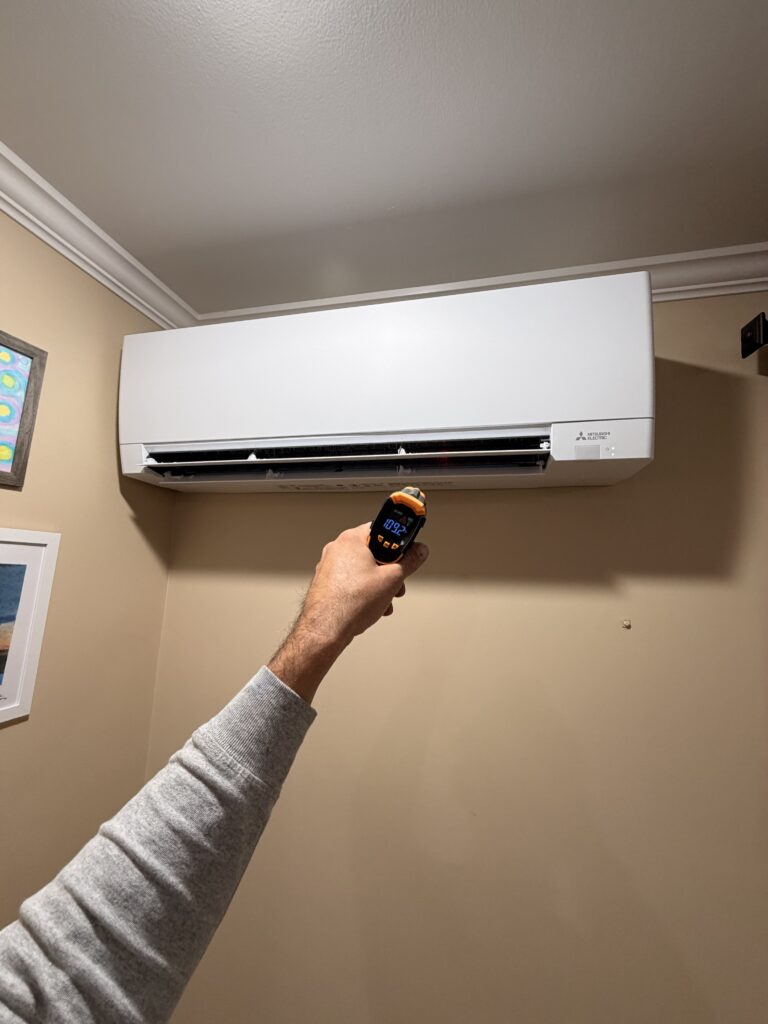
We run the system in heating and cooling and read the supply air temperature at the registers, room by room.
- 11
Inspection and HERS test
The city inspector signs off the permit, and a third-party rater checks things like duct leakage and refrigerant charge.
- 12
Rebate paperwork and warranty
We help with the final rebate paperwork and register the equipment. Qualifying Mitsubishi systems installed by a Diamond Elite contractor are eligible for up to 12 years of parts and compressor coverage.
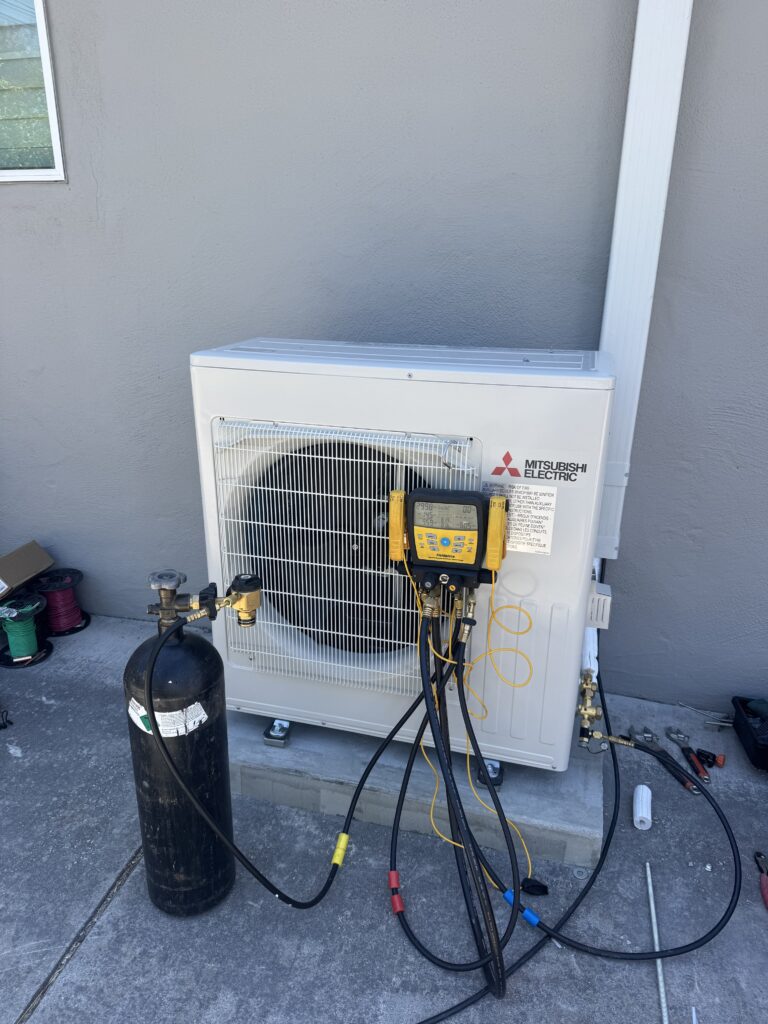
Electrical panel questions
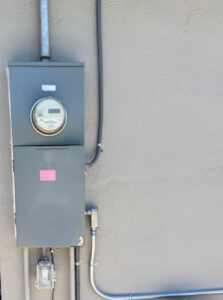
A gas furnace needs only a small 120-volt circuit for its blower and controls. A heat pump needs its own 240-volt circuit, a breaker sized to the equipment and a disconnect next to the outdoor unit. Many homes we work in didn't have a circuit ready for that, so a new dedicated line is part of most of our quotes.
Whether the panel can take it is a separate question, answered by a load calculation for the whole house rather than the number on the main breaker. A 100 amp panel in a 1960s ranch home with a gas range and gas dryer can have room. The same panel with an EV charger on it might not.
When the numbers are tight, a load manager is one option short of a new panel. PG&E's PanelBoost program targets homes with panels of 150 amps or less. If a new panel does make sense, City of Palo Alto Utilities and some other programs offer a panel add-on rebate alongside a heat pump, with their own size limits. Planning a heat pump water heater or an EV charger too? Tell us at the estimate, and see our home electrification page.
The refrigerant change: R-454B and R-32
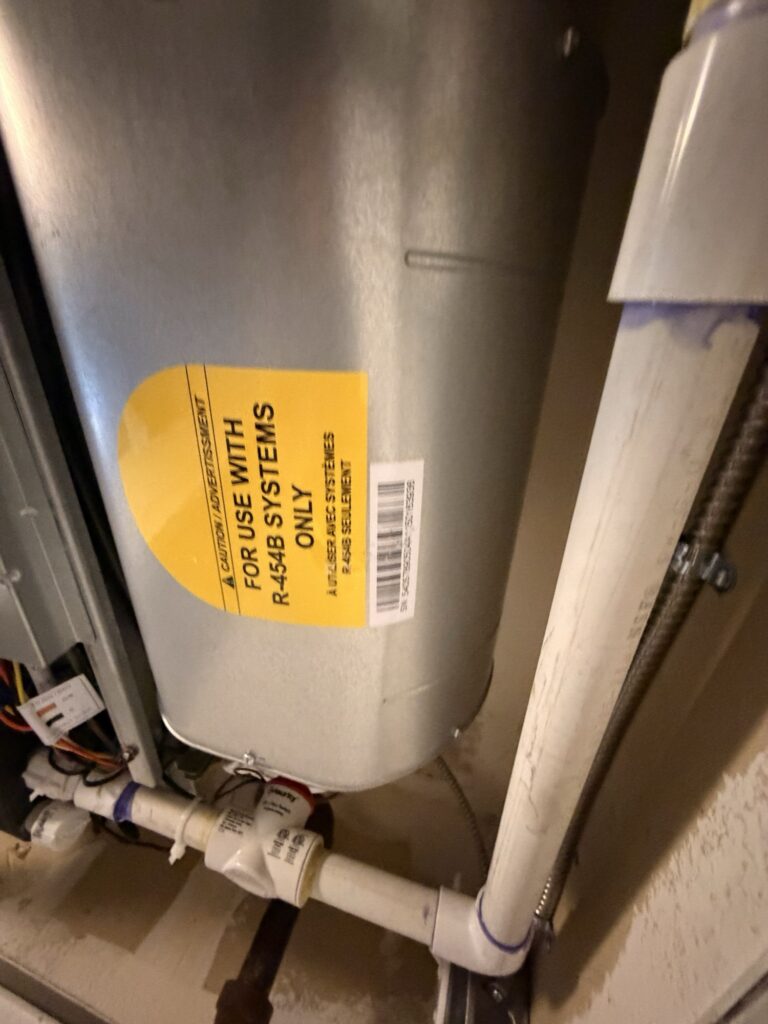
For years, home heat pumps used R-410A. EPA rules now cap the climate impact (GWP) of refrigerant in new residential split systems at 700, which R-410A exceeds, so manufacturers moved to R-454B (GWP 466) and R-32 (GWP 675). Mitsubishi launched its R-454B lineup in the US in April 2025, and Carrier's newer units are on R-454B.
For you, it means the indoor and outdoor units must both be rated for the new refrigerant. Manufacturers match R-454B outdoor units only with indoor coils approved for R-454B, so a new outdoor unit doesn't go on an old R-410A coil. That's one reason a full replacement includes the air handler. The Carrier air handler on our Mountain View job carries a yellow label: for use with R-454B systems only. A working R-410A system can still be repaired. You don't have to replace it because of the switch.
Permits, the energy code and the HERS test
Replacing a furnace or AC with a heat pump needs a city permit, and the job isn't done until the inspector signs it off. We pull it as part of the job. How fast it comes through depends on the city:
San Francisco
The PermitSF portal issues no-plans permits right away for registered contractors, and DBI runs over-the-counter permits at 49 South Van Ness. sf.gov
Mountain View
Same-day online permits for like-for-like replacements and simple upgrades on single-family homes and duplexes, no plans needed. City page
San Jose
Online and over-the-counter permits, with “heat pump including condensate” listed in the city's permit fee table. City page
San Mateo, Palo Alto, Sunnyvale and other cities have their own process, and some want a separate electrical permit for the new circuit.
California's 2025 Energy Code took effect on January 1, 2026, and HERS verification now runs under the state's Energy Code Compliance (ECC) program, so your rater may be called an ECC-Rater. On many heat pump changeouts the rater checks duct leakage and refrigerant charge after we finish. Whether your job needs the duct test depends on the scope, and we sort that out with the permit. The code also requires controls that keep backup electric strip heat off when the heat pump alone can carry the load, which affects how the thermostat is set up.
How long a heat pump installation takes
The install is the short part. Many of our recent full swaps took one long day on site. On jobs this fall in San Jose, Santa Clara, San Mateo and South San Francisco the crew spent about nine hours, from pulling the old furnace to the system running by evening. Bigger jobs can run several days. On a one-day swap your heat is off for that day only. On a longer job, ask how the house stays warm overnight, and keep a space heater handy if it lands in a cold snap.
Before install day
Choosing equipment, a rebate reservation if your program needs one, and the permit.
Bigger scope
A full new duct system, asbestos abatement, or a panel upgrade that involves PG&E can each add days.
Access
A San Francisco roof deck or a tight crawlspace needs more planning and sometimes rigging.
After install day
The inspection and the HERS test are scheduled separately. Rebate checks follow the final paperwork, on each program's own timing.
Common surprises in older Bay Area homes
Much of the Peninsula and South Bay is single-story ranch homes from the 1950s to the 70s, plus older houses in San Francisco and San Mateo. This is what we find most often once the closet, attic hatch or crawlspace door is open.
Ducts that don't fit the new system
Flex lying on the attic floor, or returns too small for the airflow a heat pump needs. In one San Francisco home the old ducts weren't sized for the new equipment, so we replaced them.
Asbestos in crawlspace ducts
Older duct wrap and tape can contain asbestos. In San Bruno, because of the home's age, a licensed abatement contractor removed the old ducts before we ran new ones.
No circuit for a heat pump
The furnace ran on a small 120-volt circuit, with no 240-volt line near the outdoor spot. On a 2.5-ton Mitsubishi job in San Mateo we built the circuit from scratch.
A closet built around the furnace
Utility closets squeezed between a wall and a water heater. Measuring at the estimate tells us what fits.
No gravity path for the drain
A heat pump makes condensate in cooling mode, which a furnace in an inside closet may never have needed to drain. A small pump with a safety switch solves it.
No yard for the outdoor unit
Many San Francisco homes have no side yard, so the unit goes on a roof deck or a raised platform, with rigging and a longer line set.
Heat pump installation cost in 2026: what drives it
Two quotes for the “same” heat pump can differ a lot because they cover different work. Instead of an average that won't match your house, here's what moves the number:
- 01
System size and equipment line
Tonnage comes from the load calculation. Within a brand, an inverter line with a matched air handler costs more than a basic one.
- 02
Ducts
Reused, sealed at the boots and return, partly rebuilt, or replaced. This is the widest swing on most quotes.
- 03
Electrical
A new circuit and disconnect are common. A load manager or a panel upgrade adds more.
- 04
Location
A garage or open closet is easier than a tight attic or low crawlspace. A side yard pad is easier than a roof deck that needs rigging.
- 05
Extras that are easy to miss
Permit and HERS fees, removal of the old equipment, a condensate pump, a thermostat, surge protection, and abatement if it applies.
- 06
Rebates at your address
They don't change the quote, but they change what you pay.
When you compare quotes, compare scope line by line: who pulls the permit, whether the HERS test is included, what happens to the ducts, and what electrical work is listed.
Rebates and the 2029 furnace rule, briefly
The federal 25C tax credit ended on December 31, 2025, and California's statewide single-family programs through TECH Clean California, including the federal HEEHRA rebates, are fully reserved with new projects waitlisted. As of November 2026, most heat pump rebate money in the Bay Area comes from your electricity provider: WestLight Energy (formerly Peninsula Clean Energy), Silicon Valley Clean Energy, San José Clean Energy or City of Palo Alto Utilities, plus some city add-ons. On a Hillsborough job this fall, Peninsula Clean Energy's rebate program applied to the project. Amounts change, so see our heat pump rebate guide.
Under the Bay Area Air District's Rule 9-4, new gas furnaces are currently scheduled to require zero NOx starting in 2029. Existing furnaces can keep running and be repaired. The Air District is reviewing the rule, with staff recommendations due to its Board on December 2, 2026, so check its building appliances page before you decide. Rule 9-6 for water heaters now starts January 1, 2028, with exemptions for qualifying low-income owners and homes with serious electrical or space limits.
How to prepare for install day
- 1
Find your electricity provider
It's listed on your electric bill (in Palo Alto, the city utility is your provider). It decides which rebate applies, so tell us before we schedule.
- 2
Clear the path
Make room around the furnace, the attic hatch or crawlspace door, and the outdoor spot. Move cars out if the furnace is in the garage.
- 3
Think about the outdoor spot
Away from bedroom windows if the yard allows it. If you have an HOA, check its rules for outdoor equipment.
- 4
Plan the day
Someone home at the start and the end, pets away from open doors, and your Wi-Fi password if the thermostat uses an app.
- 5
Keep the paperwork
Permit, HERS results, invoice and model numbers. Rebate programs and future buyers both ask for them.
Recent heat pump installs
A few of our 2026 jobs across San Mateo County, San Francisco and the South Bay. Tap a photo to see it larger.
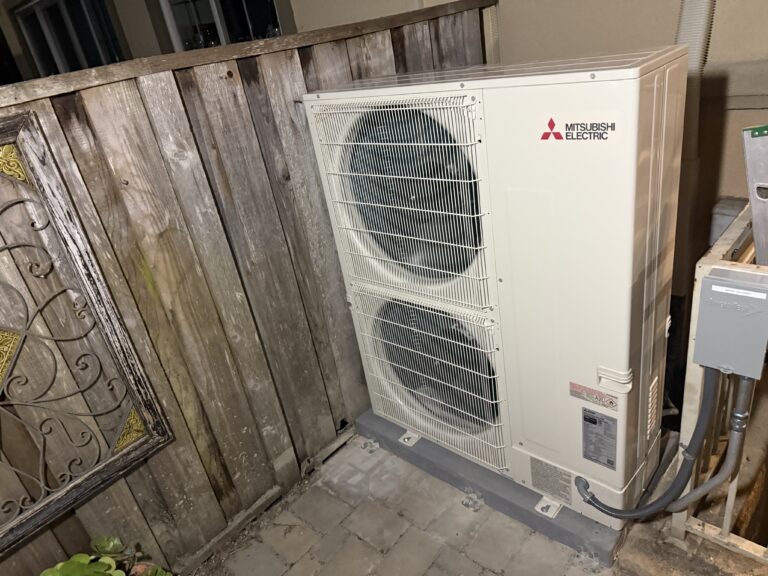
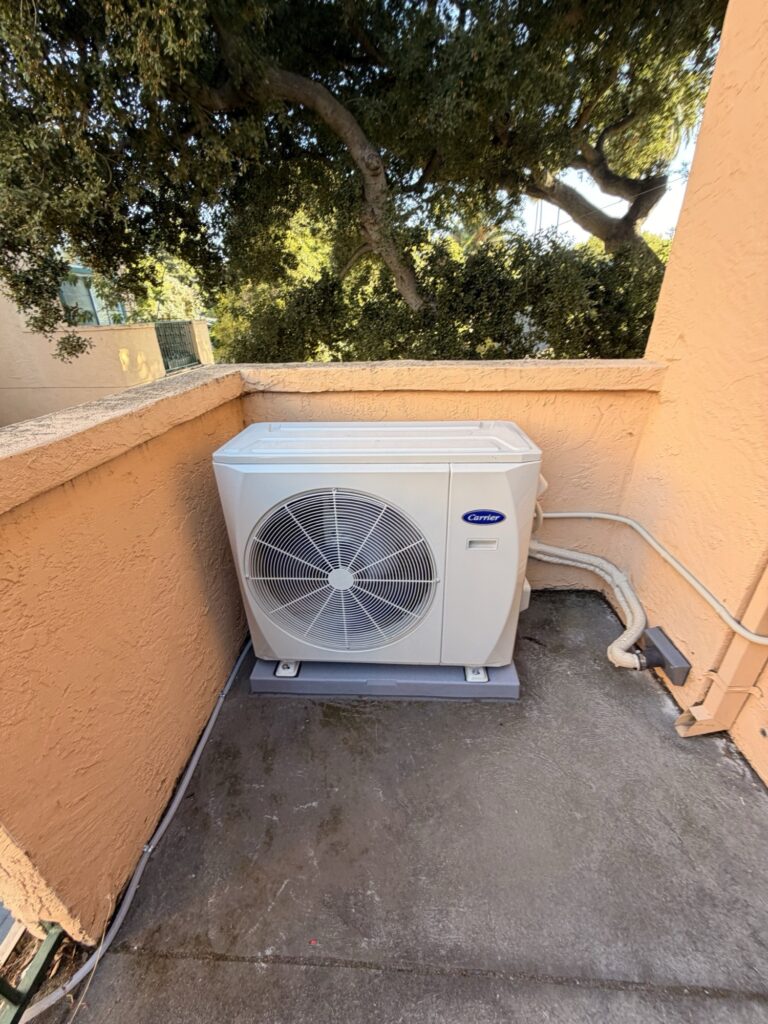

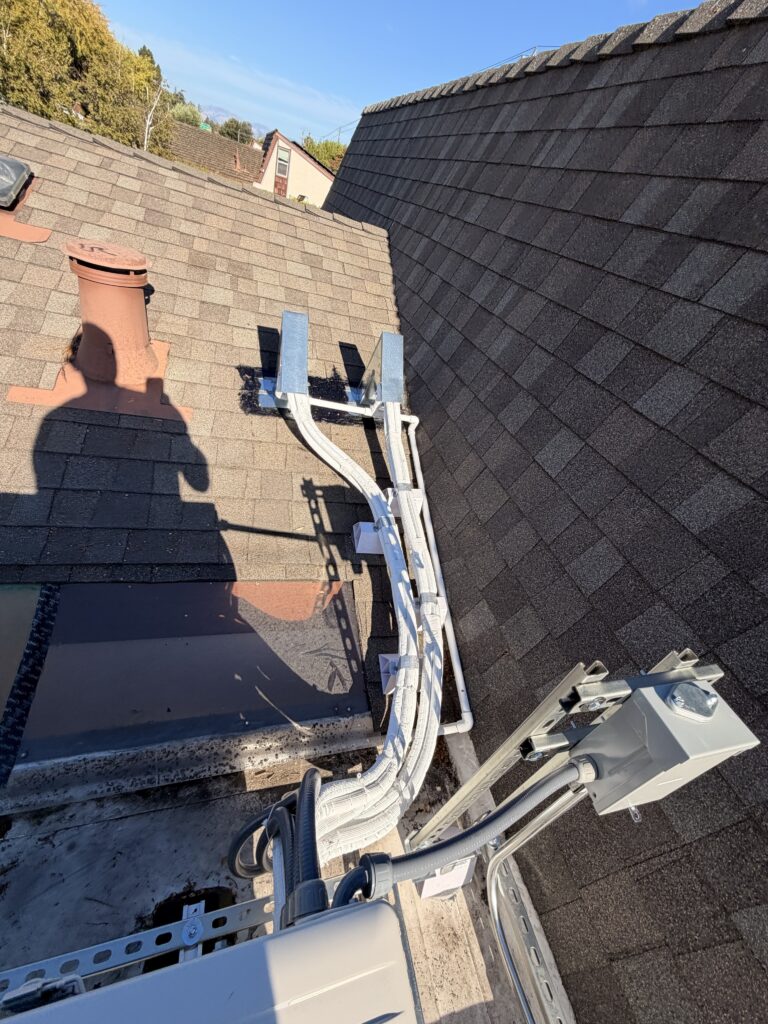
What we install most: Mitsubishi SUZ-AA and SUZ-KA outdoor units with SVZ air handlers for 2 to 3 ton homes (a Santa Clara job paired an SUZ-AA30NL with an SVZ-AP30NL), PUZ-A and PUZ-AH with PVA air handlers, whose Blue Fin coil coating helps near the bay and the coast, MXZ-SM48 and SM60 for larger homes, and Carrier 38MURAQ and 37MURA inverter heat pumps. Bryant, Gree and Bosch go in when they suit the budget and the space.
What a heat pump estimate looks like
- 01
We look at the whole house
The furnace spot, the ducts we can reach, the panel and where the outdoor unit can go. Tight closets and attics get measured, and you see photos of what we found.
- 02
We size it and lay out options
Sizing comes from a load calculation. Where it makes sense, you get more than one option: ducted, ductless or dual fuel, or two equipment lines.
- 03
You get a written quote
Every item from the steps above, plus the permit, the HERS test and which rebate applies at your address.
We install Mitsubishi Electric as a Diamond Elite contractor and Carrier as a dealer. We pull the permit, do the electrical and duct work, start the system up, schedule the inspection and the HERS test, and help with the rebate paperwork. You can reach us 8am - 8pm every day at +1 (650) 542-8555, or book online. More on heat pump installation, ductless mini-splits, dual fuel systems and ductwork.
Heat pump installation: questions
How much does heat pump installation cost in the Bay Area in 2026?
No single number fits every house. The same heat pump can be a simple swap in one home and a job with new ducts, a new circuit and a roof deck lift in the next. We give a written quote after seeing the house and check which rebate applies at your address.
How long does it take to replace a furnace with a heat pump?
Many of our recent full swaps took one long day on site with a two-person crew. Jobs with several zones, a roof deck or a panel upgrade can take a few days. The permit, any rebate reservation, the inspection and the HERS test happen on other days.
Will a heat pump keep my house warm in the Bay Area?
Yes, when it's sized from a room-by-room load calculation. Winters on the Peninsula and in the South Bay are mild, which is where inverter heat pumps work best. In the hills, or if you want gas as backup, dual fuel is the middle ground.
Do I need a new electrical panel for a heat pump?
Not always. Many homes take a heat pump on the existing panel with a new dedicated circuit, and a load manager can sometimes avoid an upgrade on a tight panel.
Can I still install a gas furnace in the Bay Area?
Yes, for now. Under the Air District's Rule 9-4, new gas furnaces are currently scheduled to require zero NOx starting in 2029, and existing furnaces can keep running. The rule is under review, so check the latest before you decide.
Related guides: Heat pump rebates · Furnace vs heat pump vs dual fuel · How many mini-split zones · Furnace not heating
Heat pump installation near you: San Mateo · Palo Alto · San Francisco · San Jose · South San Francisco · Furnace replacement