
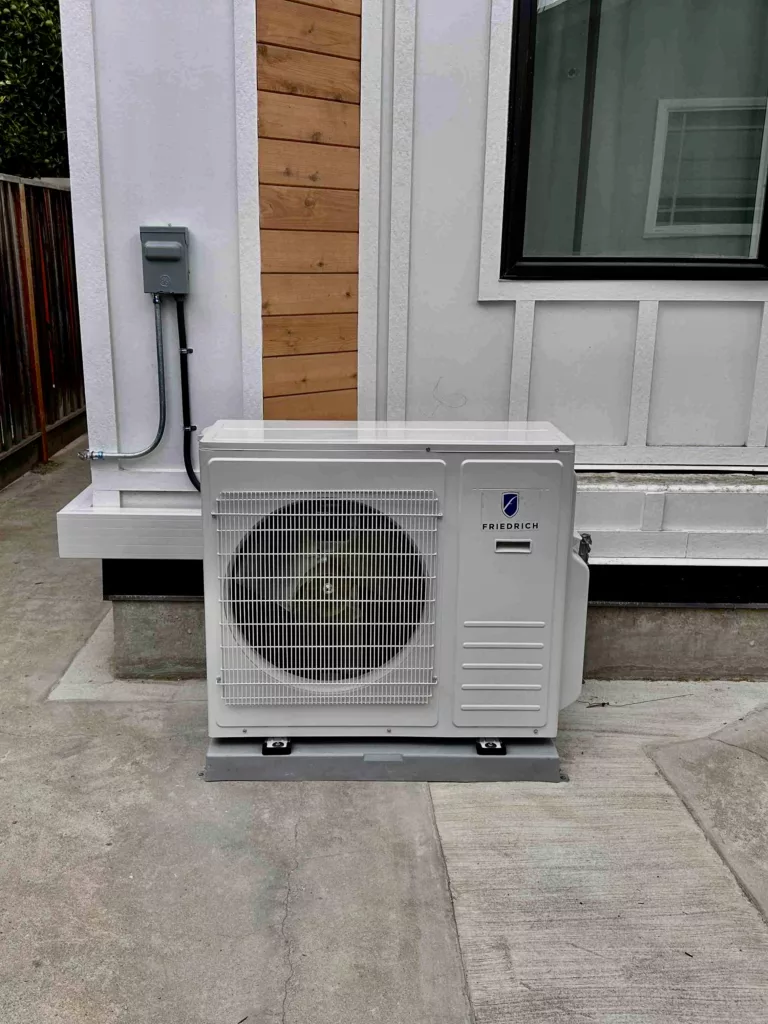
Choosing between a ductless mini-split and a traditional ducted system is one of the bigger decisions homeowners face when upgrading their heating and cooling. Both have their place, but ductless mini-splits offer some real advantages worth understanding. Here’s how the two compare.
Ductless mini-split vs. ducted: how they compare
- Energy efficiency: mini-splits work zone by zone, heating or cooling only the rooms you use, while ducted systems can lose energy to duct leaks and inefficiencies.
- Installation flexibility: mini-splits are easier to install, especially in older homes without existing ductwork, whereas adding ducts can mean a major renovation.
- Quiet operation: mini-splits run with barely noticeable noise, while ducted systems can be louder as air moves through the ducts.
- Zone control: mini-splits let you set different temperatures in different rooms, something ducted systems generally handle less precisely.
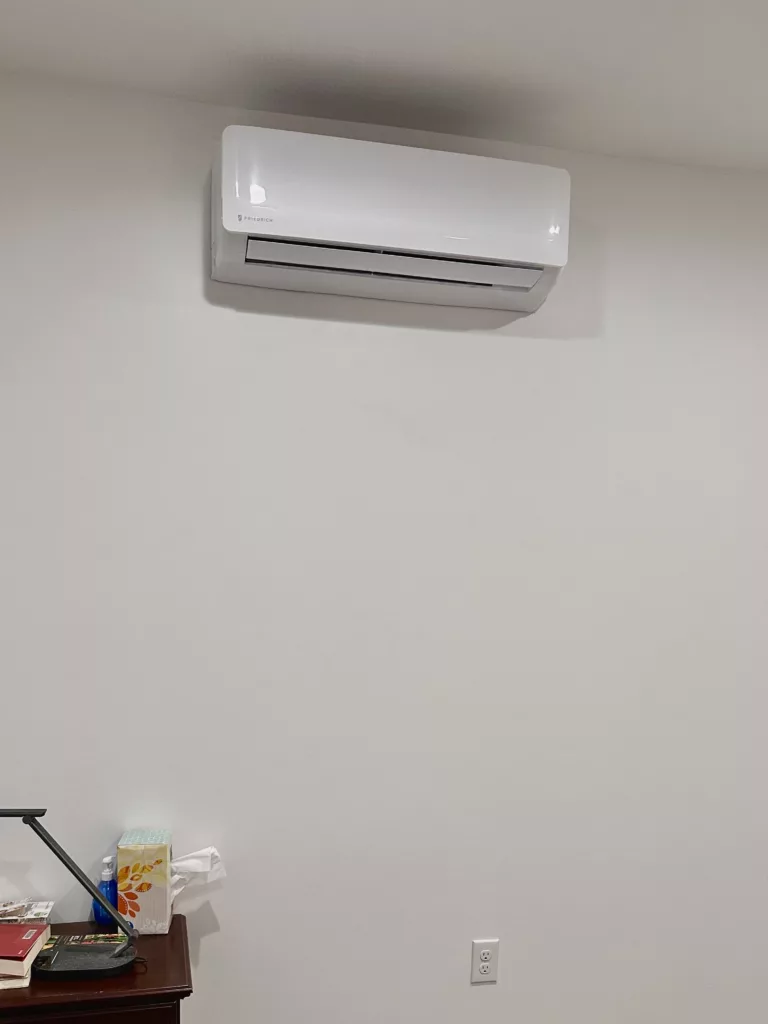
- Aesthetic appeal: sleek indoor units make a clean design statement, while ducted systems take up space behind the scenes.
- Air quality: ductless units include advanced filters that can improve indoor air, whereas ducted performance depends on how clean the ducts are.
- Cost and savings: mini-splits are often more budget-friendly upfront and over time thanks to their efficiency and precise temperature control.
There’s no single right answer for every home; the best choice depends on your layout, existing ductwork, and comfort priorities. If you’re weighing ductless against ducted, Nur HVAC can assess the home, walk through the trade-offs, and handle the installation so the system you choose performs the way it should.
Ready for reliable comfort?
Book your San Mateo County HVAC service today - fast, honest, guaranteed.
Ready to explore ductless?
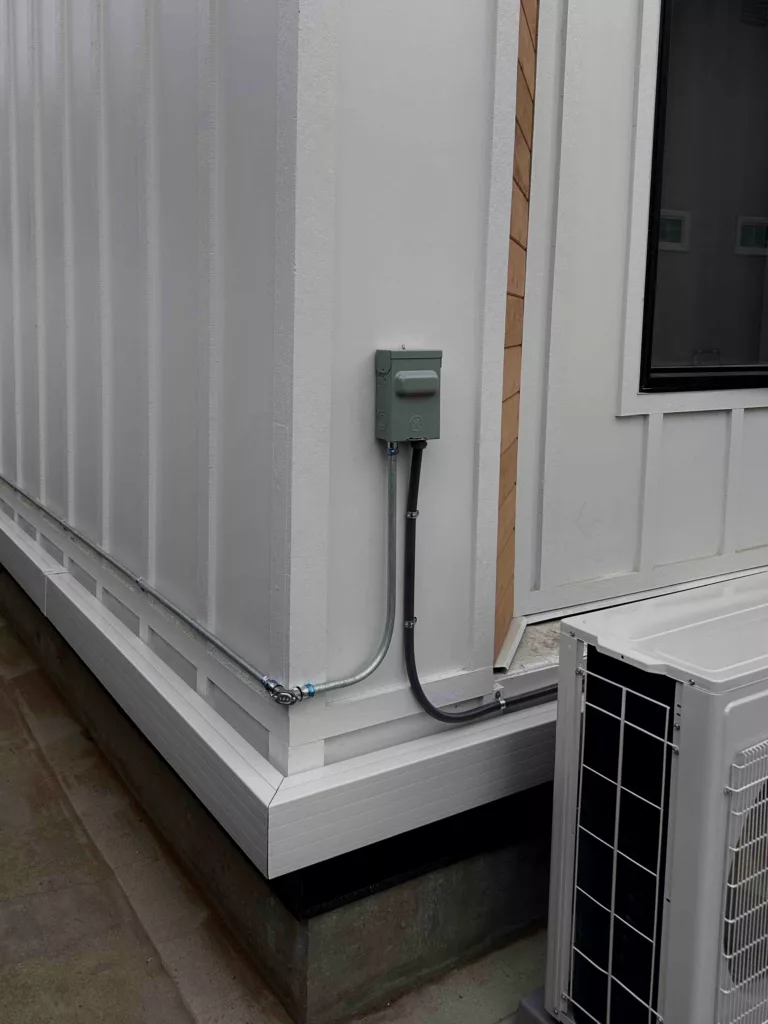
If the ductless column is winning you over, the next step is seeing how a system would fit your specific rooms. Our ductless split system installation service covers everything from picking unit locations to the final walkthrough, so you know exactly what you are getting before the work starts. And if your home turns out to be a better match for a ducted system after all, we will tell you that plainly — the right answer depends on the house, not on what is easiest to sell.

Questions about your HVAC?
Talk to a real San Mateo County technician - free estimates, honest advice, no pressure.
Reviews
Trusted by your neighbors


“I've worked with Nur multiple times, specifically Fedor and Alex. They do a great job and are thorough. It's great to be able to switch from a gas furnace to a heat pump, which means we have A/C now too! They also installed a new thermostat and put more insulation around exterior ducting. They reply quickly and are polite. I've also seen them doing commercial HVAC systems so they are trusted by businesses too.”
“Honest and meticulous. They quoted me a competitive price for work that they expected to complete within a few days. The time to finish the job increased, but the price did not. It's clear that they are *very* careful and detail-oriented during installation. Fedor and the rest of the team also make everything before the work very easy; figuring out what you want, advising what to do, and communicating about scheduling/logistics. Very happy overall, would recommend them without hesitation. My wife and I have already used them twice: adding a central heat pump and later augmenting it, in select rooms, with mini splits.”
“Nur HVAC is the company you 10000% want to use for your HVAC! I had a ducted heat pump installed and got 4 quotes. Companies gave widely variable information on what ton system I needed, what additional work I needed to the existing ducts, where to put the outdoor unit, etc--one company did this over the phone without even inspecting the existing duct work setup, based on house square footage alone (which is totally wrong!)! Luckily, I have a friend of a friend who owns an HVAC company who could review the quotes. He looked at my house and ran his calculations and told me that Nur was spot-on with their analysis of the appropriately sized system and were giving me a very good price on an excellent system. Nur responds faster to email than any other company and always answered my questions. I worked with Artur who patiently answered all my questions by phone (and I had lots of them while I decided whether / how to do this project!) and told me about local incentives I wasn't aware of and Nur helped me apply for them (TechClean, PCE rebate and loan). I made my final decision to do the project with Nur in early December and they were able to schedule the job in time to get the last federal incentives of 2025. They even bumped up the start date of the work when they had a window to do it. The project took about 2.5 days. Their workers were courteous, clean, and thoughtful. They put down tarp everywhere inside so they didn't get the floors dirty. They went through each room to tweak the system to get adequate airflow to cooler rooms and less to warmer ones. They did thoughtful touches I didn't even ask for such as painting the lines outside to match the exterior paint of the home! Even after the job was complete, Artur continued to answer my questions by text and phone about how to best use the new thermostat. I just had the city inspection and the inspector said he had worked with Nur many times and they always do great work. In addition to passing it after a detailed evaluation, he called it a "beautiful installation job". Would definitely recommend Nur to anyone looking for HVAC service, repair, or replacement in the Bay Area!”
“I would give 6 stars if I could. I replaced an ancient gas furnace with a heat pump and added upstairs a Mitsubish minisplit. They were competitive in the bids I had recieved. They were extremely helpful in choosing the right sized system, helping do the permitting, the energy rebates, and overall guidance, and were a real pleasure to work with. Artur was excellent and knowledgable, and the install team worked efficiently and tirelessly. I now have an amazing and quiet system. I highly recommend NUR HVAC!”
“NUR HVAC replaced our old furnace heating system with a heat pump and mini-split heating/AC units. David was very responsive and came by to give a quote within a few days. He answered our many questions, made recommendations on where to locate the new units, and helped prepare the paperwork for our HOA approval. We compared quotes with several neighbors who had also recently installed heat pumps and the quote was lower than the others. The installation team was very friendly and professional, using shoe covers and cleaning up after themselves every day. They stayed later than we expected to wrap up work in the evenings too. I caught COVID over a weekend during the work and they were very flexible in rescheduling for a couple weeks later. The only minor issue was that they didn't speak much English, but we were able to use Google translate, and David was always available if we needed to speak with him. Overall we had a great experience with them. Our system is fully functional now and we'd recommend NUR HVAC to others due to how responsive, professional, and reasonably priced they are.”
Google Reviews
What our customers say on Google

“We used Nur HVAC to replace gas furnace with a heat pump inverter, replace the aging duct work and gas water heater with a heat pump water heater, all in the same contract. Our project manager, Arthur was on-time for the scoping appointment. He took time to understand our needs, investigated the attic, ducts and all the existing equipment, before making any recommendations. He designed the optimal system for our house to be cost effective, provide highest comfort and be energy efficient. He was not pushy and was upfront about the ballpark estimates and timeline. He also walked us thru the various rebates that are available for the replacements from local utilities. Arthur’s quote was very competitive, in fact better than those quoted to us by Costco referred contractors. Nur’s installation crew - Eldar, Bhakridin, were very professional and thorough. They didn’t rush the job and left the job site clean and clutter free each day. They accommodated our requests for placing the electrical wires and conduits so they are not in the way. All the equipment both indoor and outdoor were cleanly laid out, secured and wiped down before hand off. Always smiling and respectful, one of the best installation crew we have had. As a white glove contractor they took care of all the permitting, inspection paperwork w/ the city, all the paper work for us to receive the rebates. They even completed the warranty registration with the manufacturers for all the equipment! We would highly recommend Arthur and Nur HVAC to anyone in the Bay Area needing heating and cooling solutions. We would definitely be going back to them ourselves when the need arises.”

“Nur HVAC recently installed a mini-split system in our SF condo; one in the living room, and one each in the two bedrooms. They installed the heat pump outside on the balcony. I was impressed with their work ethic and the way they kept our space clean during the installation. They cleaned up at the end of each work day and were very respectful and thoughtful of our home, our dog, and us. They communicate clearly and quickly; I would highly recommend them to install an AC system.”

“I am extremely pleased with my new Mitsubishi heat pump installed by Nur HVAC. Everyone in California should use a heat pump due to the high cost of electricity, and Nur HVAC should be your installer. My installation was performed in two parts: the upstairs in Mar 2025, then downstairs in May 2026. I commend Nur HVAC for their patience during this protracted and difficult installation. After an initial assessment to determine my needs, the team arrived to plan the installation of the upstairs hardware. They asked many questions to figure it out. It only took 5 days for my on-site representatives Konstantin and Maxim to finish the work, which I felt was clean and neat; the electrical, refrigerant, and condensate lines blended into the existing arrangement seamlessly. By the end of day 5, I had hot and cold air at the touch of a button. About a year later, my remodeling had progressed enough for the installation of the downstairs units. Sadly, other contractors inadvertently cut the 220V supply line to the 2nd floor units. And while they meant well, these other contractors totally messed up the 220V supply line for the 1st floor units, running it to the 2nd floor breaker box instead! Maxim and Konstantin went above and beyond the call of duty, doing jobs that weren't theirs. They re-routed the 1st floor electrical line to the 1st floor breaker box, and got everything working. They were quick to suggest best placement of the indoor units. Additionally, they figured out a far better arrangement of the outdoor unit and refrigerant lines. The installation was more concealed and neat afterwards.”

“I highly recommend Nur HVAC! They upgraded my old split furnace HVAC with a heat pump HVAC retrofit. Fedor and the installation team showed outstanding professionalism and craftsmanship in all phases of the project: * Detailed initial project scoping tailored to my home's needs * Fast, friendly communication from start to finish * Solved new complexities we encountered on site * Collaboratively discussed alternative solutions, never felt pushy * High work quality I would absolutely choose Nur again for future HVAC work.”

“I hired Nur HVAC for a major upgrade to my home's system, and they did an incredible job. The project involved converting my entire house from a gas heat pump to a new all-electric Mitsubishi system, and they also installed a split unit in my garage. Their prices were very reasonable, but what truly stood out was the professional quality of the installation. The team performed a very careful evaluation of all my existing ducts and vents to ensure the new system was installed for optimal performance. The work speaks for itself. It's been almost two months since the installation, and everything is working top-notch. I'm super happy I chose Nur HVAC and highly recommend them.”

“Nur Hvac did an outstanding job of installing a new Heat Pump and replacing our aging furnace. From the initial quote to completing the project they were meticulous at every step. I especially appreciated how clean their work was and the little extra things they did which they didn't have to (ex. moving & painting a drain line so it didn't land on our patio, sealing some walls in attic, etc.). This team treats the project as if it's their own home. I got several quotes and Nur hvac was very reasonably priced especially for the quality of the unit we were getting. Their reviews are top notch for a reason!”

“Summary: great value, high quality install that paid attention to details, owner and employees listen to and value customer feedback, clean work, high integrity business, responsive and communicative Normally one would not describe their heating and cooling equipment as a work of art, but I hope to change your mind after describing how Fedor, Aleksander, David, Artur, and the rest of Nur HVAC did an impeccably beautiful install of a new heat pump and new ductwork, removal of old gas furnace, and removal of old asbestos ducts. Throughout the process, they made me feel like a highly valued customer. I would recommend them with zero hesitation to anyone looking for an honest and diligent HVAC contractor that performs top-notch work. [Sales experience] I shopped around various HVAC contractors on Yelp, and I was fortunate to have Nur HVAC respond. David, the owner, came out to give me a quote, and I immediately had a great first impression of him and Nur. David was highly knowledgeable in HVAC, and he listened to me and what I wanted as opposed to trying to push me a hard sale. David is a rare gem in the HVAC industry, where instead of trying to upsell every chance, he actually thinks about what is needed, what's a waste of money, and he conducts himself with the utmost integrity to give the best recommendation for me and not his own pocketbook. The integrity and honesty of Nur is seen when they automatically included permits and HERS testing in the quote. I continued conversing with David, and he would always respond quickly and professionally. At the end of the day, Nur came in with a very competitive bid, and it was an easy decision for me to choose them because of the rapport I developed with David. [Install experience] My install team was Fedor and Aleksander, and I cannot overstate how awesome they were. They showed up punctually every day at 9am in the morning and worked until 6pm in the evening until the whole job was completed. The pride that they took in their work is immediately apparent: the work was not rushed, no corners were cut, they made sure to do everything right all the way down the finest details, and they made sure to clean up every small speck of dust and dirt. For example, when putting in the new vents: they applied several sealant coats inside the vent box to make sure that the ductwork would not leak conditioned air to increase system efficiency. When they finished, they cleaned my attic and made it spotless. Fedor and Aleksander entertained my curiosity in the work and were more than happy to take my feedback and requests, which is further evidence that they actually enjoy the work and have a customer-first approach to their job. For example, there was an audible humming heard inside the home when the outdoor unit was first powered on, and they quickly acted on my observation to add vibration dampening materials that made the noise go away. While making small talk with Fedor, I learned that he used to work in the HVAC industry before he came to America, which explains the expertise and perfectionism that he brought to my job. If you end up working with Nur, I unequivocally recommend you to request Fedor and Aleksander to work on your job, you won't be disappointed. [After install] Kseniia and Chinaza from the office ensured that the HERS tester and city inspector, who are third parties not affiliated with Nur, could be scheduled around my busy life. The HERS tester showed up on time, and he finished the HERS test within 30 minutes and told me that everything looked great. After this, Nur set up the city inspection so the permit could be finaled. Artur arrived on inspection day, and he helped ensure that the inspection process would be completed smoothly. The city inspector commented on how well done the install was, and he only had effusive praise for how well done everything was: the ducting, the air handler, the outdoor unit, the condensate line, and even how clean the attic was. On top of all of this, I am saving money on my utility bill!”
More from our blog

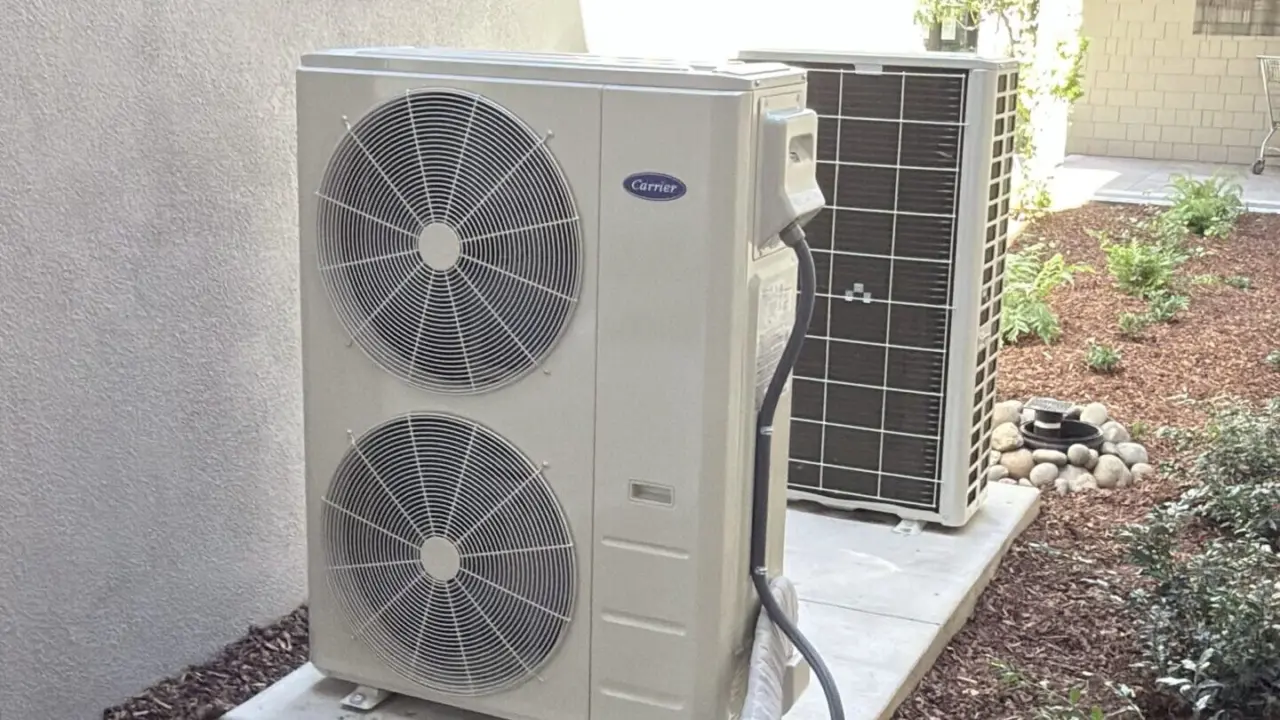
Carrier Heat Pump Installation in Menlo Park, CA
A Menlo Park homeowner was ready to replace a tired, gas-dependent setup, and we handled the complete heat pump installation - swa

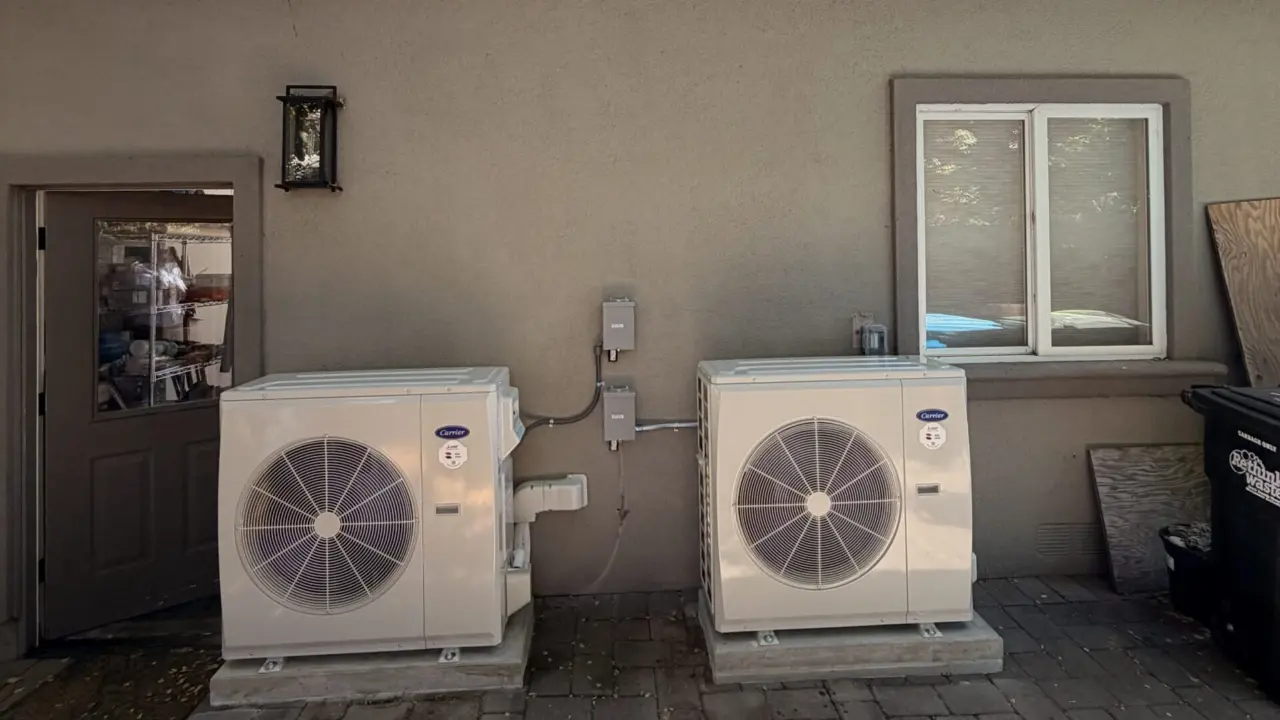
Carrier 3 Ton Heat Pump Installation in Emerald Hills, CA
Trading an older setup for a modern all-electric system, this heat pump installation in Emerald Hills gave the home a Carrier 3-to

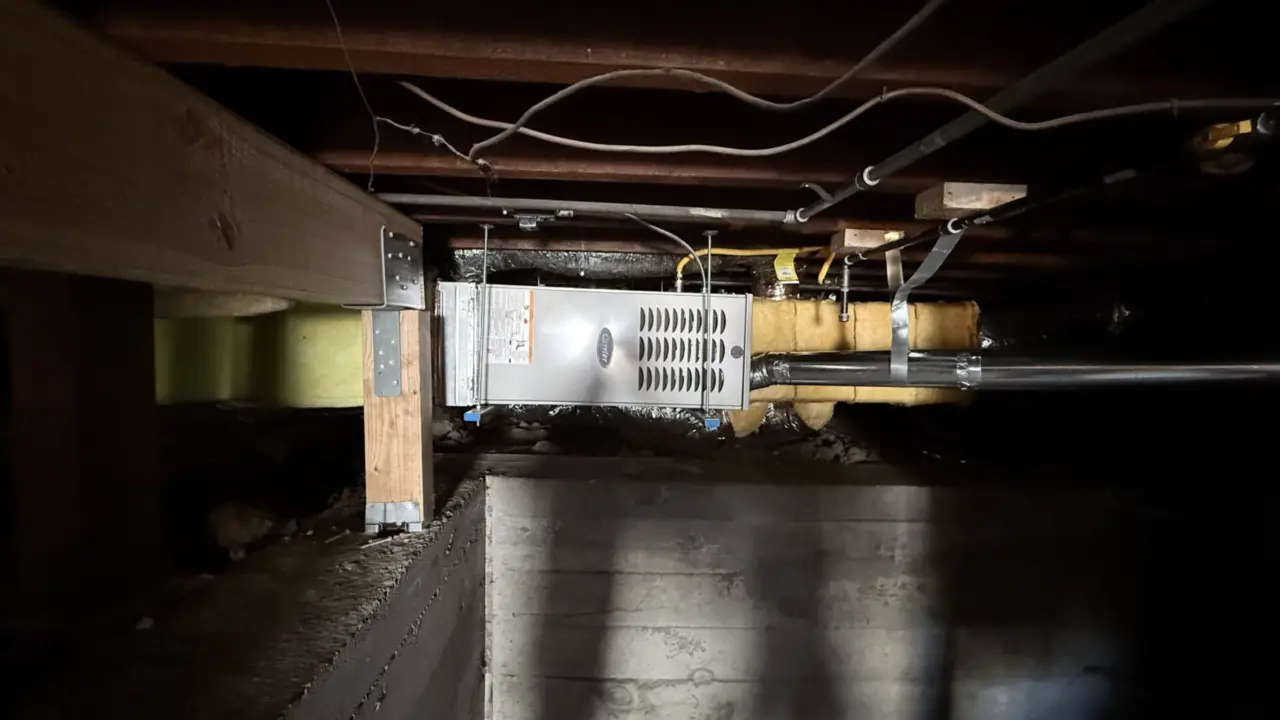
Carrier Furnace Installation in San Mateo
A full HVAC overhaul in San Mateo: a new Carrier furnace downstairs, a Mitsubishi two-zone heat pump upstairs, and all-new ductwor
Need this done at your home?
Our certified San Mateo County technicians are ready. Book online in under a minute or give us a call.