
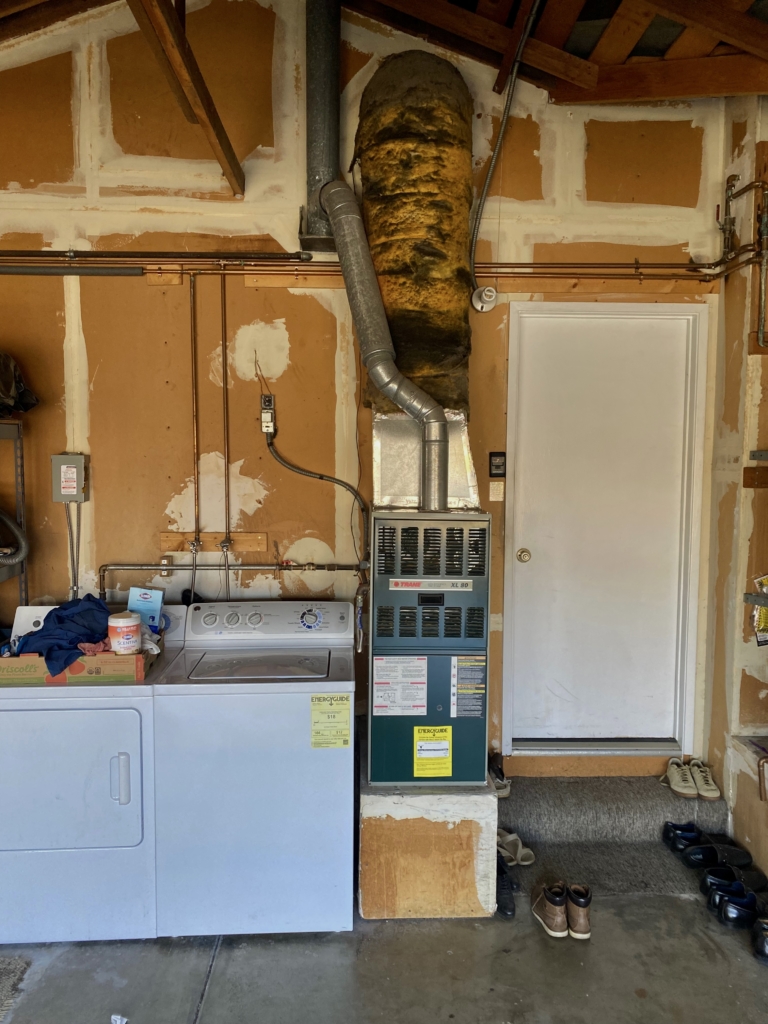
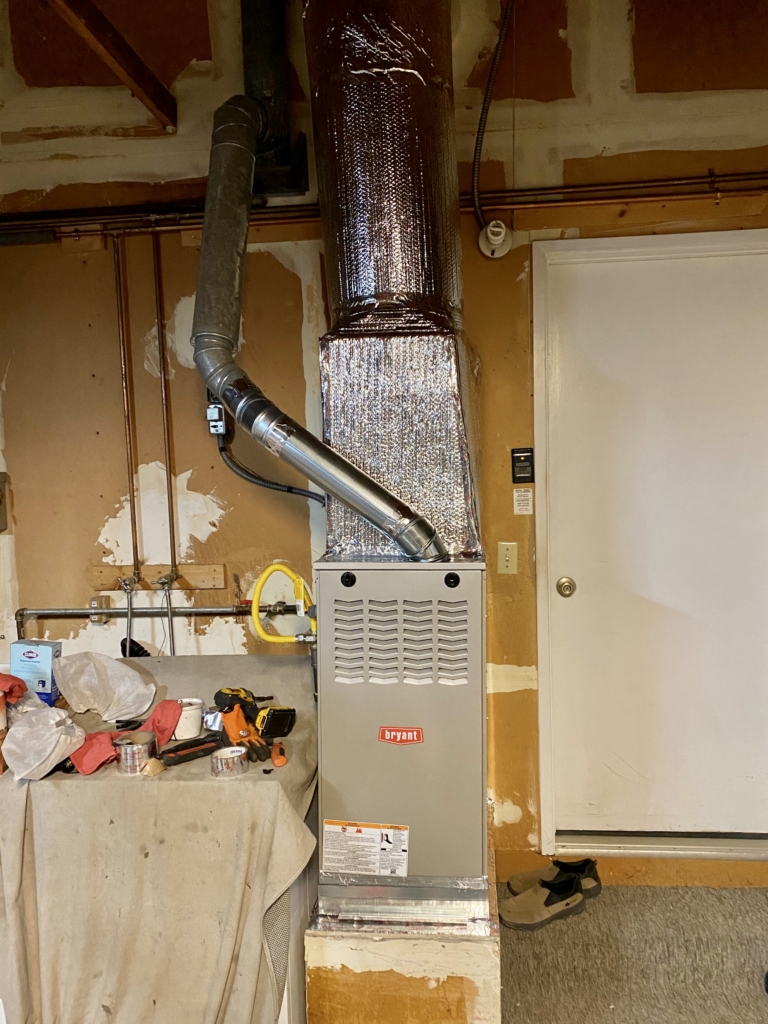
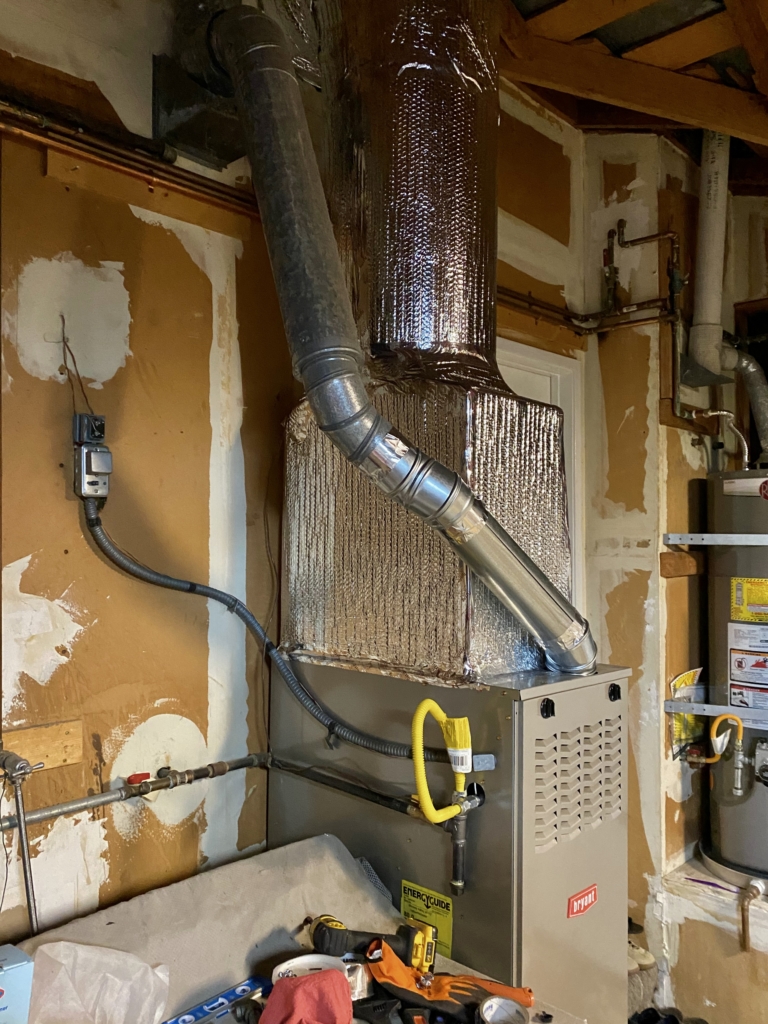
Nur HVAC completed a furnace replacement at a Campbell home, removing the old unit and installing a new Bryant 821TA48070V17A in its place. A clean changeout like this keeps the home heating reliably for years to come.
Replacing a furnace is a multi-step job, and doing each step correctly is what keeps the new system safe and efficient.
Ready for reliable comfort?
Book your San Mateo County HVAC service today - fast, honest, guaranteed.
Steps in a furnace replacement
- Choose the right furnace: select a unit sized for the home and matched to the available fuel type, such as gas, oil, or electric.
- Prepare the installation site: clear the work area of any obstacles so there is room to position and connect the furnace.
- Remove the old furnace: disconnect and take out the existing unit before the new one goes in.
- Install the new furnace: set the unit in place and connect it to the ductwork, fuel lines, and electrical wiring it needs.
- Test the system: run the furnace to confirm it heats the home properly and operates safely.
Why professional installation matters
Having a qualified HVAC technician handle the replacement makes sure the work is done safely and the furnace runs efficiently, which helps reduce energy costs and extend the unit’s lifespan. A correct installation also protects the gas and venting connections, where mistakes can be both costly and dangerous.
Thinking about replacing your furnace?
Nur HVAC sizes each furnace to the home, completes the furnace installation to code, and tests the system before leaving so it heats reliably from the first day. If your current furnace is getting older or struggling to keep the house warm, we are happy to take a look and walk you through the options that make sense for your home. A furnace that is properly sized and installed simply runs quieter, uses less fuel, and holds up better over time, which is why we treat every changeout as a full job rather than a quick swap.
Questions about your HVAC?
Talk to a real San Mateo County technician - free estimates, honest advice, no pressure.
Reviews
Trusted by your neighbors


“We could not be happier with Nur HVAC. They installed 2 HVAC systems in our home and have been absolutely fantastic ever since. Whatever an issue comes up they respond quickly and get it fixed without delays. They are reliable, professional, knowledgeable and always willing to help. It's such a relief to have someone we can trust to take care of our home's electrical and HVAC needs. We highly recommend them to anyone looking for a dependable professional who truly stands behind its work!”

“excellent service at a fair price. definitely our new go-to HVAC. These guys are professional and extremely competent”
“Antonio was prompt, efficient and personable. He quickly assessed our air conditioner and, despite the unit's considerable age, recommended a reasonably priced repair. We so appreciate his expertise and honesty and would not hesitate to recommend Nur.”
“Honest and meticulous. They quoted me a competitive price for work that they expected to complete within a few days. The time to finish the job increased, but the price did not. It's clear that they are *very* careful and detail-oriented during installation. Fedor and the rest of the team also make everything before the work very easy; figuring out what you want, advising what to do, and communicating about scheduling/logistics. Very happy overall, would recommend them without hesitation. My wife and I have already used them twice: adding a central heat pump and later augmenting it, in select rooms, with mini splits.”

“I them 10 stars if I could! Adlan was an outstanding human in addition to being very knowledgeable technician! He was great at explaining what he was doing, why, and what I could do to make the system more efficient. He solved my problem perfectly and made my day!”
“Fair and honest contractors are hard to come by these days, but NurHVAC absolutely fits that description. I was referred to them by a friend, and I'm glad I took the recommendation. We needed to replace our old gas water heater, which was nearing 15 years old. From start to finish, their communication was excellent. Artur was my coordinator and Shalai was my installer. They were honest, transparent, and took the time to answer every question I had. They walked me through the pros and cons of each option without any pressure and even guided me through the rebate process, which made everything much easier. What really stood out was their commitment to customer service. The installer stayed until 9:00 PM to make sure everything was working properly so we wouldn't have to spend the night without hot water. He absolutely didn't have to do that, but it showed how much he genuinely cared about doing the job right. When the work was finished, he cleaned everything up so well that you wouldn't have known a major project had taken place in my garage. If you're looking for a company that's honest, knowledgeable, and truly goes above and beyond for its customers, I can't recommend NurHVAC highly enough.”

“We used Nur HVAC to replace gas furnace with a heat pump inverter, replace the aging duct work and gas water heater with a heat pump water heater, all in the same contract. Our project manager, Arthur was on-time for the scoping appointment. He took time to understand our needs, investigated the attic, ducts and all the existing equipment, before making any recommendations. He designed the optimal system for our house to be cost effective, provide highest comfort and be energy efficient. He was not pushy and was upfront about the ballpark estimates and timeline. He also walked us thru the various rebates that are available for the replacements from local utilities. Arthur's quote was very competitive, in fact better than those quoted to us by Costco referred contractors. Nur's installation crew - Eldar, Bhakridin, were very professional and thorough. They didn't rush the job and left the job site clean and clutter free each day. They accommodated our requests for placing the electrical wires and conduits so they are not in the way. All the equipment both indoor and outdoor were cleanly laid out, secured and wiped down before hand off. Always smiling and respectful, one of the best installation crew we have had. As a white glove contractor they took care of all the permitting, inspection paperwork w/ the city, all the paper work for us to receive the rebates. They even completed the warranty registration with the manufacturers for all the equipment! We would highly recommend Arthur and Nur HVAC to anyone in the Bay Area needing heating and cooling solutions. We would definitely be going back to them ourselves when the need arises.”
“Highly recommend Nur. From start to finish, this was an excellent experience. The sales guy, Fedor, did an excellent job explaining our options, giving us multiple quotes, and responding to my various follow up questions. Then, the installer, Islam, was super professional. He was very careful to protect my floors, to make everything look great, and to show me how to use the system. Most importantly, he discovered an oddity in my return ducts, having to do with an addition we did years ago. This required him to have to come back to relocate the air filter. Again, he was super professional through that as well. The price was very competitive and the service was top notch. Thanks and best wishes to the Nur team.”
“We recently had an issue with our AC unit. The Nur HVAC tech was dispatched on the next business day and provided excellent service! Very thorough, clearly explained the problems and ensured that everything was - for sure - working properly before packing up. The cost was quite reasonable for the amount of time that the technician investigated (actually troubleshooting, not 'shot gunning') the problem and verified the solution. I would not hesitate to call Nur HVAC again!”
“I had a great experience all around with Nur HVAC. Scheduling with Regina was a breeze, and Adlan, our technician, was fantastic. Adlan quickly diagnosed and fixed an issue with our 20-year-old AC unit on the spot without trying to upsell anything. Beyond the quick repair, he took the time to walk me through his process for diagnosing/assessing our AC system as well as the steps for a routine furnace maintenance - I learned a lot along the way. Highly recommend NUR HVAC, and especially Adlan!”
“The service man arrived on time. Very understanding and accommodating. Knew his trade very well, careful to explain our problem and the challenges of fixing it Would unhesitatingly recommend.”
“Very professional, easy communication and quick service. Will definitely reach out again with any HVAC issues.”
“Nur installed A/C throughout our house. We had an initial miscommunication at the beginning, but they took the time to understand exactly what we wanted, and from that point, everything was completed to perfection. I can't recommend them highly enough.”
“Great company. Installed a heat pump central HVAC system and handled all the rebates. I also recommended them for an installation at a relatives house and they did a great job there also.”

“This is the 2nd project I've done with NUR, and similar to the first time, I am a happy customer. From start to finish, NUR (in particular technician, Adlan) is completely professional. They are diligent and timely with their responses and scheduling. Adlan came out and diagnosed our 20 year old A/C system and was able to revive it, but prepared us with options for the future should the system go out again. He was extremely thorough in explaining these in layman terms. HVAC systems will always need maintenance and repairs, that's a given. However, I know that I have an honest, value-added, and well-run company to work with in NUR. Highly recommended!”
“Great communication and technician - honest and straight forward. They also arrived on time and were quick to fix my A/C issues (2 separate appointments). I will use them again.”

“Very thorough clean and tidy work. Vince was exceptionally nice and helpful. I'd work with this company again any time”

“Very thorough service. Clear communication and explanations of root cause of issues affecting HVAC system. Had same serviceman come out for two separate issues end they remembered everything about the previous service, and specifies about our particular system.”

“I highly recommend NUR HVAC to install or replace your old system. We had our 2 HVAC systems replaced with heat pump systems. Since we have solar installed on our roof, we opted for the Carrier heat pumps and new air handlers which don't use natural gas for heat. Their installers were always on time and cleaned up after each day of work. They arranged for the permit and scheduled final inspection. A very nice job and respectful staff!!”

“Adlan just completed a full residential furnace and a/c system maintenance. Happy to say he performed a very thorough job. He diagnosed and fixed a dead vent. All proper measurements were taken, and he dug in deep to check all the components. 100% happy with the service.”

“I am happy to do business with Nur HVAC. They have an excellent phone service. Regina, who I talked to on the phone regarding my central heating problem, and she was very courteous, and helpful. Adlan did a thorough job to make sure that my central heating system worked properly before he left. I am very happy with their services. Thanks guys for the great service you have provided to me. Keep up with your great work”

“This is the second project I've done with this team, and there's a reason I keep coming back: Trust. When my water heater went out, Fedor showed up the same day to walk me through my options. I have a tendency to "over-buy," and I was actually leaning toward an expensive heat pump model. Instead of just taking the bigger check, Fedor was honest with me--he explained that the ROI on that specific unit wouldn't be recovered in my lifetime given complex electrical work required. Once we picked the right system for my actual needs, he had a crew at my house within two days to finish the install. They were professional, clean, and efficient. It's hard to find an HVAC company that values integrity as much as they do. They've earned a customer for life!”
“These guys are the best. After checking around, we went with NUR for a new Carrier furnace and a/c installation. Their pricing was fair, no surprises, and the quality of the installation was excellent. Even during the permit process the town inspector commented on how good everything looked. Here is the big thing: Everyone I dealt with at NUR was friendly, courteous, and professional. There were a couple of glitches along the way which happens with a project like this, but NUR was always responsive and took care of things promptly. I couldn't ask for more and can highly recommend.”
“Excellent service from start to finish. Thorough and patient in explaining how the system works to the final installation. Service contractors have praised the work done. Great crew respectful of the work environment.”
“We could not be happier with Nur HVAC. They installed 2 HVAC systems in our home and have been absolutely fantastic ever since. Whatever an issue comes up they respond quickly and get it fixed without delays. They are reliable, professional, knowledgeable and always willing to help. It's such a relief to have someone we can trust to take care of our home's electrical and HVAC needs. We highly recommend them to anyone looking for a dependable professional who truly stands behind its work!”
“excellent service at a fair price. definitely our new go-to HVAC. These guys are professional and extremely competent”
“Antonio was prompt, efficient and personable. He quickly assessed our air conditioner and, despite the unit's considerable age, recommended a reasonably priced repair. We so appreciate his expertise and honesty and would not hesitate to recommend Nur.”
“Honest and meticulous. They quoted me a competitive price for work that they expected to complete within a few days. The time to finish the job increased, but the price did not. It's clear that they are *very* careful and detail-oriented during installation. Fedor and the rest of the team also make everything before the work very easy; figuring out what you want, advising what to do, and communicating about scheduling/logistics. Very happy overall, would recommend them without hesitation. My wife and I have already used them twice: adding a central heat pump and later augmenting it, in select rooms, with mini splits.”
“I them 10 stars if I could! Adlan was an outstanding human in addition to being very knowledgeable technician! He was great at explaining what he was doing, why, and what I could do to make the system more efficient. He solved my problem perfectly and made my day!”
“Fair and honest contractors are hard to come by these days, but NurHVAC absolutely fits that description. I was referred to them by a friend, and I'm glad I took the recommendation. We needed to replace our old gas water heater, which was nearing 15 years old. From start to finish, their communication was excellent. Artur was my coordinator and Shalai was my installer. They were honest, transparent, and took the time to answer every question I had. They walked me through the pros and cons of each option without any pressure and even guided me through the rebate process, which made everything much easier. What really stood out was their commitment to customer service. The installer stayed until 9:00 PM to make sure everything was working properly so we wouldn't have to spend the night without hot water. He absolutely didn't have to do that, but it showed how much he genuinely cared about doing the job right. When the work was finished, he cleaned everything up so well that you wouldn't have known a major project had taken place in my garage. If you're looking for a company that's honest, knowledgeable, and truly goes above and beyond for its customers, I can't recommend NurHVAC highly enough.”
“We used Nur HVAC to replace gas furnace with a heat pump inverter, replace the aging duct work and gas water heater with a heat pump water heater, all in the same contract. Our project manager, Arthur was on-time for the scoping appointment. He took time to understand our needs, investigated the attic, ducts and all the existing equipment, before making any recommendations. He designed the optimal system for our house to be cost effective, provide highest comfort and be energy efficient. He was not pushy and was upfront about the ballpark estimates and timeline. He also walked us thru the various rebates that are available for the replacements from local utilities. Arthur's quote was very competitive, in fact better than those quoted to us by Costco referred contractors. Nur's installation crew - Eldar, Bhakridin, were very professional and thorough. They didn't rush the job and left the job site clean and clutter free each day. They accommodated our requests for placing the electrical wires and conduits so they are not in the way. All the equipment both indoor and outdoor were cleanly laid out, secured and wiped down before hand off. Always smiling and respectful, one of the best installation crew we have had. As a white glove contractor they took care of all the permitting, inspection paperwork w/ the city, all the paper work for us to receive the rebates. They even completed the warranty registration with the manufacturers for all the equipment! We would highly recommend Arthur and Nur HVAC to anyone in the Bay Area needing heating and cooling solutions. We would definitely be going back to them ourselves when the need arises.”
“Highly recommend Nur. From start to finish, this was an excellent experience. The sales guy, Fedor, did an excellent job explaining our options, giving us multiple quotes, and responding to my various follow up questions. Then, the installer, Islam, was super professional. He was very careful to protect my floors, to make everything look great, and to show me how to use the system. Most importantly, he discovered an oddity in my return ducts, having to do with an addition we did years ago. This required him to have to come back to relocate the air filter. Again, he was super professional through that as well. The price was very competitive and the service was top notch. Thanks and best wishes to the Nur team.”
“We recently had an issue with our AC unit. The Nur HVAC tech was dispatched on the next business day and provided excellent service! Very thorough, clearly explained the problems and ensured that everything was - for sure - working properly before packing up. The cost was quite reasonable for the amount of time that the technician investigated (actually troubleshooting, not 'shot gunning') the problem and verified the solution. I would not hesitate to call Nur HVAC again!”
“I had a great experience all around with Nur HVAC. Scheduling with Regina was a breeze, and Adlan, our technician, was fantastic. Adlan quickly diagnosed and fixed an issue with our 20-year-old AC unit on the spot without trying to upsell anything. Beyond the quick repair, he took the time to walk me through his process for diagnosing/assessing our AC system as well as the steps for a routine furnace maintenance - I learned a lot along the way. Highly recommend NUR HVAC, and especially Adlan!”
“The service man arrived on time. Very understanding and accommodating. Knew his trade very well, careful to explain our problem and the challenges of fixing it Would unhesitatingly recommend.”
“Very professional, easy communication and quick service. Will definitely reach out again with any HVAC issues.”
“Nur installed A/C throughout our house. We had an initial miscommunication at the beginning, but they took the time to understand exactly what we wanted, and from that point, everything was completed to perfection. I can't recommend them highly enough.”
“Great company. Installed a heat pump central HVAC system and handled all the rebates. I also recommended them for an installation at a relatives house and they did a great job there also.”
“This is the 2nd project I've done with NUR, and similar to the first time, I am a happy customer. From start to finish, NUR (in particular technician, Adlan) is completely professional. They are diligent and timely with their responses and scheduling. Adlan came out and diagnosed our 20 year old A/C system and was able to revive it, but prepared us with options for the future should the system go out again. He was extremely thorough in explaining these in layman terms. HVAC systems will always need maintenance and repairs, that's a given. However, I know that I have an honest, value-added, and well-run company to work with in NUR. Highly recommended!”
“Great communication and technician - honest and straight forward. They also arrived on time and were quick to fix my A/C issues (2 separate appointments). I will use them again.”
“Very thorough clean and tidy work. Vince was exceptionally nice and helpful. I'd work with this company again any time”
“Very thorough service. Clear communication and explanations of root cause of issues affecting HVAC system. Had same serviceman come out for two separate issues end they remembered everything about the previous service, and specifies about our particular system.”
“I highly recommend NUR HVAC to install or replace your old system. We had our 2 HVAC systems replaced with heat pump systems. Since we have solar installed on our roof, we opted for the Carrier heat pumps and new air handlers which don't use natural gas for heat. Their installers were always on time and cleaned up after each day of work. They arranged for the permit and scheduled final inspection. A very nice job and respectful staff!!”
“Adlan just completed a full residential furnace and a/c system maintenance. Happy to say he performed a very thorough job. He diagnosed and fixed a dead vent. All proper measurements were taken, and he dug in deep to check all the components. 100% happy with the service.”
“I am happy to do business with Nur HVAC. They have an excellent phone service. Regina, who I talked to on the phone regarding my central heating problem, and she was very courteous, and helpful. Adlan did a thorough job to make sure that my central heating system worked properly before he left. I am very happy with their services. Thanks guys for the great service you have provided to me. Keep up with your great work”
“This is the second project I've done with this team, and there's a reason I keep coming back: Trust. When my water heater went out, Fedor showed up the same day to walk me through my options. I have a tendency to "over-buy," and I was actually leaning toward an expensive heat pump model. Instead of just taking the bigger check, Fedor was honest with me--he explained that the ROI on that specific unit wouldn't be recovered in my lifetime given complex electrical work required. Once we picked the right system for my actual needs, he had a crew at my house within two days to finish the install. They were professional, clean, and efficient. It's hard to find an HVAC company that values integrity as much as they do. They've earned a customer for life!”
“These guys are the best. After checking around, we went with NUR for a new Carrier furnace and a/c installation. Their pricing was fair, no surprises, and the quality of the installation was excellent. Even during the permit process the town inspector commented on how good everything looked. Here is the big thing: Everyone I dealt with at NUR was friendly, courteous, and professional. There were a couple of glitches along the way which happens with a project like this, but NUR was always responsive and took care of things promptly. I couldn't ask for more and can highly recommend.”
“Excellent service from start to finish. Thorough and patient in explaining how the system works to the final installation. Service contractors have praised the work done. Great crew respectful of the work environment.”
“We could not be happier with Nur HVAC. They installed 2 HVAC systems in our home and have been absolutely fantastic ever since. Whatever an issue comes up they respond quickly and get it fixed without delays. They are reliable, professional, knowledgeable and always willing to help. It's such a relief to have someone we can trust to take care of our home's electrical and HVAC needs. We highly recommend them to anyone looking for a dependable professional who truly stands behind its work!”
“excellent service at a fair price. definitely our new go-to HVAC. These guys are professional and extremely competent”
“Antonio was prompt, efficient and personable. He quickly assessed our air conditioner and, despite the unit's considerable age, recommended a reasonably priced repair. We so appreciate his expertise and honesty and would not hesitate to recommend Nur.”
“Honest and meticulous. They quoted me a competitive price for work that they expected to complete within a few days. The time to finish the job increased, but the price did not. It's clear that they are *very* careful and detail-oriented during installation. Fedor and the rest of the team also make everything before the work very easy; figuring out what you want, advising what to do, and communicating about scheduling/logistics. Very happy overall, would recommend them without hesitation. My wife and I have already used them twice: adding a central heat pump and later augmenting it, in select rooms, with mini splits.”
“I them 10 stars if I could! Adlan was an outstanding human in addition to being very knowledgeable technician! He was great at explaining what he was doing, why, and what I could do to make the system more efficient. He solved my problem perfectly and made my day!”
“Fair and honest contractors are hard to come by these days, but NurHVAC absolutely fits that description. I was referred to them by a friend, and I'm glad I took the recommendation. We needed to replace our old gas water heater, which was nearing 15 years old. From start to finish, their communication was excellent. Artur was my coordinator and Shalai was my installer. They were honest, transparent, and took the time to answer every question I had. They walked me through the pros and cons of each option without any pressure and even guided me through the rebate process, which made everything much easier. What really stood out was their commitment to customer service. The installer stayed until 9:00 PM to make sure everything was working properly so we wouldn't have to spend the night without hot water. He absolutely didn't have to do that, but it showed how much he genuinely cared about doing the job right. When the work was finished, he cleaned everything up so well that you wouldn't have known a major project had taken place in my garage. If you're looking for a company that's honest, knowledgeable, and truly goes above and beyond for its customers, I can't recommend NurHVAC highly enough.”
“We used Nur HVAC to replace gas furnace with a heat pump inverter, replace the aging duct work and gas water heater with a heat pump water heater, all in the same contract. Our project manager, Arthur was on-time for the scoping appointment. He took time to understand our needs, investigated the attic, ducts and all the existing equipment, before making any recommendations. He designed the optimal system for our house to be cost effective, provide highest comfort and be energy efficient. He was not pushy and was upfront about the ballpark estimates and timeline. He also walked us thru the various rebates that are available for the replacements from local utilities. Arthur's quote was very competitive, in fact better than those quoted to us by Costco referred contractors. Nur's installation crew - Eldar, Bhakridin, were very professional and thorough. They didn't rush the job and left the job site clean and clutter free each day. They accommodated our requests for placing the electrical wires and conduits so they are not in the way. All the equipment both indoor and outdoor were cleanly laid out, secured and wiped down before hand off. Always smiling and respectful, one of the best installation crew we have had. As a white glove contractor they took care of all the permitting, inspection paperwork w/ the city, all the paper work for us to receive the rebates. They even completed the warranty registration with the manufacturers for all the equipment! We would highly recommend Arthur and Nur HVAC to anyone in the Bay Area needing heating and cooling solutions. We would definitely be going back to them ourselves when the need arises.”
“Highly recommend Nur. From start to finish, this was an excellent experience. The sales guy, Fedor, did an excellent job explaining our options, giving us multiple quotes, and responding to my various follow up questions. Then, the installer, Islam, was super professional. He was very careful to protect my floors, to make everything look great, and to show me how to use the system. Most importantly, he discovered an oddity in my return ducts, having to do with an addition we did years ago. This required him to have to come back to relocate the air filter. Again, he was super professional through that as well. The price was very competitive and the service was top notch. Thanks and best wishes to the Nur team.”
“We recently had an issue with our AC unit. The Nur HVAC tech was dispatched on the next business day and provided excellent service! Very thorough, clearly explained the problems and ensured that everything was - for sure - working properly before packing up. The cost was quite reasonable for the amount of time that the technician investigated (actually troubleshooting, not 'shot gunning') the problem and verified the solution. I would not hesitate to call Nur HVAC again!”
“I had a great experience all around with Nur HVAC. Scheduling with Regina was a breeze, and Adlan, our technician, was fantastic. Adlan quickly diagnosed and fixed an issue with our 20-year-old AC unit on the spot without trying to upsell anything. Beyond the quick repair, he took the time to walk me through his process for diagnosing/assessing our AC system as well as the steps for a routine furnace maintenance - I learned a lot along the way. Highly recommend NUR HVAC, and especially Adlan!”
“The service man arrived on time. Very understanding and accommodating. Knew his trade very well, careful to explain our problem and the challenges of fixing it Would unhesitatingly recommend.”
“Very professional, easy communication and quick service. Will definitely reach out again with any HVAC issues.”
“Nur installed A/C throughout our house. We had an initial miscommunication at the beginning, but they took the time to understand exactly what we wanted, and from that point, everything was completed to perfection. I can't recommend them highly enough.”
“Great company. Installed a heat pump central HVAC system and handled all the rebates. I also recommended them for an installation at a relatives house and they did a great job there also.”
“This is the 2nd project I've done with NUR, and similar to the first time, I am a happy customer. From start to finish, NUR (in particular technician, Adlan) is completely professional. They are diligent and timely with their responses and scheduling. Adlan came out and diagnosed our 20 year old A/C system and was able to revive it, but prepared us with options for the future should the system go out again. He was extremely thorough in explaining these in layman terms. HVAC systems will always need maintenance and repairs, that's a given. However, I know that I have an honest, value-added, and well-run company to work with in NUR. Highly recommended!”
“Great communication and technician - honest and straight forward. They also arrived on time and were quick to fix my A/C issues (2 separate appointments). I will use them again.”
“Very thorough clean and tidy work. Vince was exceptionally nice and helpful. I'd work with this company again any time”
“Very thorough service. Clear communication and explanations of root cause of issues affecting HVAC system. Had same serviceman come out for two separate issues end they remembered everything about the previous service, and specifies about our particular system.”
“I highly recommend NUR HVAC to install or replace your old system. We had our 2 HVAC systems replaced with heat pump systems. Since we have solar installed on our roof, we opted for the Carrier heat pumps and new air handlers which don't use natural gas for heat. Their installers were always on time and cleaned up after each day of work. They arranged for the permit and scheduled final inspection. A very nice job and respectful staff!!”
“Adlan just completed a full residential furnace and a/c system maintenance. Happy to say he performed a very thorough job. He diagnosed and fixed a dead vent. All proper measurements were taken, and he dug in deep to check all the components. 100% happy with the service.”
“I am happy to do business with Nur HVAC. They have an excellent phone service. Regina, who I talked to on the phone regarding my central heating problem, and she was very courteous, and helpful. Adlan did a thorough job to make sure that my central heating system worked properly before he left. I am very happy with their services. Thanks guys for the great service you have provided to me. Keep up with your great work”
“This is the second project I've done with this team, and there's a reason I keep coming back: Trust. When my water heater went out, Fedor showed up the same day to walk me through my options. I have a tendency to "over-buy," and I was actually leaning toward an expensive heat pump model. Instead of just taking the bigger check, Fedor was honest with me--he explained that the ROI on that specific unit wouldn't be recovered in my lifetime given complex electrical work required. Once we picked the right system for my actual needs, he had a crew at my house within two days to finish the install. They were professional, clean, and efficient. It's hard to find an HVAC company that values integrity as much as they do. They've earned a customer for life!”
“These guys are the best. After checking around, we went with NUR for a new Carrier furnace and a/c installation. Their pricing was fair, no surprises, and the quality of the installation was excellent. Even during the permit process the town inspector commented on how good everything looked. Here is the big thing: Everyone I dealt with at NUR was friendly, courteous, and professional. There were a couple of glitches along the way which happens with a project like this, but NUR was always responsive and took care of things promptly. I couldn't ask for more and can highly recommend.”
“Excellent service from start to finish. Thorough and patient in explaining how the system works to the final installation. Service contractors have praised the work done. Great crew respectful of the work environment.”
Google Reviews
What our customers say on Google

“We had the system shutting off too soon. Elias found the problem: vermin had chewed through an important wire!”

“Adlan C. was our technician and was very helpful, knowledgeable, and thorough. I would recommend NUR HVAC to others as a trustworthy service provider.”

“Superior service. Fedor promised a high quality install, and delivered beyond expectations. The installers did a high quality install. There were no shortcuts taken. They did everything they could to make the install go smoothly. I cannot recommend them enough.”

“Very professional, all installation was excellent, quick and clean. Would recommend fully.”

“Nur HVAC recently installed a mini-split system in our SF condo; one in the living room, and one each in the two bedrooms. They installed the heat pump outside on the balcony. I was impressed with their work ethic and the way they kept our space clean during the installation. They cleaned up at the end of each work day and were very respectful and thoughtful of our home, our dog, and us. They communicate clearly and quickly; I would highly recommend them to install an AC system.”

“Very competitive price. Very professional estimate and installation process.”

“The people at NUR did a fabulous job installing a new heat pump, and at a very competitive price. The crew was communicative, on-time, and very professional. About a year later we're very much enjoying our (still) new heating/cooling system!”

“Adlan was amazing. Our apartment hvac was not functioning appropriately and Adlan analyzed the situation diligently and efficiently fixed the found issues.”

“Professional, detailed, and super hard working. NUR did a fantastic job replacing my air conditioner. Highly recommend!”

“Furnace replacement. Very professionally done. Price was significantly below a competitive bid. I would recommend. English as a second language for the installers presented a challenge, but the end result, so far, has been great.”

“The best in service, as always! Thanks, David and team”

“Alex and Dil were extremely professional. They did amazing job and our project manager Arthur was always provided updates”

“We've only had a diagnostic so far, but the technician Adlan was awesome. We were super impressed so far. We hope to see him again for the repair.”

“I’m very pleased with Nur HVAC. I have an older AC unit, and Islam was able to successfully repair it while clearly explaining the work and showing me the before-and-after measurements so I could understand the difference. He also patiently answered all my questions. I am very satisfied with the service.”

“Alexey is fantastic. He did a great job. I would absolutely recommend NUR HVACand Alexey”

“Adlan was so professional, knowledgeable and an excellent technician. Glad we called!!!”

“Adlan is very nice and thorough with his explanations.”

“After 18 years our Air Conditioning System failed. We, of course, called Nur HVAC and were glad to see Islam again. He rapidly diagnosed that the AC compressor failed and had to be replaced. However, the AC system was so old that the compressor only had a 1 year warranty and the refrigerant in use 18 years ago is only available for legacy repairs (This is to protect the Ozone layer). We could have replaced the AC system, but the heating system was equally old and likely to fail. The cost to move to a full all electric HVAC system was a few dollars more than just replacing the AC system and it would eliminate our use of gas for heating and take advantage of the recently installed Solar Panels. So the house has a new fully electric HVAC system installed by Nur HVAC. Islam came and took the measurements so the system could be ordered and priced. Soon Alex and the installation team arrived to install the system. The quality of the installation and the care Alex and team took during the custom wiring, new refrigerant lines, new moisture drains, new thermostats, system setup and calibration was outstanding. Alex made sure that the air flow for both heating and cooling was measured and far better than the previous systems. Alex made sure to keep us informed as progress was being made and they managed to keep the house clean during the install. Again Nur HVAC exceeded expectations with a very high quality install at a fair price. A project of this size had a few bumps but this appeared to have been done to provide a quality install with attention to detail. This company has superb knowledgeable professionals working for it from service to installation. I highly recommend Nur HVAC.”

“We have used NUR HVAC for maintenance and repair multiple times over the years. The receptionist is friendly and dispatches technician timely whenever possible. Islam, the technician who worked with us in the past two years, is always on time for the scheduled appointment, technically competent and also very friendly and patient when answering my questions related to our 2 HVAC systems. Thank you Islam! We will definitely continue to use NUR HVAC’s service.”

“I could not be happier with the work Nur HVAC did. Mine was a large residential job, replacing 2 furnaces and 2 HVAC units. I procured 3 estimates from different companies and Nur provided the most detailed estimate at the lowest price. Communication was good throughout the process and the project was finished on time. I'm most happy about the quality of the work. It is meticulous! The entire project was a great experience.”

“Last month, we contracted NUR HVAC to install three units of Mitsubishi ductless AC units to our house. The sales contact Artur was very professional, always addressed our questions very quickly and clearly. Their office support Regina was proactive and timely communicated important information for our awareness ahead of time. Their two technicians Maxim and Alksei have done done an excellent job to install the units and relevant pipes. We are very satisfied with the quality of Nur HAVC's work, their competitive price and excellent customer services, and definitely recommend this company for others who are seeking professionals to do the similar service. George and Amy from Redwood Shores, CA”

“Alexey from NUR HVAC was a total pro! He was friendly and clearly communicated the repair plan (schedule, likely costs) as my Carrier HVAC circuit board was damaged but replaced under warranty. And when Carrier/brand mixed up and sent the wrong part, he quickly got them to resend and rushed down that same day to install it. Highly recommend NUR and Alexey!”

“Amazing job! 2 gentleman work smoothly and super fast and clean. There are no garbage after they finished. Highly recommend!!”

“Our experience with NUR was simply awesome from start to finish. The quoting process (with Artur) was fantastic: he knew his stuff, could explain the "ins and outs" of every system choice in great detail (I had done my research and had a lot of very specific questions ready). I found him to be incredibly communicative, appreciated that he produced a really detailed quote and handled all the scheduling and logistics including permits. Our building is a tricky site because we are on a hill, so Artur even coordinated with a scaffold company on our behalf so the refrigerant line could be installed, and negotiated with them to lower the price. Shalai was our lead installer, and was incredible. He and his team were all super friendly, always respectful of our home, extremely clean and tidy, very detail-oriented, took their time to do the work (versus rushing to get to the next job) and checked in daily. I wanted a couple of things done very specifically with the plenum and filter box, and they were happy to accommodate everything, no questions asked. The install is a thing of beauty. Would absolutely recommend, great company.”
“We had the system shutting off too soon. Elias found the problem: vermin had chewed through an important wire!”
“Adlan C. was our technician and was very helpful, knowledgeable, and thorough. I would recommend NUR HVAC to others as a trustworthy service provider.”
“Superior service. Fedor promised a high quality install, and delivered beyond expectations. The installers did a high quality install. There were no shortcuts taken. They did everything they could to make the install go smoothly. I cannot recommend them enough.”
“Very professional, all installation was excellent, quick and clean. Would recommend fully.”
“Nur HVAC recently installed a mini-split system in our SF condo; one in the living room, and one each in the two bedrooms. They installed the heat pump outside on the balcony. I was impressed with their work ethic and the way they kept our space clean during the installation. They cleaned up at the end of each work day and were very respectful and thoughtful of our home, our dog, and us. They communicate clearly and quickly; I would highly recommend them to install an AC system.”
“Very competitive price. Very professional estimate and installation process.”
“The people at NUR did a fabulous job installing a new heat pump, and at a very competitive price. The crew was communicative, on-time, and very professional. About a year later we're very much enjoying our (still) new heating/cooling system!”
“Adlan was amazing. Our apartment hvac was not functioning appropriately and Adlan analyzed the situation diligently and efficiently fixed the found issues.”
“Professional, detailed, and super hard working. NUR did a fantastic job replacing my air conditioner. Highly recommend!”
“Furnace replacement. Very professionally done. Price was significantly below a competitive bid. I would recommend. English as a second language for the installers presented a challenge, but the end result, so far, has been great.”
“The best in service, as always! Thanks, David and team”
“Alex and Dil were extremely professional. They did amazing job and our project manager Arthur was always provided updates”
“We've only had a diagnostic so far, but the technician Adlan was awesome. We were super impressed so far. We hope to see him again for the repair.”
“I’m very pleased with Nur HVAC. I have an older AC unit, and Islam was able to successfully repair it while clearly explaining the work and showing me the before-and-after measurements so I could understand the difference. He also patiently answered all my questions. I am very satisfied with the service.”
“Alexey is fantastic. He did a great job. I would absolutely recommend NUR HVACand Alexey”
“Adlan was so professional, knowledgeable and an excellent technician. Glad we called!!!”
“Adlan is very nice and thorough with his explanations.”
“After 18 years our Air Conditioning System failed. We, of course, called Nur HVAC and were glad to see Islam again. He rapidly diagnosed that the AC compressor failed and had to be replaced. However, the AC system was so old that the compressor only had a 1 year warranty and the refrigerant in use 18 years ago is only available for legacy repairs (This is to protect the Ozone layer). We could have replaced the AC system, but the heating system was equally old and likely to fail. The cost to move to a full all electric HVAC system was a few dollars more than just replacing the AC system and it would eliminate our use of gas for heating and take advantage of the recently installed Solar Panels. So the house has a new fully electric HVAC system installed by Nur HVAC. Islam came and took the measurements so the system could be ordered and priced. Soon Alex and the installation team arrived to install the system. The quality of the installation and the care Alex and team took during the custom wiring, new refrigerant lines, new moisture drains, new thermostats, system setup and calibration was outstanding. Alex made sure that the air flow for both heating and cooling was measured and far better than the previous systems. Alex made sure to keep us informed as progress was being made and they managed to keep the house clean during the install. Again Nur HVAC exceeded expectations with a very high quality install at a fair price. A project of this size had a few bumps but this appeared to have been done to provide a quality install with attention to detail. This company has superb knowledgeable professionals working for it from service to installation. I highly recommend Nur HVAC.”
“We have used NUR HVAC for maintenance and repair multiple times over the years. The receptionist is friendly and dispatches technician timely whenever possible. Islam, the technician who worked with us in the past two years, is always on time for the scheduled appointment, technically competent and also very friendly and patient when answering my questions related to our 2 HVAC systems. Thank you Islam! We will definitely continue to use NUR HVAC’s service.”
“I could not be happier with the work Nur HVAC did. Mine was a large residential job, replacing 2 furnaces and 2 HVAC units. I procured 3 estimates from different companies and Nur provided the most detailed estimate at the lowest price. Communication was good throughout the process and the project was finished on time. I'm most happy about the quality of the work. It is meticulous! The entire project was a great experience.”
“Last month, we contracted NUR HVAC to install three units of Mitsubishi ductless AC units to our house. The sales contact Artur was very professional, always addressed our questions very quickly and clearly. Their office support Regina was proactive and timely communicated important information for our awareness ahead of time. Their two technicians Maxim and Alksei have done done an excellent job to install the units and relevant pipes. We are very satisfied with the quality of Nur HAVC's work, their competitive price and excellent customer services, and definitely recommend this company for others who are seeking professionals to do the similar service. George and Amy from Redwood Shores, CA”
“Alexey from NUR HVAC was a total pro! He was friendly and clearly communicated the repair plan (schedule, likely costs) as my Carrier HVAC circuit board was damaged but replaced under warranty. And when Carrier/brand mixed up and sent the wrong part, he quickly got them to resend and rushed down that same day to install it. Highly recommend NUR and Alexey!”
“Amazing job! 2 gentleman work smoothly and super fast and clean. There are no garbage after they finished. Highly recommend!!”
“Our experience with NUR was simply awesome from start to finish. The quoting process (with Artur) was fantastic: he knew his stuff, could explain the "ins and outs" of every system choice in great detail (I had done my research and had a lot of very specific questions ready). I found him to be incredibly communicative, appreciated that he produced a really detailed quote and handled all the scheduling and logistics including permits. Our building is a tricky site because we are on a hill, so Artur even coordinated with a scaffold company on our behalf so the refrigerant line could be installed, and negotiated with them to lower the price. Shalai was our lead installer, and was incredible. He and his team were all super friendly, always respectful of our home, extremely clean and tidy, very detail-oriented, took their time to do the work (versus rushing to get to the next job) and checked in daily. I wanted a couple of things done very specifically with the plenum and filter box, and they were happy to accommodate everything, no questions asked. The install is a thing of beauty. Would absolutely recommend, great company.”
“We had the system shutting off too soon. Elias found the problem: vermin had chewed through an important wire!”
“Adlan C. was our technician and was very helpful, knowledgeable, and thorough. I would recommend NUR HVAC to others as a trustworthy service provider.”
“Superior service. Fedor promised a high quality install, and delivered beyond expectations. The installers did a high quality install. There were no shortcuts taken. They did everything they could to make the install go smoothly. I cannot recommend them enough.”
“Very professional, all installation was excellent, quick and clean. Would recommend fully.”
“Nur HVAC recently installed a mini-split system in our SF condo; one in the living room, and one each in the two bedrooms. They installed the heat pump outside on the balcony. I was impressed with their work ethic and the way they kept our space clean during the installation. They cleaned up at the end of each work day and were very respectful and thoughtful of our home, our dog, and us. They communicate clearly and quickly; I would highly recommend them to install an AC system.”
“Very competitive price. Very professional estimate and installation process.”
“The people at NUR did a fabulous job installing a new heat pump, and at a very competitive price. The crew was communicative, on-time, and very professional. About a year later we're very much enjoying our (still) new heating/cooling system!”
“Adlan was amazing. Our apartment hvac was not functioning appropriately and Adlan analyzed the situation diligently and efficiently fixed the found issues.”
“Professional, detailed, and super hard working. NUR did a fantastic job replacing my air conditioner. Highly recommend!”
“Furnace replacement. Very professionally done. Price was significantly below a competitive bid. I would recommend. English as a second language for the installers presented a challenge, but the end result, so far, has been great.”
“The best in service, as always! Thanks, David and team”
“Alex and Dil were extremely professional. They did amazing job and our project manager Arthur was always provided updates”
“We've only had a diagnostic so far, but the technician Adlan was awesome. We were super impressed so far. We hope to see him again for the repair.”
“I’m very pleased with Nur HVAC. I have an older AC unit, and Islam was able to successfully repair it while clearly explaining the work and showing me the before-and-after measurements so I could understand the difference. He also patiently answered all my questions. I am very satisfied with the service.”
“Alexey is fantastic. He did a great job. I would absolutely recommend NUR HVACand Alexey”
“Adlan was so professional, knowledgeable and an excellent technician. Glad we called!!!”
“Adlan is very nice and thorough with his explanations.”
“After 18 years our Air Conditioning System failed. We, of course, called Nur HVAC and were glad to see Islam again. He rapidly diagnosed that the AC compressor failed and had to be replaced. However, the AC system was so old that the compressor only had a 1 year warranty and the refrigerant in use 18 years ago is only available for legacy repairs (This is to protect the Ozone layer). We could have replaced the AC system, but the heating system was equally old and likely to fail. The cost to move to a full all electric HVAC system was a few dollars more than just replacing the AC system and it would eliminate our use of gas for heating and take advantage of the recently installed Solar Panels. So the house has a new fully electric HVAC system installed by Nur HVAC. Islam came and took the measurements so the system could be ordered and priced. Soon Alex and the installation team arrived to install the system. The quality of the installation and the care Alex and team took during the custom wiring, new refrigerant lines, new moisture drains, new thermostats, system setup and calibration was outstanding. Alex made sure that the air flow for both heating and cooling was measured and far better than the previous systems. Alex made sure to keep us informed as progress was being made and they managed to keep the house clean during the install. Again Nur HVAC exceeded expectations with a very high quality install at a fair price. A project of this size had a few bumps but this appeared to have been done to provide a quality install with attention to detail. This company has superb knowledgeable professionals working for it from service to installation. I highly recommend Nur HVAC.”
“We have used NUR HVAC for maintenance and repair multiple times over the years. The receptionist is friendly and dispatches technician timely whenever possible. Islam, the technician who worked with us in the past two years, is always on time for the scheduled appointment, technically competent and also very friendly and patient when answering my questions related to our 2 HVAC systems. Thank you Islam! We will definitely continue to use NUR HVAC’s service.”
“I could not be happier with the work Nur HVAC did. Mine was a large residential job, replacing 2 furnaces and 2 HVAC units. I procured 3 estimates from different companies and Nur provided the most detailed estimate at the lowest price. Communication was good throughout the process and the project was finished on time. I'm most happy about the quality of the work. It is meticulous! The entire project was a great experience.”
“Last month, we contracted NUR HVAC to install three units of Mitsubishi ductless AC units to our house. The sales contact Artur was very professional, always addressed our questions very quickly and clearly. Their office support Regina was proactive and timely communicated important information for our awareness ahead of time. Their two technicians Maxim and Alksei have done done an excellent job to install the units and relevant pipes. We are very satisfied with the quality of Nur HAVC's work, their competitive price and excellent customer services, and definitely recommend this company for others who are seeking professionals to do the similar service. George and Amy from Redwood Shores, CA”
“Alexey from NUR HVAC was a total pro! He was friendly and clearly communicated the repair plan (schedule, likely costs) as my Carrier HVAC circuit board was damaged but replaced under warranty. And when Carrier/brand mixed up and sent the wrong part, he quickly got them to resend and rushed down that same day to install it. Highly recommend NUR and Alexey!”
“Amazing job! 2 gentleman work smoothly and super fast and clean. There are no garbage after they finished. Highly recommend!!”
“Our experience with NUR was simply awesome from start to finish. The quoting process (with Artur) was fantastic: he knew his stuff, could explain the "ins and outs" of every system choice in great detail (I had done my research and had a lot of very specific questions ready). I found him to be incredibly communicative, appreciated that he produced a really detailed quote and handled all the scheduling and logistics including permits. Our building is a tricky site because we are on a hill, so Artur even coordinated with a scaffold company on our behalf so the refrigerant line could be installed, and negotiated with them to lower the price. Shalai was our lead installer, and was incredible. He and his team were all super friendly, always respectful of our home, extremely clean and tidy, very detail-oriented, took their time to do the work (versus rushing to get to the next job) and checked in daily. I wanted a couple of things done very specifically with the plenum and filter box, and they were happy to accommodate everything, no questions asked. The install is a thing of beauty. Would absolutely recommend, great company.”
More from our blog

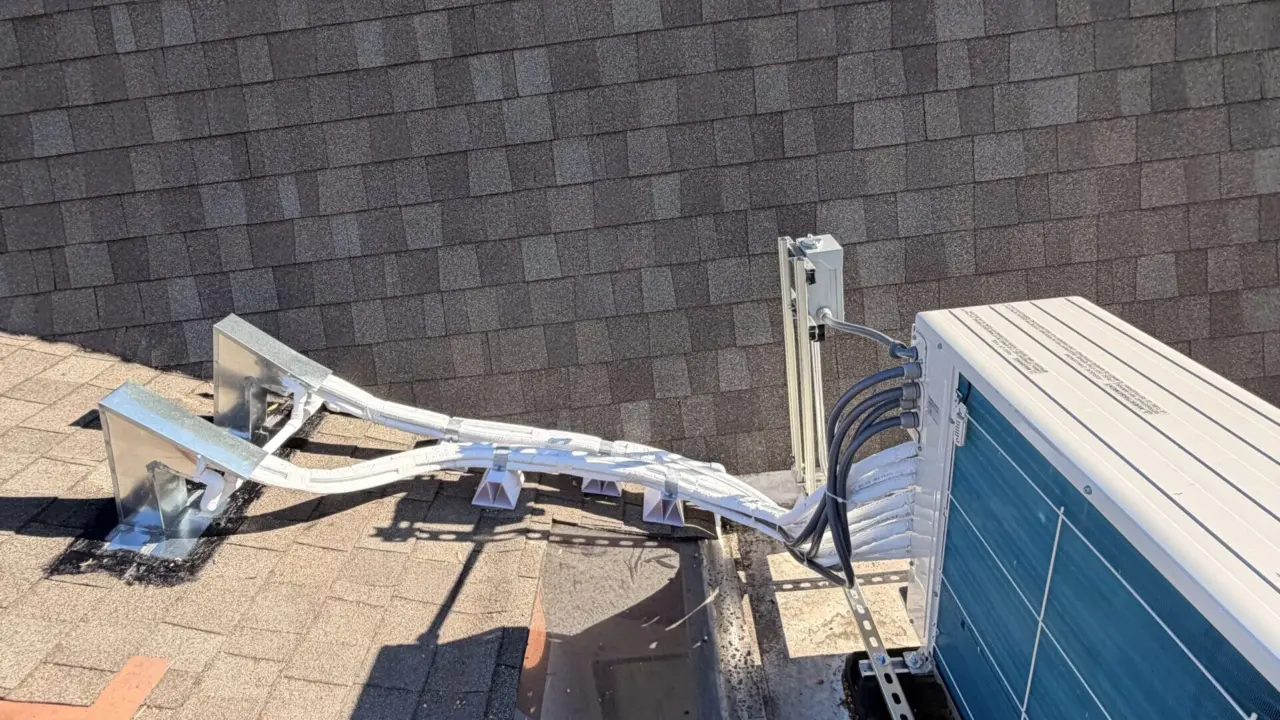
Mitsubishi 4-Zone Heat Pump Installation in Cupertino
A look at a 4-zone Mitsubishi heat pump installation we completed for a returning customer in Cupertino, from rooftop line set wor

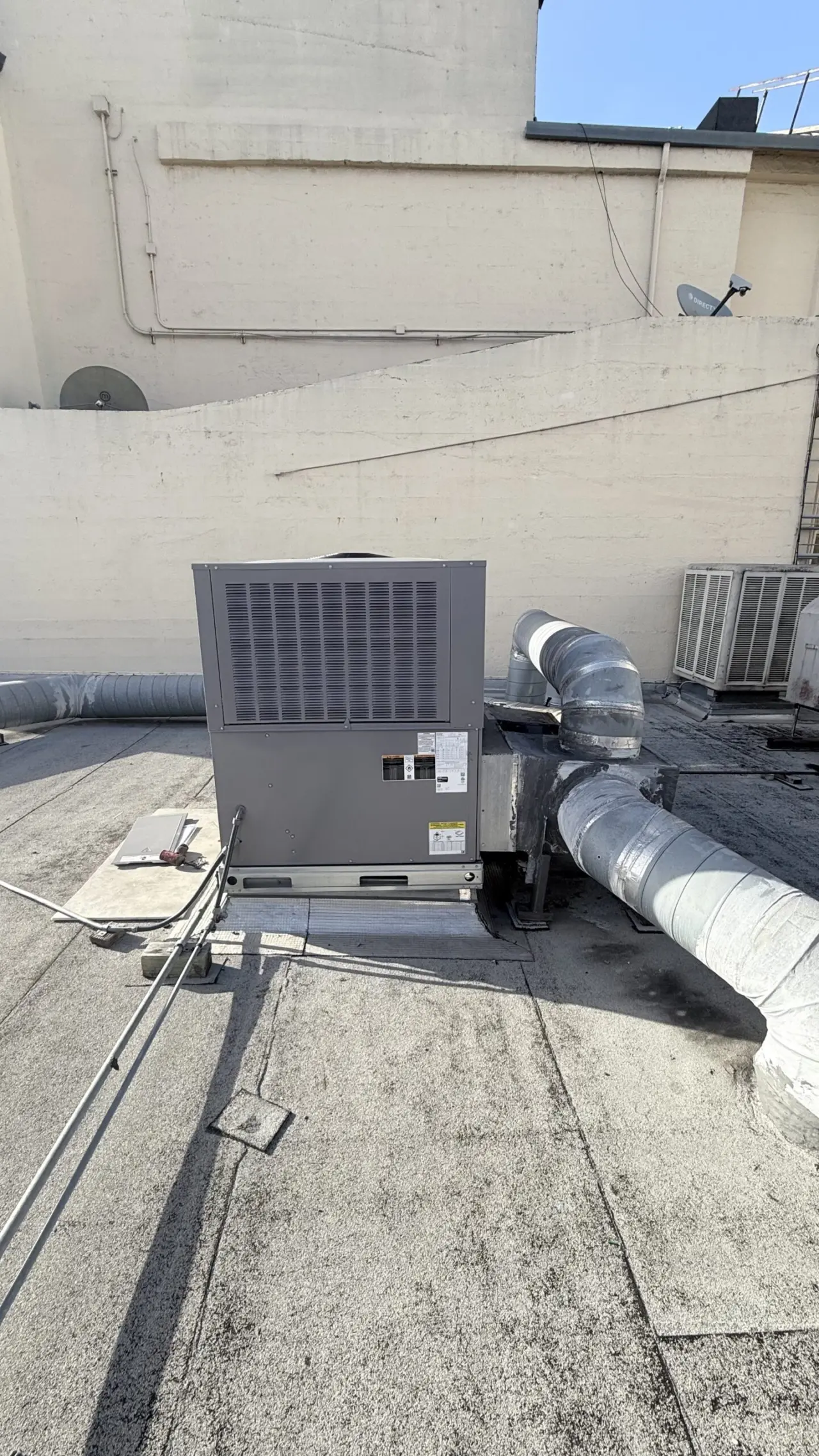
Carrier Rooftop Unit Installation in San Francisco
We replaced an aging rooftop package unit at a San Francisco restaurant with a new Carrier 50NT series unit, rebuilding the duct c

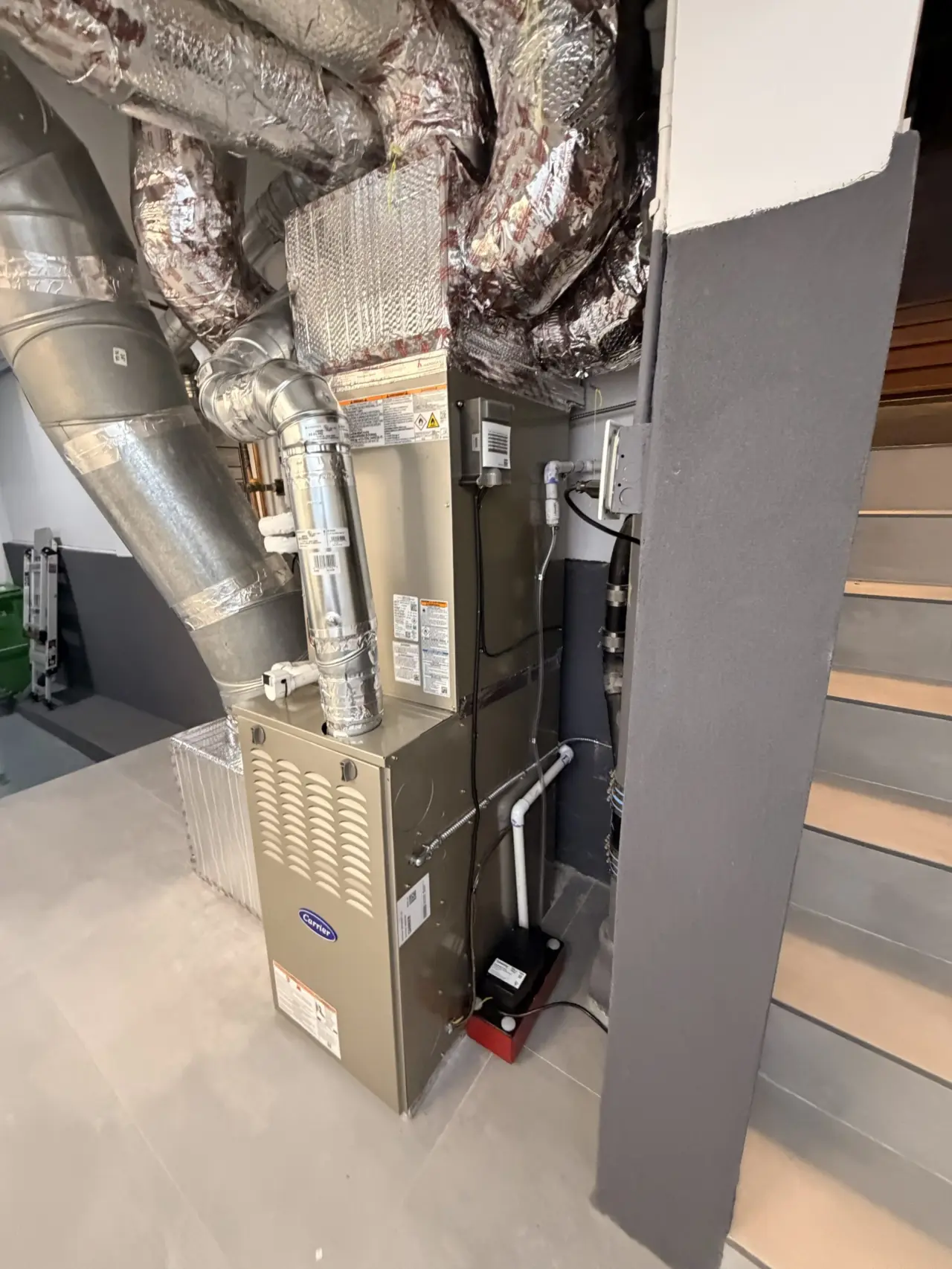
Carrier Heat Pump Installation in San Francisco
A full dual fuel changeover in San Francisco: new Carrier heat pump, matching furnace, and new ductwork, tested room by room befor
Need this done at your home?
Our certified San Mateo County technicians are ready. Book online in under a minute or give us a call.